Mortal Kombat II
Fight!

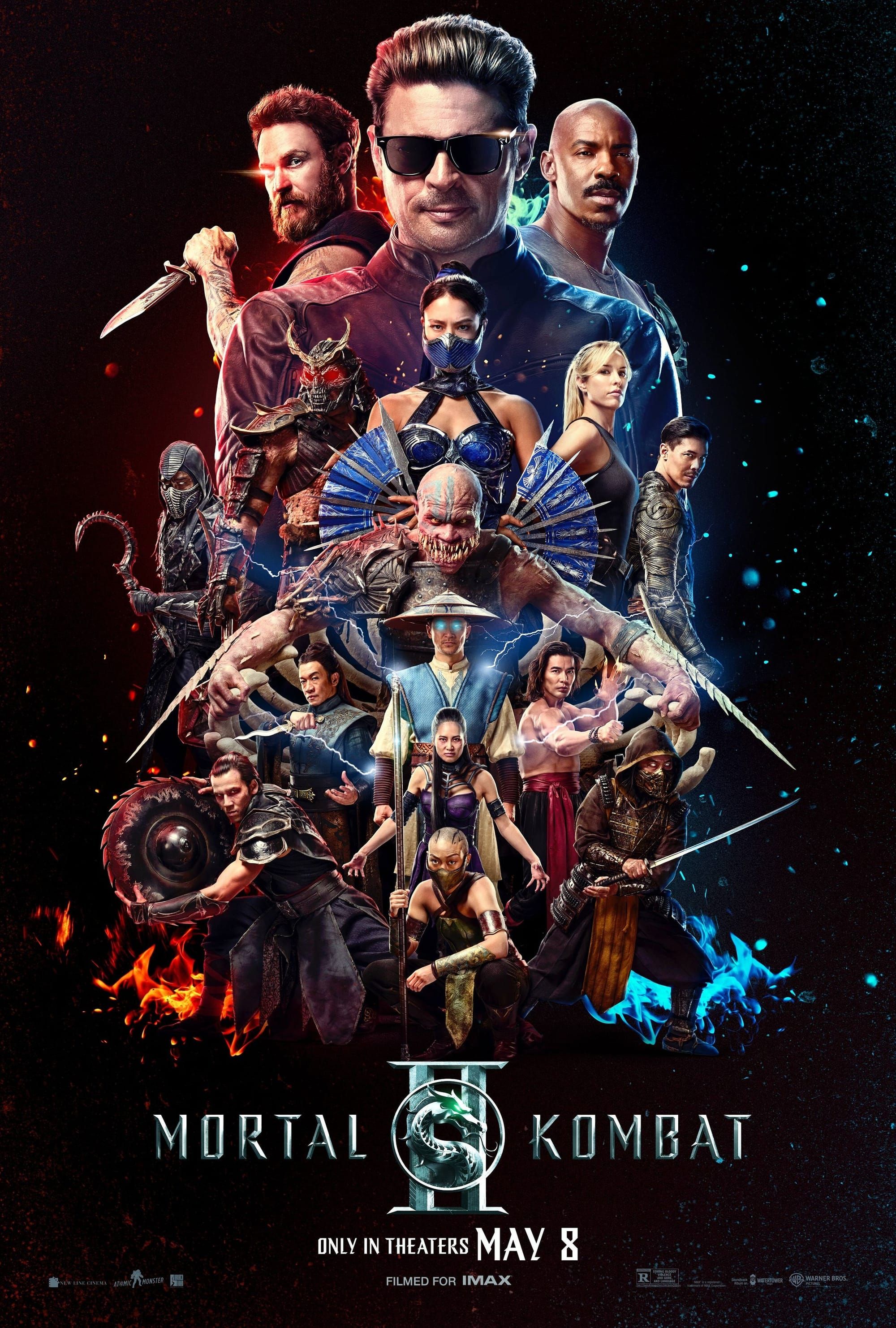
To defeat Shao Kahn, a powerful otherworldly tyrant looking to conquer Earth, Johnny Cage joins with the world’s greatest fighters in the deadly ultimate fighting tournament known as Mortal Kombat.
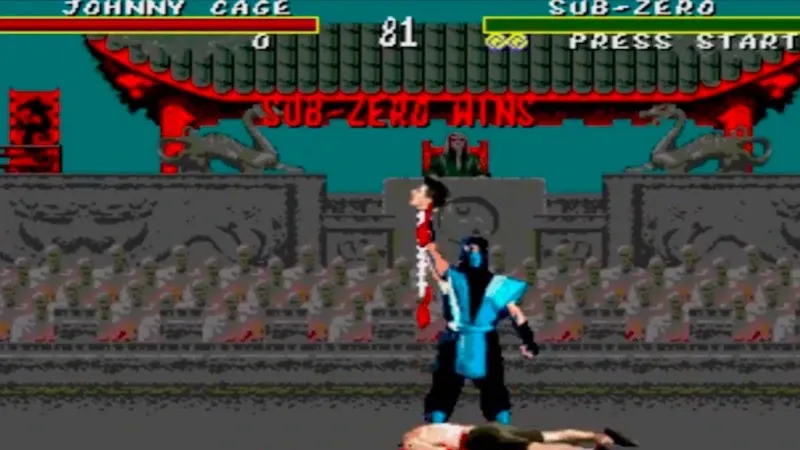
Originally released in 1992, Mortal Kombat was a fighting video game created by Midway Games.
A "fighting" game is a video game that centers around (usually, but not always) one-on-one combat between two characters. The various characters will sometimes use weapons, but most often, the game focuses on hand-to-hand fighting, with a bunch of punching, kicking, blocking, grappling, throwing, and counter-attacking, sometimes with the ability to chain attacks together into big flashy "combo” moves, and usually with a somewhat difficult to pull off signature move or two unique to each character. Fights usually take place in a fixed-size area on a two-dimensional plane, and the characters move horizontally by walking or dashing, and vertically by jumping. although some games allow movement in more of a 3D space. It’s a very popular type of game. There’s a seemingly endless supply of them. And it all (basically) started with Mortal Kombat (and a couple of others).
Either way, the original Mortal Kombat arcade game was a massive hit.
It has since spawned a franchise that includes fighting games, action-adventure games, comic book series, card games, film series, an animated TV series, and a live-action stage tour (Imagine a Monster Truck Show meets Disney on Ice, but with Karate-dancing). It is one of the highest-grossing media franchises of all time, worth a reported 5.5 billion. So while Mortal Kombat is not the first fighting game (that would be Heavyweight Champ in 1976), or even the first martial arts-based fighting game (that'd be the eternally frustrating–because it was impossible to turn your guy around–Karate Champ in 1984), it's one of the biggest. It basically shares the stage with Street Fighter, with the main difference between those two games is Mortal Kombat's use of realistically rendered digital characters, and of course, the bloody violence.
Also, Mortal Kombat has a kick-ass theme song...
In 1995, I worked at the Mann's Crossroads Commons 6 movie theatre in Boulder, Colorado, and I once watched a guy absolutely lose his mind to this song, opening night at the 7pm showing of the original movie. He was mega-fan of the franchise, and when the song started, he could not contain himself. He ran up and down the aisles screaming "Mortal Kombat" and hi-fiving the sold-out audience.
Anyway...
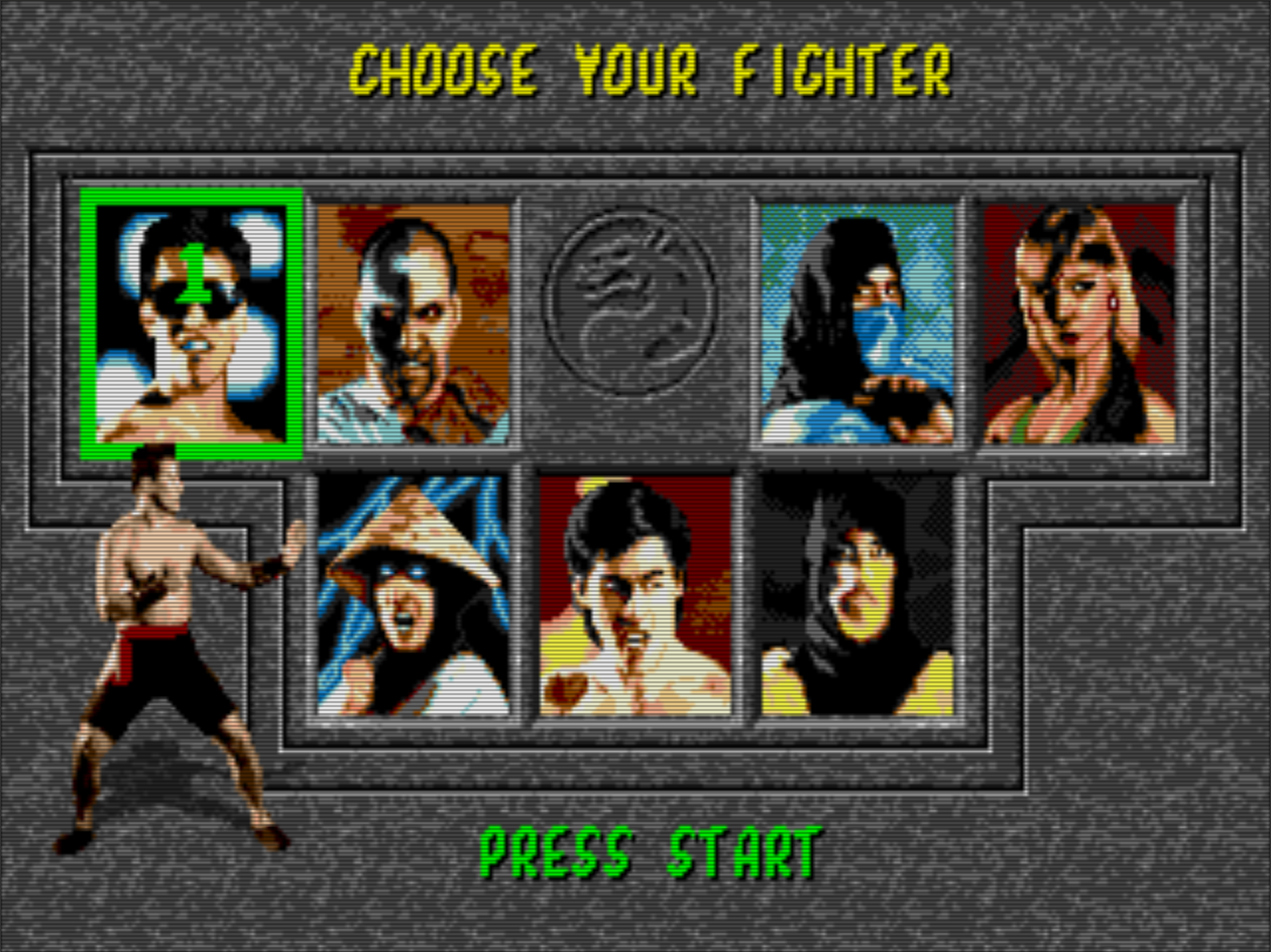
The original Mortal Kombat had seven playable characters, well... eight, if you count Repitile, which I don't, and for the most part, each one was a unique type of fighter, based on specific "martial arts world" inspirations. In the years since, the roster has expanded to 37 different fighters.
The original seven were...
- Johnny Cage, a Hollywood movie star and martial artist, who is based on the Muscles from Brussels himself, Jean-Claude Van Damme, specifically from the film Bloodsport.
- Kano, a cyborg warrior partly inspired by the Terminator, and mixed with a bit of Mark "Chopper" Reed. His Fataility of ripping out hearts was inspired by the 1984 movie Indiana Jones and the Temple of Doom.
- Sub-Zero, the blue ninja. He has ice powers, hence the name. His infamous spine-rip fatality was inspired by the 1987 movie Predator, and I‘d be willing to bet that his name comes from the 1987 version of the film The Running Man.
- Sonya Blade is a Special Forces Agent, mostly based on the martial art movie star Cynthia Rothrock, but with some classic 80's action movie heroines thrown in too, like Sarah Connor from the Terminator franchise.
- Raiden is very loosely based on a mix of Japanese thunder deities, but his look was most heavily inspired by the character "Lightning" from John Carpenter's 1986 movie Big Trouble in Little China.
- Liu Kang was originally supposed to be a Shaolin Monk-inspired fighter, but the actor apparently refused to shave his head, so he ended up becoming more of a Bruce Lee-inspired type of fighter.
- Scorpion is the yellow ninja, but otherwise looks exactly like Sub-Zero. He’s an undead demon from hell who is looking for revenge for his murder, making him a kind of Ghost Rider-type Spirit of Vengence. His human name is Hanzo Hasashi, which is a homage to the historical samurai and ninja Hattori Hanzo.
But yeah, like I said, Mortal Kombat was mostly known for its "graphic" violence, mostly due to the feature known as "Fatalities," special moves that were unique to each character. The point of the Fatalities was to kill your defeated opponent, rather than just knocking them out. At the end of a match, if the victorious player, when prompted by the game to "Finish them!" was able to hit the correct series of buttons in quick succession, depending on which character they were using, they would be able to watch a short clip of their fighter tearing the other fighter's head and spine off, or maybe ripping out their hearts barehanded, or possibly burning them to a crisp, or simply punching their opponent's head clean off…
Kids fucking loved this.
It all seems harmless and quaint now, especially when viewed with today’s eyes, and mostly highlights how the 80s and the 90s really were just a string of the most obnoxious white privilege pearl-clutching imaginable.
But because that's the way shit goes in America, the national response to the Mortal Kombat game—in a kind of proto version of the bigotry, transphobia, and Christian Nationalism that plague us today—the various creepy Christian weirdo parent groups melted down in their usual "moral panic" way, so their pet dipshit politicians seized the chance to grandstand, and held Congressional hearings on the subject of "video game violence.” The result was an almost exact repeat of the same bullshit that these assholes pulled in the 50s with comic books, leading to the creation of the Entertainment Software Rating Board. The ESRB is a generally ignorant and toothless video game rating system, but this way, if a boomer parent saw the MA-13 rating, which stood for "Parental Discretion Advised," it gave them a reason to say no, and all without having to get too involved in what their children were doing, a lifestyle which is basically the reason why there was a PSA during the 80s that famously asked: “It's 10 p.m. Do you know where your children are?”
The ESRB brought with it the illusion of taking decisive action, and in the end, that's really all the GOP small town/suburban bigot trash and their white centrist Democrat buddies wanted, so there ya' go.
BUT…
What this mostly did was to result in to creation of the now famous "blood code" when a neutered and bloodless "safe" version of the Mortal Kombat video game was released to the SNES and Sega Genesis home systems.
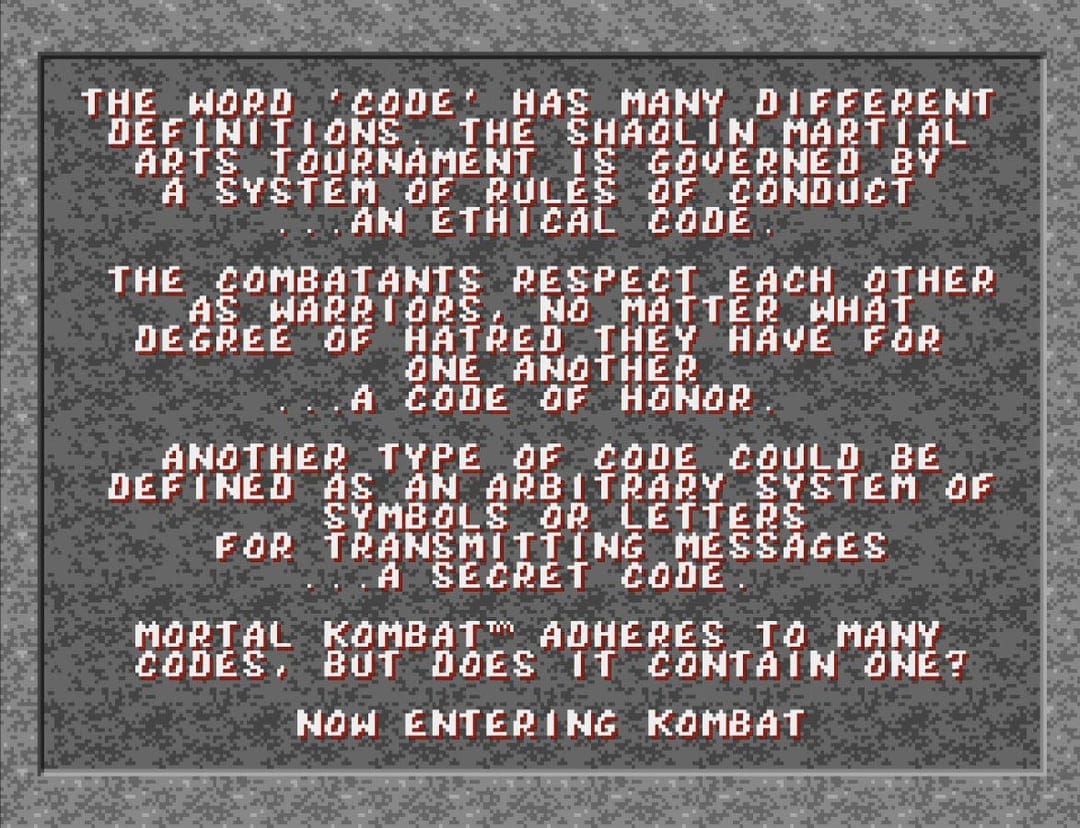
I don't know how people found out about this kind of stuff back in the day, back before the internet. Maybe it was in an issue of Nintendo Power. Or maybe it was one of those things that traveled the Kid Network, that word-of-mouth whisper web that passed knowledge, myth, and legend between kids across the country in the 70s, 80s, and 90s. Like how everyone learned to use a pencil or a battery when playing the arcade version of Track And Field, or knew about the "Nintendo Blow" with their game cartridges, or the fact that Mikey died after mixing Pop Rocks and Coke, which made his head explode.
However it got passed around... everyone knew that when you started the game, when the screen posted above appeared, you had to quickly press the buttons on your controller in this exact sequence:
A, B, A, C, A, B, B.
If you entered it right, then you would hear Scorpion yell his signature line of "Get over here!" and then the text on the screen turned red.
After that... you were free to get bloody.
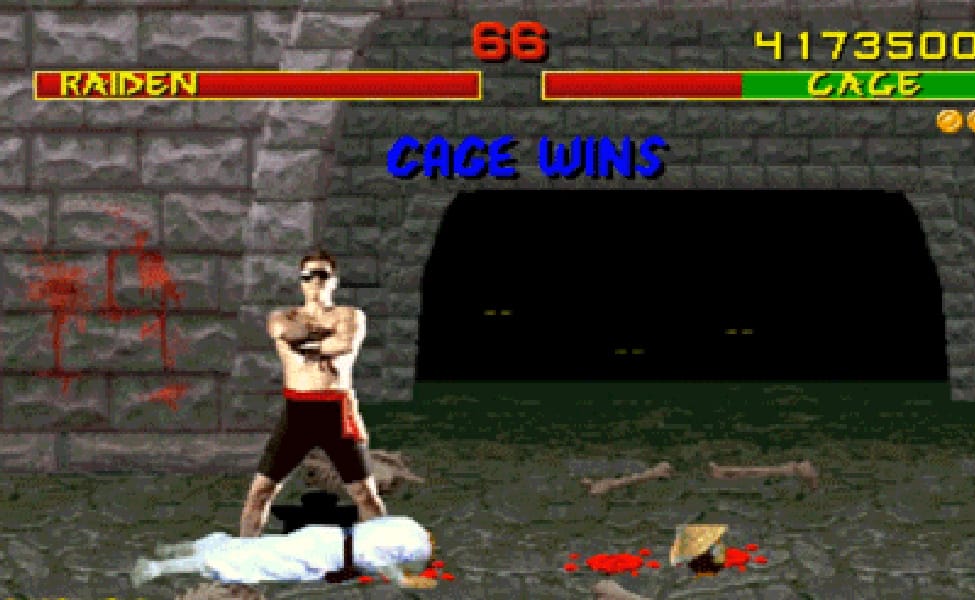
Yet another piece in the collage that was life in the wild west of Gen X childhood. "Out of sight, out of mind." Good luck, kid.
But I digress...
As for the movie… Mortal Kombat II (2026) is, of course, based upon the video-game, and it is directed by Simon McQuoid, who's main film credit was the 2021 Mortal Kombat, which was terrible. But this film us written by Jeremy Slater, who wrote the MCU Moon Knight tv show, as well as The Umbrella Academy tv show, so there's a little hope that it might actually be good this time.
Well… “good” but you know what I mean.
But that said, again, Mortal Kombat II is the sequel to the 2021 Mortal Kombat, which was so terrible, it’s gonna be hard to shake off that particular stink, so let’s call that a faint hope. This is also the 4th film in the Mortal Kombat series overall, which is a film series that, much like its video game film adaptation distant cousin, the Resident Evil film series, are all shockingly terrible, and yet… somehow they keep getting made. Benefits of being a multi-billion dollar franchise, I guess.
Side note: All of that having been said, and also definitely being true, I am very excited to see Zach Cregger's Resident Evil movie this fall.
But again... I digress, let's talk about this movie finally…
So...
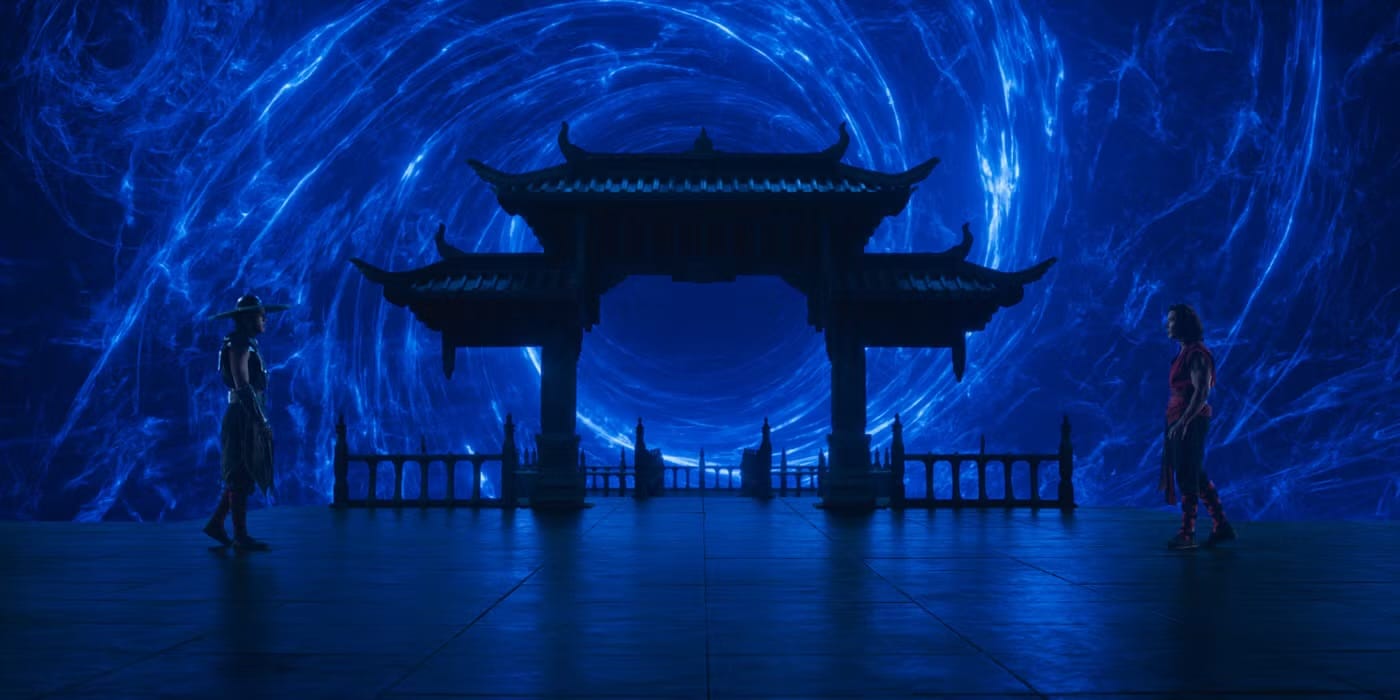
The Outworld is a place in constant turmoil. The result of an unknown number of conquered realms long ago merged into one, it is place of barren wastelands, vast deserts, high mist-shrouded peaks, and dark and dangerous forests. It is a place of monsters and magic. In a flashback, the Outworld Emperor Shao Kahn kills the noble King Jerrod in Mortal Kombat, and thus, takes over the land of Edenia in the name of Outworld. For his prize, he takes the Queen Sindel as his consort, and the young Princess Kitana as his daughter and his hostage.
Twenty years later…
The 10th Mortal Kombat tournament looms. On one side stands the Outworld, and on the other, the mortal plane, the realm of Earth. The Rules of Mortal Kombat are clear: fight. Win and live, or lose and die. Whichever side wins 10 mortal kombats in a row conquers the other side.
The Outworld has already won nine tournaments.
In preparation of the coming tournament, the Emperor Shao Kahn has the fallen fighters Kung Lao and Kano revived from the dead, so that they may serve him in the next tournament. But Kano’s wild nature will not allow him to submit, and he escapes into the wastes of the Outworld with Shinnok's amulet, a MacGuffin of mysterious power.
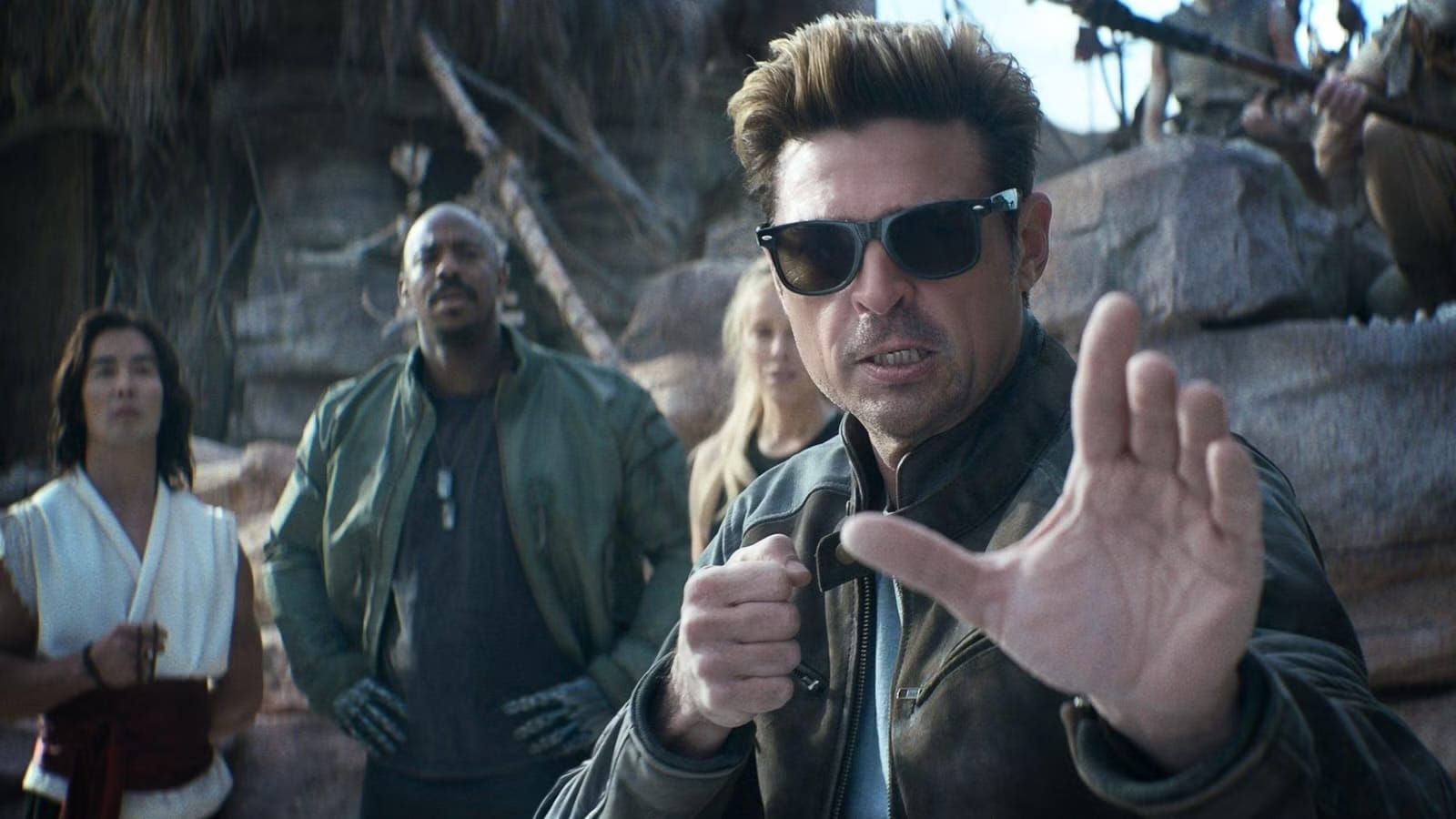
Meanwhile, in the Earthrealm, the Thunder God Lord Raiden and Sonya Blade attend a local pop culture convention, looking to recruit the once legendary martial arts movie star, Johnny Cage. They want him to fight for the Earthrealm alongside Sonya, the former soldier, Liu Kang, who is their best fighter, Jax Briggs, a big guy with robot arms, and Cole Young, nepo-baby son of the now dead ninja, Scorpion. They’ll face the warriors of the Emperor Shao Kahn, which include the pair of dark sorcerers, Shang Tsung and Quan Chi, Bi-Han, the shadowy wraith once known as Sub-Zero, the corrupted Kung Lao and Queen Sindel, and her beautiful and deadly daughter, Kitana, and Kitana’s bodyguard, Jade… But unfortunately, Johnny Cage is now a sad and washed up action hero, bitter at finding himself cast aside in a world of TikTokers and YouTubers.
He refuses the call.
But then changes his mind.
The tournament begins, and in the first round, Sonya faces a corrupted Queen Sindel while Johnny Cage faces the now grownup Kitana. Sonya manages to kill Sindel, but while Kitana defeats Johnny, she spares him, revealing herself to be a spy for Lord Raiden. Her bodyguard Jade isn’t happy about her not killing Johnny Cage though. Meanwhile Quan Chi recovers Shinnok's amulet from Kano for Shao Kahn. At the same time, the corrupted Kung Lao ambushes Raiden, allowing Quan Chi and Shang Tsung to drain the Thunder God’s power into the amulet, and bind it to Shao Kahn, making him immortal, which is something that the amulet does.
As a result, Raiden falls into a magical coma, as you do.
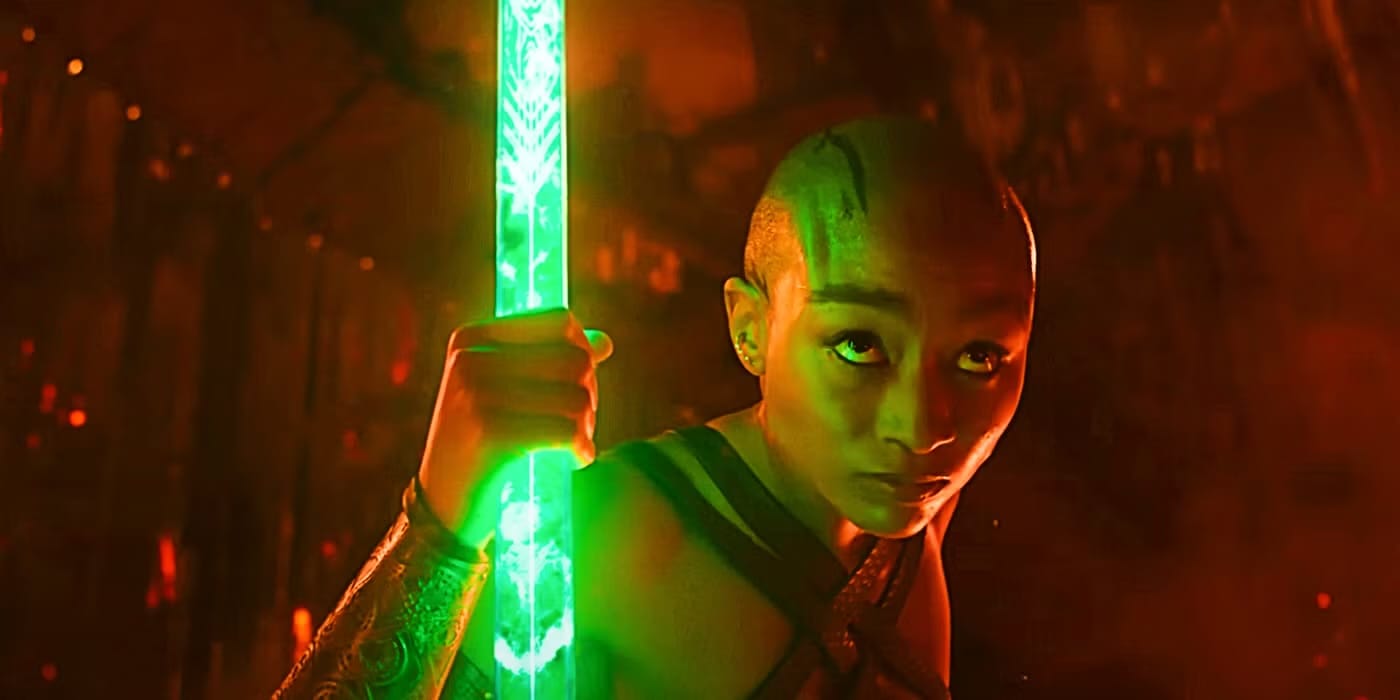
The second round begins with Liu Kang and Kung Lao facing off. Despite his efforts to redeem Kung Lao, Liu Kang is forced to kill him. Jax fights against Jade and defeats her, but spares her to repay what Kitana did for Johnny. Cole Young manages to mortally wound the Emperor Shao Kahn during their fight, but his wounds heal instantly, and Shao Kahn kills him, because he’s a d-tier nepo baby, and an uninteresting character with an ugly design and a boring power-set.
Realizing they cannot defeat Shao Kahn while he holds Shinnok‘s amulet, Liu Kang, Jax, Sonya, and Johnny Cage travel to the home realm of the Tarkatans, for reasons that mostly seem to be “we need to have another popular character appear in this story.”
That character is Baraka.
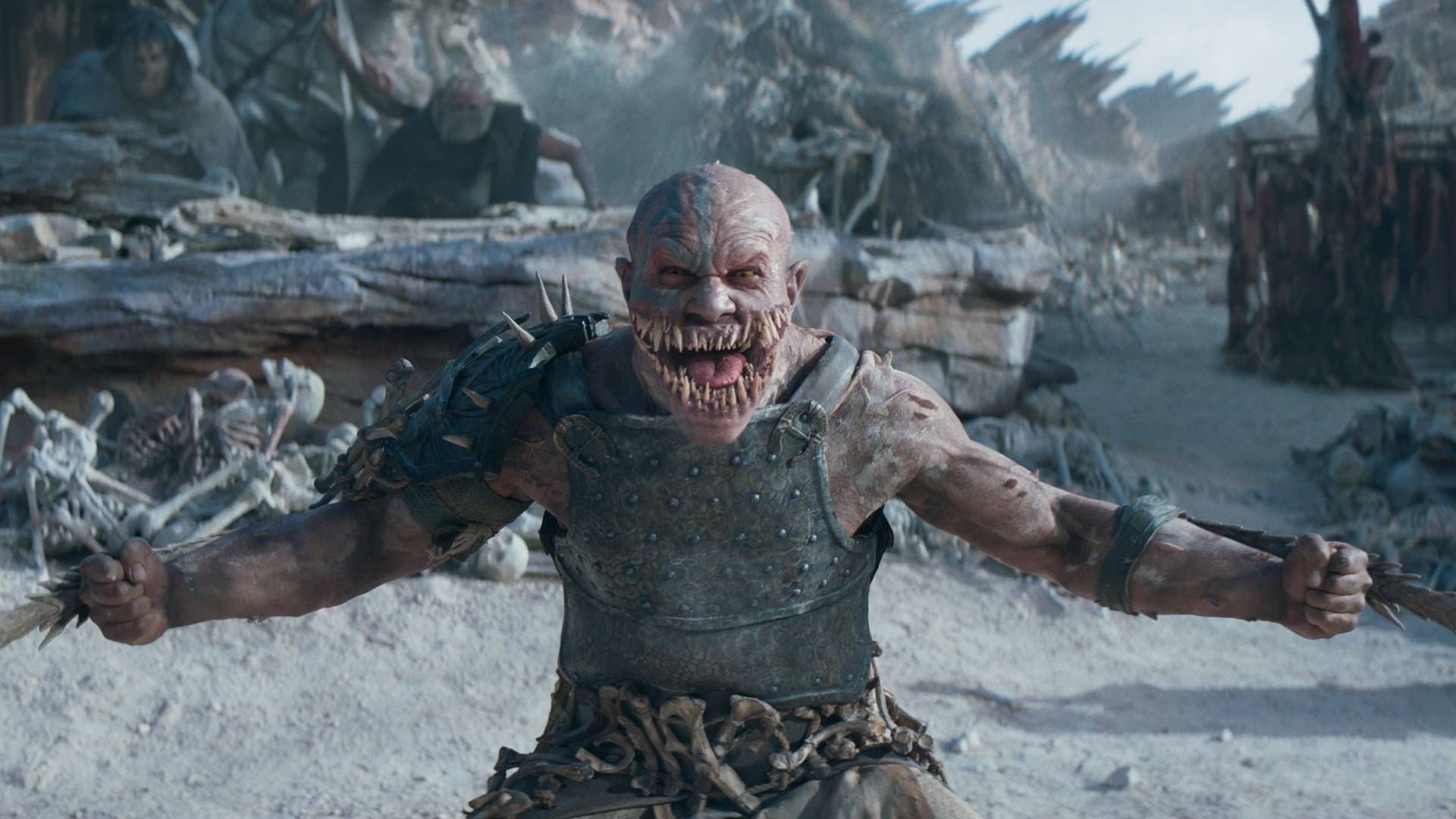
Johnny defeats the toothy man-monster in one-on-one combat, regaining his confidence and earning Baraka's trust, who then guides our heroes to a hidden entrance below Emporer Shao Kahn's palace, and then Baraka exits stage left.
Meanwhile, Kitana is betrayed by Jade, and exposed as a spy, and Shao Kahn chains her up in the public square in a very sexy bondage kind of way. Our heroes try to steal the amulet, but are repelled. Jax is killed by Shao Kahn in the attempt when both Sonya and Liu are suddenly teleported away for the final round of the tournament. Kano, preferring the luxuries of the Earthrealm over the wastelands of the Outworld, saves Johnny Cage, and after they escape, he reveals that Bi-Han is hiding in the Netherrealm with the amulet. Rousing from his coma, and using what little power he has left, Lord Raiden sends Kano and Johnny to Netherrealm, ordering them to destroy the amulet.
In the final round of the tournament, Shao Kahn fatally wounds Liu Kang, who realizes that he is not the chosen one. Liu Kang evaporates into fire as he declares that he will rescue the fallen. Sonya frees Kitana before being knocked out by Shao Kahn, which apparently makes him winner of the 10th Mortal Kombat in the name of The Outworld, but to be fair, this whole thing has been really loosey-goosey with the scoring. But that doesn’t matter, I guess, because then Kitana announces she’s switching sides, in much the same way Micheal Scott declared bankruptcy in The Office, which is apparently allowed? Anyway, the Earthrealm now has one more champion.
Kitana fights Shao Kahn one-on-one.
Meanwhile, Johnny and Kano team up with the spirit of the ninja Scorpion, and also a reformed Jade, as they fight Bi-Han. During the fight, Johnny‘s powers are unlocked, and he shadow-kicks the hell out of B-Han, destroying the amulet, thus making Shao Kahn mortal again.
Kitana kills Shao Kahn, and becomes queen.
Meanwhile, Shang Tsung attempts to kill Raiden, hoping to take him out in his weakened state, but with the amulet's destruction, the Thunder God has returned to full strength, and Raiden destroys Shang Tsung.
And they all live happily ever after.
Until the next Mortal Kombat tournament…
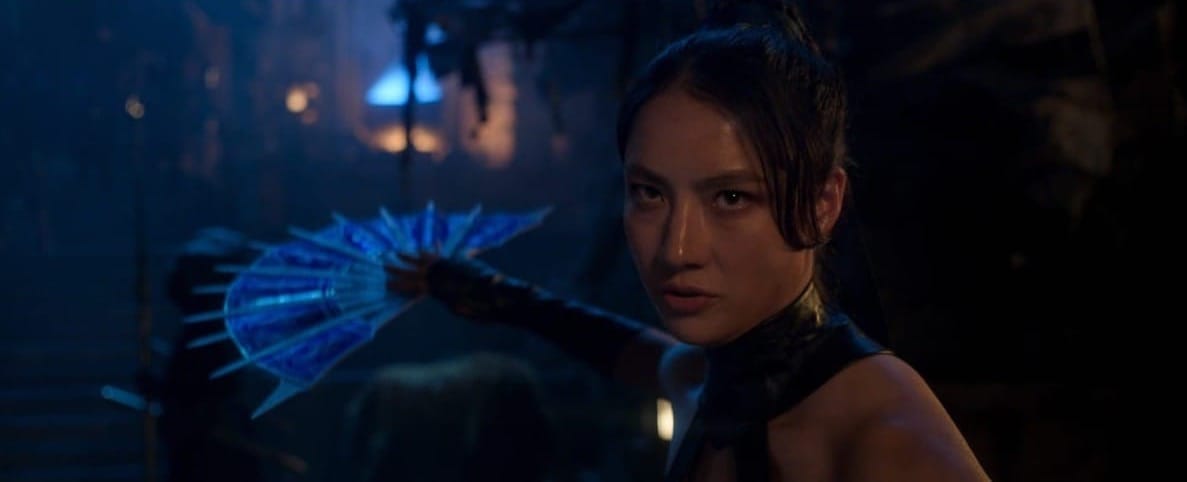
So, was Mortal Kombat II (2026) any good?
Asking whether or not the story was “good” in a Mortal Kombat movie, is a lot like asking if the story is “good” in a Mortal Kombat video game.
Literally no one cares, bro.
When it comes to a movie like this, you're either here because you still rock out to that kick-ass theme song in your tuned-up six-second Honda Civic with the dragon wrap and the bright neon green ground effects, OR… you were drugged, and were then woken up suddenly by the blaring theme song to find that you were somehow sitting in a darkened movie theatre.
But if you’re really curious…
While this definitely a sequel, but not so much that the filmmakers are willing to make too much of a big deal out of it—because as I said, the previous film was not just terrible, but the most common complaint from actual fans was basically "Hey, you forgot the Mortal Kombat in your Mortal Kombat film"—the plot here is pretty much a Galaxy Quest type thing meets a fantasy fighting tournament, with Johnny Cage as the eyes through which we see this world. Other than that, the movie does what everyone wanted from the first film, but didn’t get, so there is a lot of martial arts on display, and all done through a Mortal Kombat Easter Egg lens. This isn't a good film at all, in fact, it’s definitely a bad movie, but it’s bad in all the right ways, so if you like Mortal Kombat, you'll at least nominally enjoy this film.
This one is for the fans, y’know?
That said, even if you’re not a big fan of the Mortal Kombat franchise, Karl Urban is almost reason enough to check this film out. He’s pretty fantastic as the washed up loser that’s still got it, Johnny Cage. But then, Karl Urban is always fantastic. A staple of genre cinema, and an under-appreciated great, Karl Urban is best known as Eomer in The Lord of the Rings movies, Billy Butcher in The Boys tv show, Skurge in Thor: Ragnarok, and for playing multiple roles in the classic show, Xena: Warrior Princess, amongst many others. But for my money, Urban’s best roles are as Judge Dredd, in the movie Dredd, and of course, Dr. Leonard “Bones” McCoy in the Abrams’ Star Trek films. His Deforest Kelley is so shockingly perfect, I was flabbergasted. Bones McCoy wasn't a character that I really thought of as having a specific voice and mannerisms, but as soon as KArl Urban starts speaking as him in that first Abram's Star Trek, I realized how incredibly wrong I was. He nailed it. Johnny Cage doesn't quite reach those particular heights, but still, he's fun.
But seriously, if you aren’t a mega-fan of this franchise, or an action movie junkie, or if you weren’t already at least half-interested after hearing ”Karl Urban stars as Johnny Cage in Mortal Kombat II,” then this is not a film that I'd recommend to you. If that's the case, don’t bother.