Night Patrol
“Looks like we all carvin’ up swine tonight!”

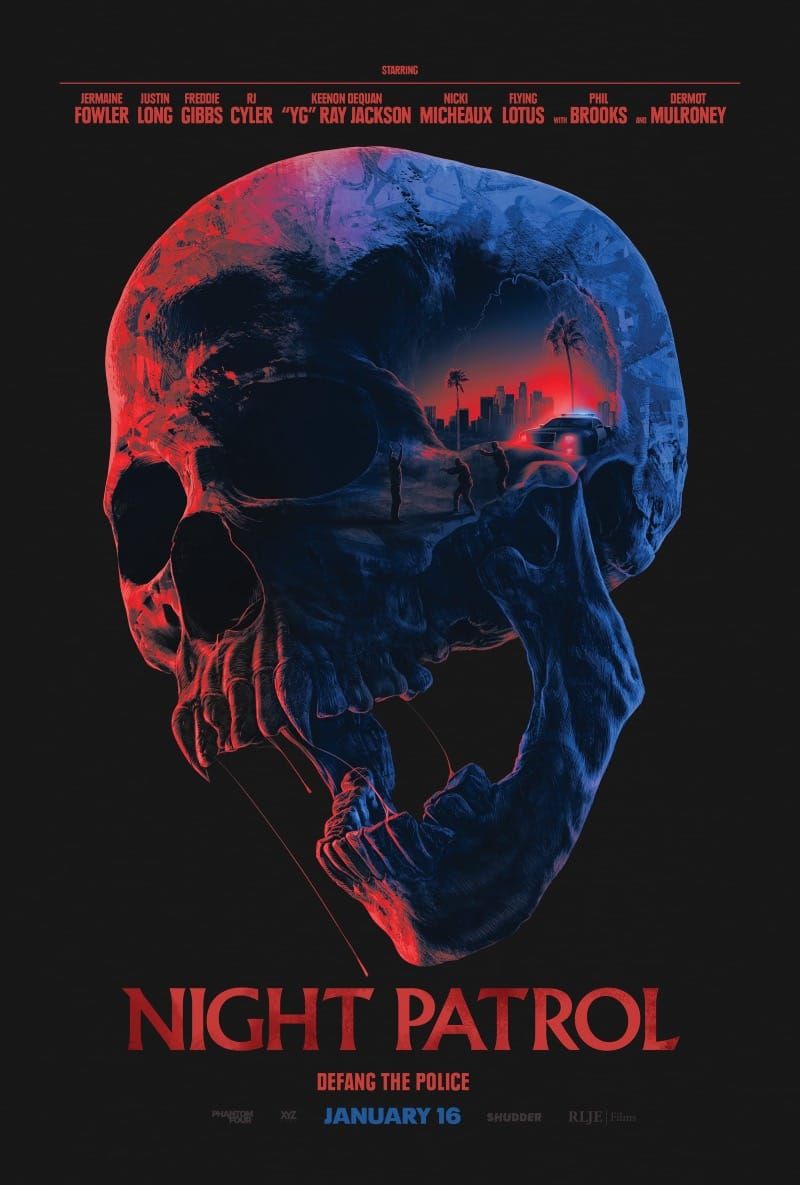
A pair of LAPD officers and a young gang member discover an elite police task force is actually a gang of bloodthirsty vampires, who use the power of both their badges and their vampiric natures to turn disenfranchised neighborhoods into their personal feeding grounds.
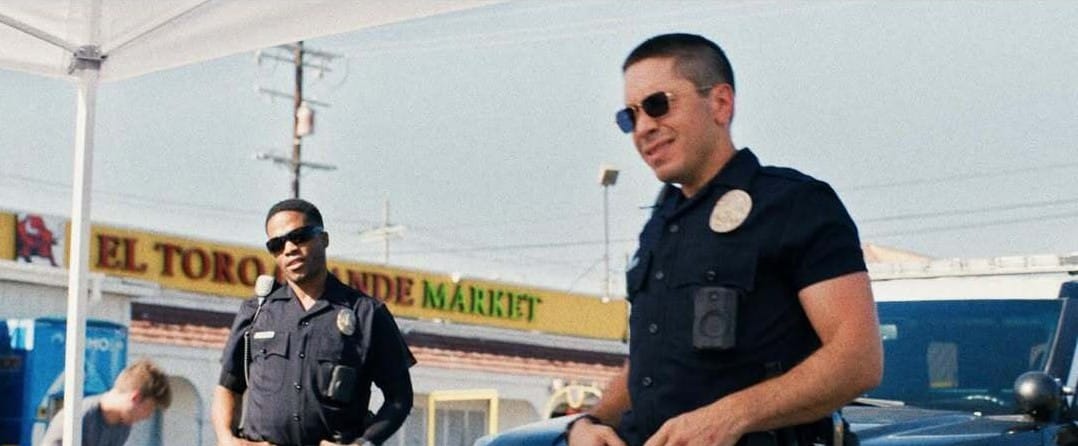
Directed and co-written by Ryan Prows, Shaye Ogbonna, Tim Cairo, and Jake Gibson, Night Patrol had its world premiere at Fantastic Fest last year, before being released here in the United States in January. And while it's fair to say that the festival has struggled with various controversies and detrimental changes over the past few years, and the Nerd Elder in me demands that I sniff with disdain and say that it is no longer the festival that it once was, if you know Fantastic Fest, then you'll know what I mean when I say that Night Patrol is definitely a Fantastic Fest film. For the rest of you regular folks, saying this means a movie is funny, bloody, transgressive, and probably not all that ready for Primetime. That means that it's basically right up my alley.
So, surprise, surprise, my general overall response here is going to be that Night Patrol is a good time, and that, even if it doesn't quite deliver on its "fantastic" premise, it’s worth checking out.
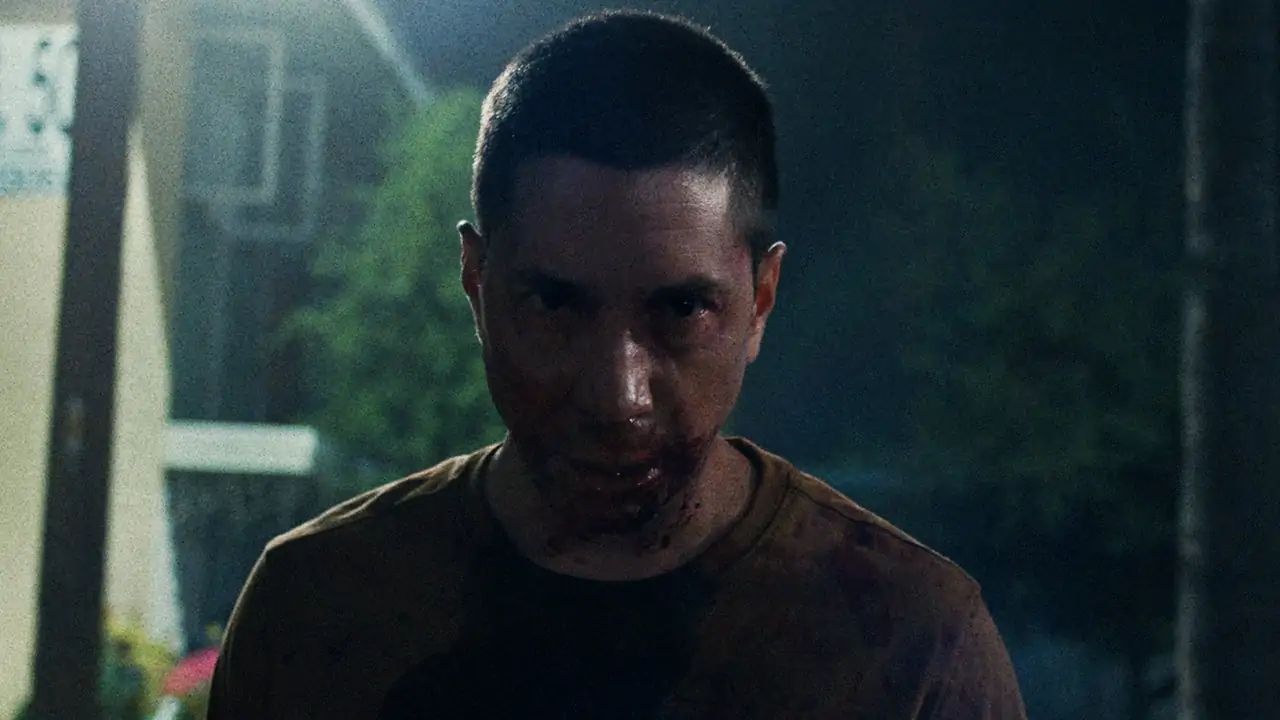
This is especially true if you're a fan of Vampire movies... which I am.
Bram Stroker's Dracula, Lost Boys, Near Dark, Let the Right One In (both versions), Blade, Blade 2, Only Lovers Left Alive, Nosferatu, 30 Days of Night, From Dusk til Dawn, A Girl Walks Home Alone at Night, The Monster Squad, The Last Voyage of the Demeter, The Last Man on Earth, Omega Man, Stake Land, Daybreakers, I Am Legend, the one where Alyssa Milano is naked, all the various Fright Nights, John Carpenter's Vampires, Afflicted, Doctor Sleep, Blood Red Sky, Byzantium, Night Watch, El Conde, Abigail, What We Do In The Shadows, Boys From County Hell, The Vourdalak, and obviously, the all-timer, Buffy the Vampire Slayer, both the movie and the TV show, but especially the TV show. Sinners too, of course. Obviously. Also, I'm watching From right now too, which is really great.
They're just good times. Vampires are good times.
Whether they are fun and frivolous, dark and scary, or exciting and adventurous, vampires are one of the oldest staples in horror, and a big part of the reason why is how malleable they are. As a concept, they can be inserted into any genre, any time period, any situation or setting. Best of all, much like the zombie genre, they can also be used to highlight prevalent fears of society or social ills.
In Night Patrol’s case, that particular social ill is not just systemic racism, but specifically white America’s personal violence concierges, those knights of white supremacy, those proud Brownshirts of white Nationalism, the violent arm of the violent aims of white America, pulled from a hiring pool almost exclusively made up out of the dumbest kids you went to high school with, and the most ate-up guys you served with, each eager for the chance to apply their spectacularly undeserved power of life and death based on their most vindictive and petty of whims, all as part of a profession that originated out of slave catcher patrols...
Cops.
It is a subject ripe for the skewering...
Still, bad luck having your movie about vampire cops come out right now.
After Sinners dominated 2025, really bringing vampires back to the forefront of pop culture with its examination of white supremacy and the Black experience in America, it's gotta be hard to walk potentially the same ground, but with less star power and money. So I was interested in seeing what Night Patrol would do with vampires in this context. How had Sinners’ success affected creative decisions with this film? After all, the reality of police brutality, extrajudicial killings, and regular human rights abuses at the hands of law enforcement are topics that are definitely on people’s minds currently, especially as the pure distilled essence of the absolute worst kind of person to wear a badge are either snatching people off the streets or stalking the security lines at our airports. It’s so prominent honestly, that the idea of cops as vampires seems natural. After all, they’re clearly out there hunting for blood in a metaphorical sense, so why not make it literal too? The metaphor feels so natural, it almost feels too obvious, almost like low hanging fruit even. So, in light of this, and the shadow being cast by Sinners at the moment, would Night Patrol have anything new to add to the discussion? I was interested in seeing.
And that's why vampires are so fun.
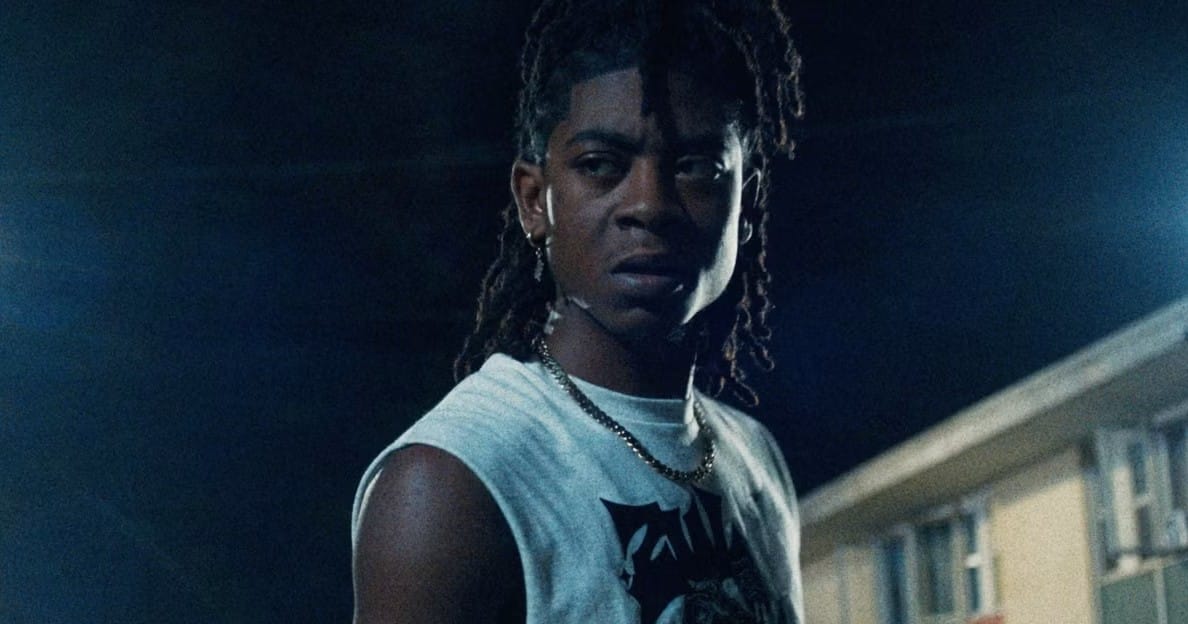
And so we begin in Los Angeles, a city run by three gangs: the Zulu Crips, the Piru Bloods, and, of course, the biggest, most well-funded gang of them all... the LAPD.
We are quickly introduced to four characters...
Wazi is a Crips-affiliated young man and petty criminal. He's secretly hooking up with Primo, a Blood-affliated young woman. They park in her car, away from the rest of their world. He tries to give her a ring as a token of love, but she turns him down, mocking him for not understanding what their relationship is. And then the cops show up, looking to hassle Primo. They yank her from the car, and then one of the cops executes her. Wazi runs, and a cop chases, but when he is cornered, and the cop is about to shoot him, the ring he tried to give Primo, now on his own finger, glows green. The cop hisses and runs off.
(Unfortunately no, this is not a story about a Green Lantern versus vampire cops... we don't get beautiful things like that, not in this time line.)
The cop that executed Primo was Ethan Hawkins, the white son of a legendary white LAPD cop, who died in the line of duty years ago. Ethan is a patrolman with the LAPD, cruising the streets or LA, stopping and frisking, harassing citizens, and shaking down local food trucks for free food. His dream is to join The Night Patrol, an elite unit within the department that patrols the LA streets at night, focusing on gang activity. The night he shot Primo, he was riding along with Night Patrol, and her murder was part of his initiation into the group. He spotted Wazi's bike at the scene that night, and saw that it had a sticker that said "GamerBoi" on it. Later, he asks his partner if he knows anyone on the street who uses that name.
Ethan’s partner is Xavier Carr. A Black LAPD officer, Xavier is also Wazi's older brother, and he used to be a member of the Crips gang himself, like his father was before him. Now he has left that world behind, turning his back on his people and his past. He works hard to be thought of as a loyal, ”all in” cop, to win the approval of his superiors and fellow cops in the hope of rising in the ranks of the police, and to be fully accepted as one of them. Xavier has no idea Ethan has been riding with Night Patrol after their shift, let alone that he's about to become one of them, and when he finds out, he's jealous. But when Ethan then asks him about "Gamerboi," he gets worried. He still cares for his little borther, and he doesn’t want the cops to get ahold of him, because he is both a cop and a Black man in America, he knows what that would mean. But Wazi is not answering his phone, so he calls his mom.
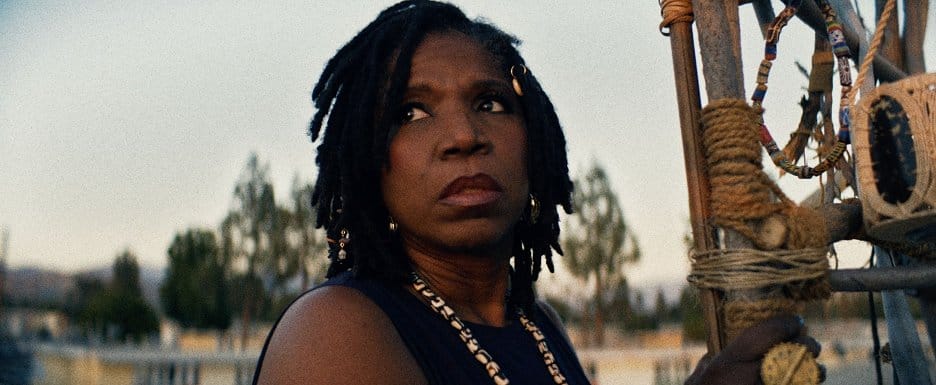
Xavier and Wazi’s mother is Ayanda Carr. The wife of a long-dead Crip, she is a rebellious revolutionary who has little time for white America, and even less for the cops. She is well-aware that there are vampires in the LAPD, because Ayada is also a mystic, and a caretaker of their ancestral legacy of supernatural lore, so she is well-versed in how to deal with them. But her war with the vampires of LA was shut down years ago with the death of her husband, and, in order to survive, and to keep her young boys safe, she promised to pack away her weapons and knowledge and keep it all to herself, and within the housing projects.
When Wazi finally comes home, Ayanda discovers that he has her green-glowing anti-vampire ring, and she’s pissed that he took it without asking her. She knows what this means too. It means that trouble is coming, because now the vampires think she broke their deal, so they're going to come for her and her family.
Now Ayanda needs to get ready for a war.
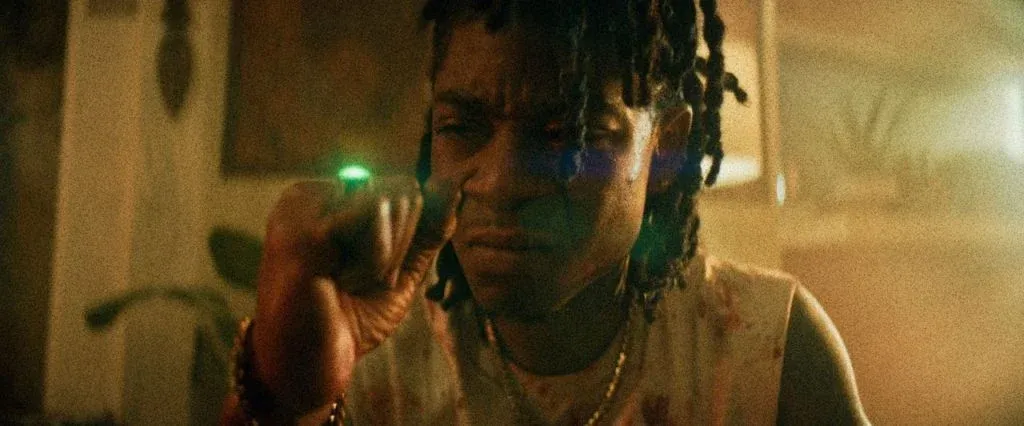
Meanwhile, the Night Patrol task force is out there killing gang members and making it look like it was the work of rival gangs, hoping to stoke a gang war. Why? So that they can then invade the Projects under the guise of "keeping order" while harvesting vats of blood from people that polite society considers to be criminal trash, and thus deserving of whatever brutalization the cops visit upon them.
While Wazi is trying to avoid the cops, and Ayanda is getting ready for her war, and Xavier is trying to prove his value to the LAPD so that he can become a part of the Night Patrol, even if it means sacrificing his own brother, as well as any hope of ever having a relationship with his mother again, Ethan is being inducted into the Night Patrol Task Force. This means being turned into a vampire.
It's at this point that we learn a few things about the Night Patrol.
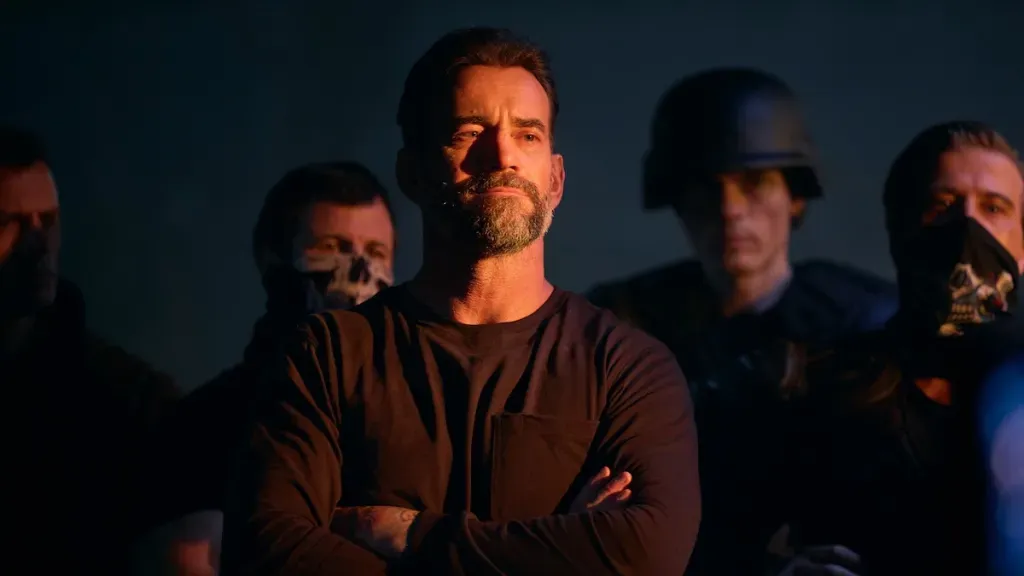
One... As I mentioned, they really are vampires.
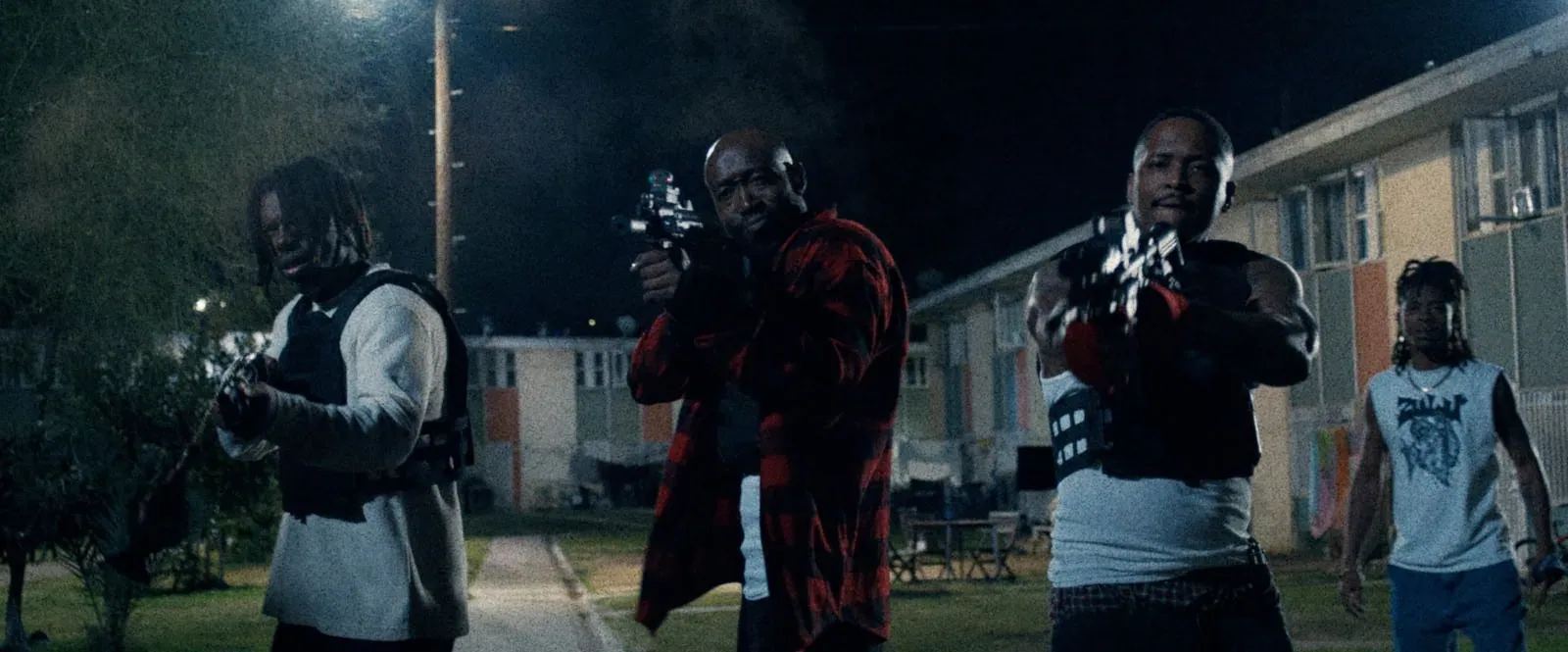
Two… Night Patrol is basically just ICE Agent central casting, nothing but the usual motherfuckers, square-jawed squareheads, all either shaped like pears or upside down triangles, just your typical cop culture douchebags... Oakley shades, tribal thorn tattoos, face masks adorned with skulls, an embarrassing amount of battle rattle, their thumbs perennially hooked in the arm holes of their tac-vests.
Three… the Night Patrol task force is lead by an infamous, rarely seen, shadowy figure known as The Sarge. He's not only the one who is going to turn Ethan, but it turns out... The Sarge is actually Ethan's long dead father.
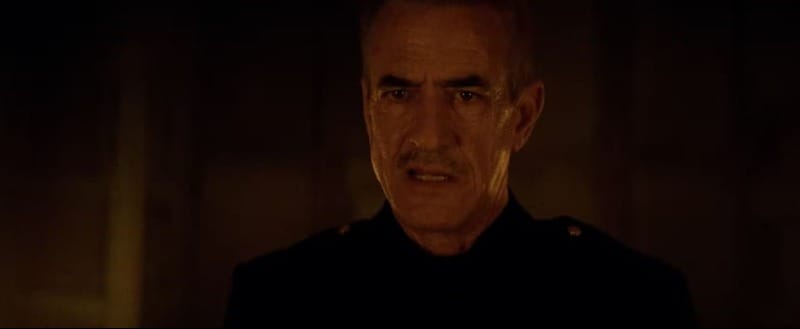
The Sarge believes the police stand at the fine line between civilization and the unwashed. This is basically the meaning behind what is known as the “Thin Blue Line” flag, which is a US flag rendered in black and white with a single blue stripe across the middle. Much like MAGA gear, or voting for Donald Trump, or agreeing to have "no politics" holidays and hang-outs with Trump supporters, it's basically a central piece of white American bigot iconography, and the preferred flag of white Christian Nazis, so basically, anyone you see displaying the suburban swastika is telling you that they are an avowed white supremacist. This is undeniably true, and anyone who tries to tell you differently is either deliberately avoiding talking about the fact that the black stripes are meant to represent “chaos and anarchy” and the white ones are supposed to represent “justice and order," OR… they’re ignorant of this meaning, and yet for some reason are still defending a known symbol of hate and disrespect as something innocent and well-meaning, almost as if bigotry is an instinctual feature of their culture, OR… they're defending this racist rag simply because their dad happens to be proudly flying one in front of his house.
Who can say for sure?
But all that aside, in case the metaphor for the vampires in this film wasn't already obvious, it really should be pretty crystal clear to you now.
So…
Finally, the sun sets, and the Night Patrol invades the Projects, blood crazed and looking to cleanse the streets, with all the power of the System backing them up. Ayanda and a small army of Crips and Bloods await the cops, armed with guns and steel and Zulu magic. A war breaks out with Wazi, Xavier, Ethan, and the residents of the Projects caught in the middle. In the end, we learn that the LAPD is just the tip of the spear, and the vampire conspiracy runs much deeper.
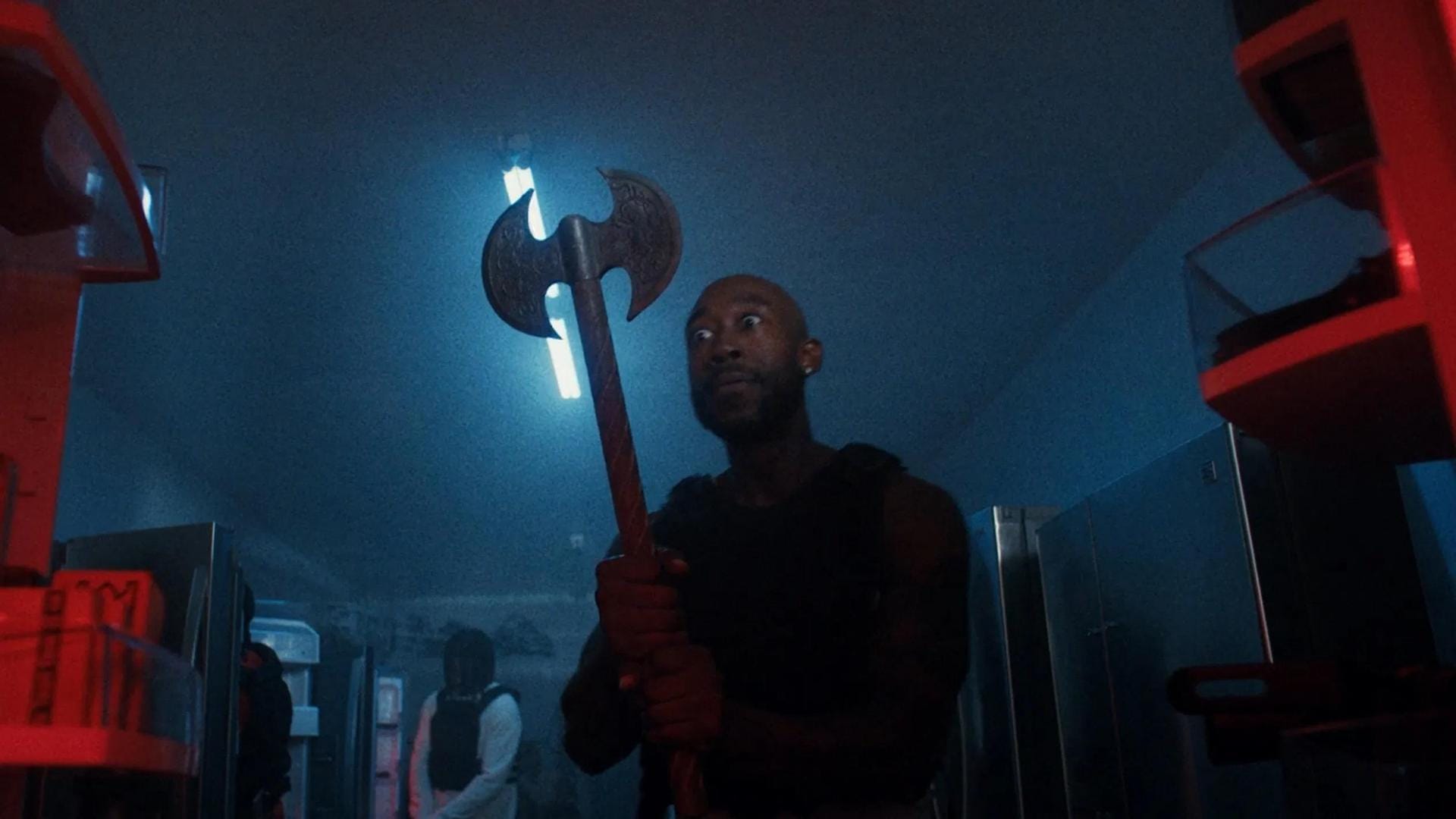
Night Patrol is like Near Dark meets Training Day meets Friday.
One thing that I liked about this film is that our “hero” cops aren’t heroes at all. They murder, they steal, they break the law, they’re both a pair of cowboy assholes, nothing but swaggering dicks with guns and badges and a license to be shitheads. They're both shown brutalizing people. Both come from violent pasts, one from the street gangs, and the other leaving his war crimes in the military for the homicidal PMC mercenary cesspools like Blackwater, but these pasts are not used as excuses. They both shown to have agency, and they're both shown making choices, and they are given plenty of chances to show who they really are. The film doesn’t shy away from the answers either, and that is that there are no good cops, only sell outs and monsters, and in the end, cops protect cops, always. Early on, Ethan is speaking at a school assembly, where he trots out the "few bad apples" lie, and that this is after we've seen him shoot a young woman in the back of the head is a perfect refutation of that bullshit, showcasing how rotten and toxic cop culture is. I appreciated the film’s refusal to indulge in copaganda or undeserved redemption arcs.
Of course, at the same time, while neither one of our "hero" cops are actually “good” people by any means, they’re also not vampires–at least at first–so to be fair, they do have that going in their favor. Because in this film at least, like cops, there are no good vampires either.
Like cops, in the end, vampires protect vampires.
Night Patrol turns out to be a pretty effective metaphor about police targeting Black communities, but as I mentioned , that's a pretty easy one to make simply by combining these two topics, so good job hitting the underhand pitch, I guess. That said, the LA culture featured throughout the film does add to the film's aesthetic, giving this tale of systemic racism and blood-drinking monsters a strange sense of authenticity. I also really enjoyed the Zulu mythology being tied into the vampires, pulling from stories of West African creatures like the Asanbosam, which were said to have iron teeth, and to hang in trees waiting for its prey. The way the vampire police then used metal fang-grills instead of having actual fangs themselves was a nice new vampire detail. And the big fight at the end, though obviously a victim of the film’s small budget, was still pretty fun.
I also really liked how the ultimate message of the film was that if you fight the system, well… they're probably gonna get you eventually, but that doesn't mean you should back down.
There were a few issues, of course.
Night Patrol is a fun film, but still, it doesn't quite work. So if you're going to sit down and watch it, you're going to have to be a little (or a lot) forgiving. Mostly, ithe issues are obviously due to the small budget, a classic case of eyes being too large for stomachs. What're you gonna do about that? It happens. But at the same time, some of the little issues are hard to ignore. The slo-mo running, for instance, is… not impressive. And the chapter titles were kind of annoying too. The structure of the story didn't seem to demand them at all, so they were just pointless stylistic flourishes. This isn't automatically a bad thing, it's just that they didn't mesh with the rest of the sylistic flourishes.
But the main problem is that the film feels unfinished.
I’m not sure where the time went, Night Patrol is around an hour and 44 minutes long, but the film ends up feeling both overstuffed and underserved. Part of this is clearly the reality of filming in LA with a small budget, where time and money just runs out, but part of it is clearly just missed in the script. Regardless, what you end up with here is Wazi, Xavier, Ethan, and Ayanda’s stories all felt thin, the climaxes of the film itself, as well as their individual stories, all felt like they were blown past too quickly. In short, the bones are all there, it’s the meat that sometimes isn’t.
Like for instance, in the lead-up to the big climatic battle, Ayanda has Wazi hand out literature to the residents detailing the vampire problem and how to deal with it, which the residents laugh off. What was in these pamphlets? Was it more truth than crazy, or vice versa? Why wasn't there a pay-off where the residents ended up using that knowledge, or getting punished for ignoring it? Who knows. During all of this, we also see Ayanda and Wazi putting up these lattices and woven-looking items hung with various magical fetishes, like beads and feathers and crosses and whatnot, on the roofs of the apartment buildings and around the housing project‘s gates. From the context of the story, these are obviously some kind of Zulu magic, an anti-vampire ward of some king. But what kind? And to do what? Who knows. Despite clearly being important, Ayanda never explains any of it. And then, when the vampires do show up, they don’t seem to have any issue with these things and just knock them aside. Now, it’s not clear, which is a whole other problem, but this might have been because there were human cops working with the vampire cops, because Ethan had no trouble with it earlier in the film, but the film never explains any of that enough so that when the cops do knock the lattices aside, it just seems weirdly impotent, like it just undermines Ayanda's power, like... yeah, she's right about there being vampires, but all the rest of the shit is nonsense. And I don't think that was the film's intention.
Maybe it's just me, but shit like this gets in the way when you’re trying to enjoy a fun and gory little vampire movie.
Plus, there's obviously topics like police brutality, gang culture, cop culture, local cultural twists on Christianity, and the prevalence of conspiracy theories within under-resourced communities due to the lack of public education funding, that are a part of this movie, and it’s all touched on, but it's never any more than "touched on" and that is disappointing. Or, for instance, the whole point of the film's ending is the reveal that the entirety of the LAPD is aware that there are vampires in the ranks, and they are not only fine with it, this is in the service of a larger conspiracy, but the film only takes the shallowest of swipes at this, and then it rolls credits.
In fact, the ending is so hurried, and seems so off-handed in the telling, so perfunctory in the way it was shot, that it really highlights that feeling that the filmmakers were simply out of time and money, so they just wrapped it up. And that sucks when that happens, and sometimes it's out of the filmmakers' hands, but still... the whole film then ends up feeling like it was taken out at the knees. I don't know what happened, but I can't imagine an artist being satisfied with that end product. Sometimes it's just not done, even if there's no money or time left. Sometimes no cake is better than undercooked cake, y'know?
But all that having been said, I can’t deny that the film has a good message.
Subtle or not, what the film has to say about the importance of community is something that these past few months especially have shown us to be right and much-needed. So there's that.
Despite a maybe overstuffed, yet underserved script, and some obvious budget-related issues, Night Patrol is a great premise, with some really good effects, and some good performances. And there are times when it's really great. There's some real potential here. It’s also an accurate depiction of how the open racism, a toxic “warrior” culture, and the La Cosa Nostra-like policy of Omerta infecting modern police departments is a huge problem. As is the way that police departments often think of citizens as hostile natives in a foreign territory they are occupying, instead of a community they are supposed to protect and serve, and how the police are the ones who get to decide who is a "good" citizen, and how any suggestion that this is a problem is viewed as a direct attack on them, the “good” guys… In the end, Night Patrol definitely very effectively lays out all of the reasons why the police are such problem in American society.
As an obvious child of greats like George Romero, Wes Craven, and John Carpenter, filmmakers who also weren’t afraid to weave pointed social critiques into their stories of monsters and mayhem, Night Patrol is pretty decent. Despite how it may sound here, the film is much better written and executed than you'd expect. And it's often really fun and funny. I’m looking forward to seeing more from writer/director Ryan Prows.
If you’re a fan of vampires movies, this is worth checking out.