The Secret Agent
“Our story is set in the Brazil of 1977, a period of great mischief.”

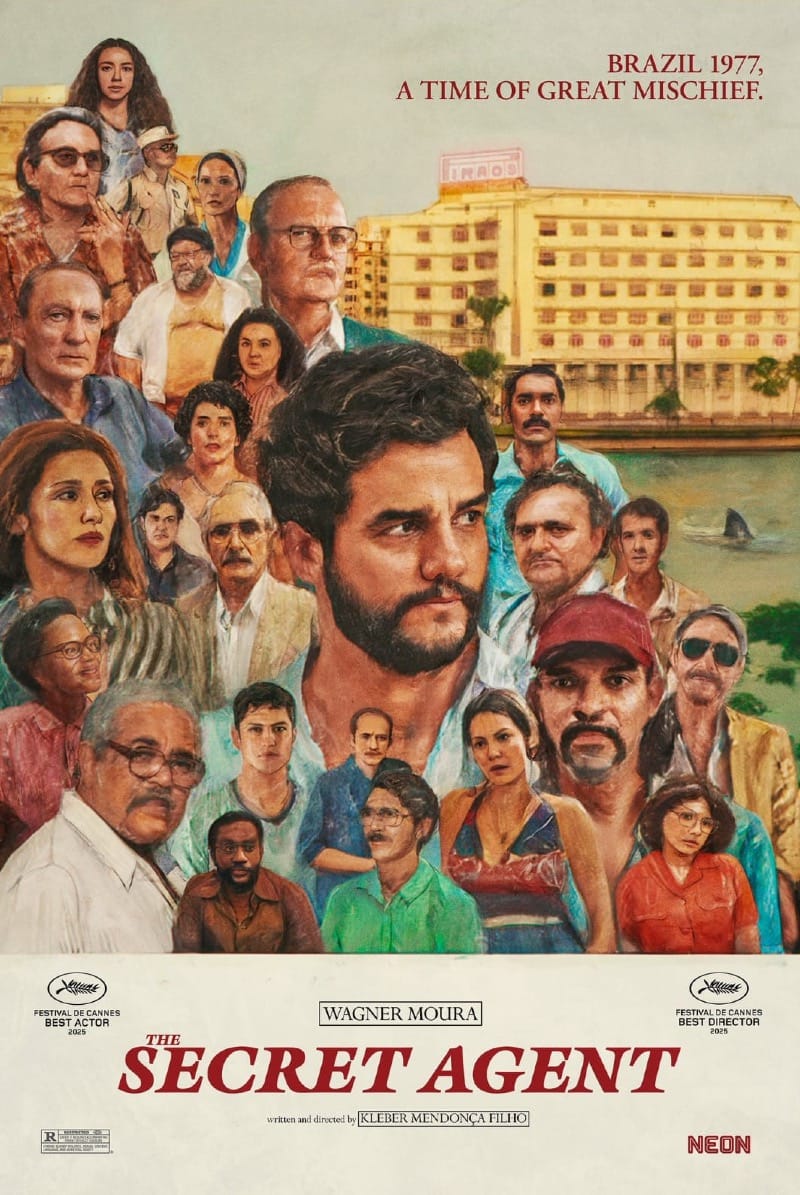
On the run, after becoming the target of a violent dictatorship, a man attempts to flee persecution by the authoritarian regime that rules Brazi.
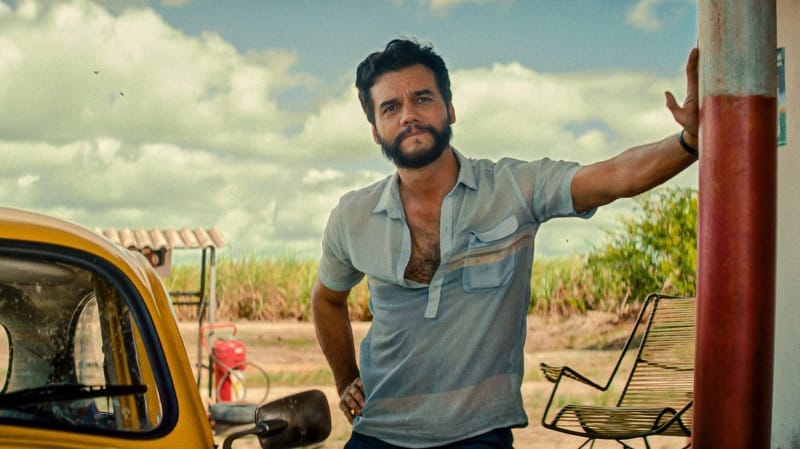
The Secret Agent is a slow-burn historical political thriller that was written and directed by Kleber Mendonça Filho, a Brazilian native, an antifascist, and a former film critic, who became a film director.
Thematically rich and visually arresting, the film is said to have been inspired by the New Hollywood film movement of the 70s, films from Mendonça's childhood by names like Altman, De Palma, Peckinpah, Scorsese, Spielberg, Coppola, all them guys. This is obvious as you’re watching, as the film replicates that era’s style, apparently even using the same kind of Panavision anamorphic lenses and vintage camera equipment of the time. This is just a small part of why The Secret Agent is such an incredible film. This is a film that is so clearly personal to Mendonça, rooted in who he is and where he comes from. It is an ode to his childhood, to the films that inspired him, and to the country of his birth. It is such a fantastic film, the simple fact of its existence alone exposes the idea that such a dunderheaded piece of trash nonsense like F1 might somehow be in competition with it for the complete joke that it is.
I mean, what the fuck...
Anyway, the Secret Agent’s world premiere was at the 2025 Cannes Film Festival, where it received a 13-minute standing ovation, and ended the festival as the most awarded film. Meanwhile, the movie's Brazilian premiere took place at the Cinema São Luiz, one of the film's locations, as well as reputedly one of the last art house cinemas in Brazil.
So, while there are probably many things I’m going to be saying about this movie, most likely at great length, the thing I want to mention first, right up front, is that this film includes the final role of Udo Kier.
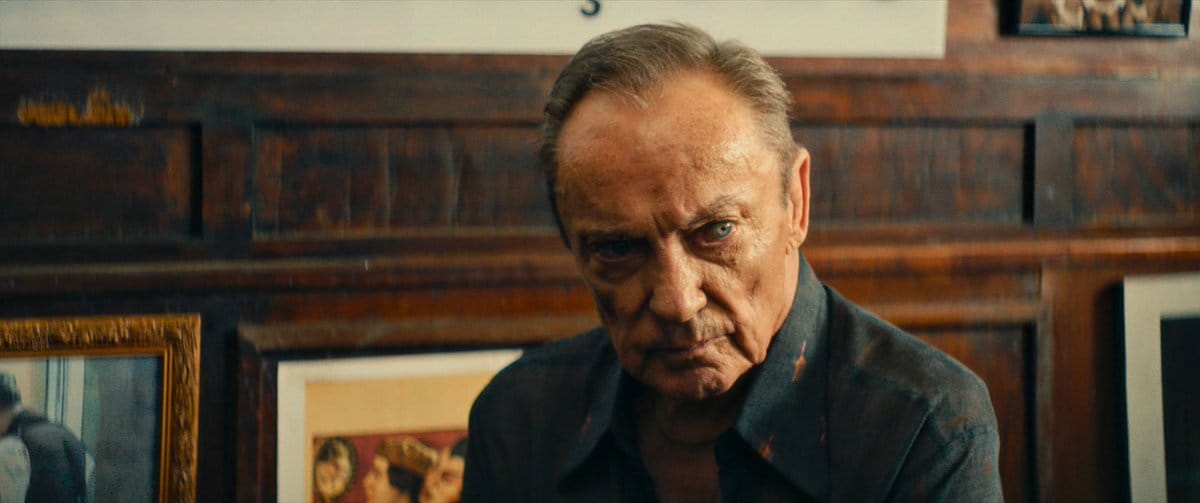
A German character actor, and former fashion model, known for portraying "eccentric" characters, Kier was a distinctive, immediately recognizable cult icon, who appeared in well over 200 films throughout his long career, ranging from the trashiest of mainstream genre films to most respected of art house films.
Here, he plays a Belgian Jew, a refugee in the wake of World War 2, a man who, in order to be allowed to exist in relative peace and anonymity, allows the local police to believe that he is a former Nazi soldier. But this means him having to endure the humiliation of being paraded about by the police chief before various cronies like a freakshow attraction, forced to show off a body that has been brutally scarred by the horror of war. The fury that blazes behind Keir's eyes while he is suffering this indignity, the barely contained righteous anger that makes his voice quiver, in such a small role, is a testament to the man's immense talent, a fitting final curtain call for a true artist, just one last quick trod across the boards to remind us all of how great he really was. He died at 81.
R.I.P. to a true legend.
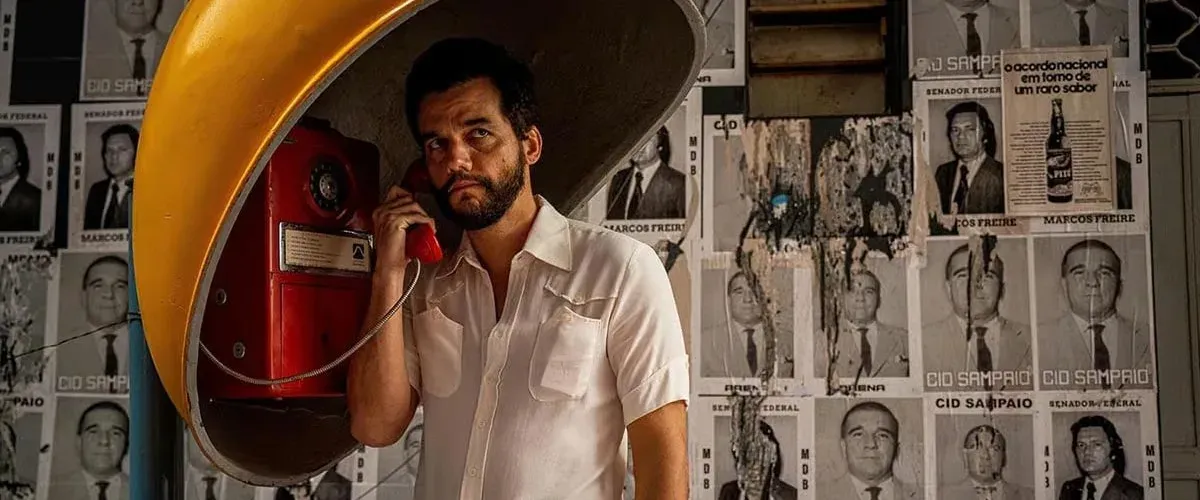
The story of The Secret Agent is set during the military dictatorship of Brazil, an era sometimes known as the Fifth Brazilian Republic. Beginning with a coup d'état in 1964, it was led by the usual havens of monsters, a coalition of the military, the Church, the upper class, and of course, the United States (shocker), in all its Red Scare-driven Imperialist Capitalist bigot glory.
The dictatorship lasted for 21 years.
Throughout the 60s and the 70s, powered by rabid anti-communist rhetoric, fascist nationalism, and robber baron capitalism, the regime implemented a new and much more oppressive Constitution. They persecuted all political opposition, they censored free speech, and they engaged in rampant human rights abuses, including institutionalized torture, extrajudicial killings, and the forced disappearances of dissidents.
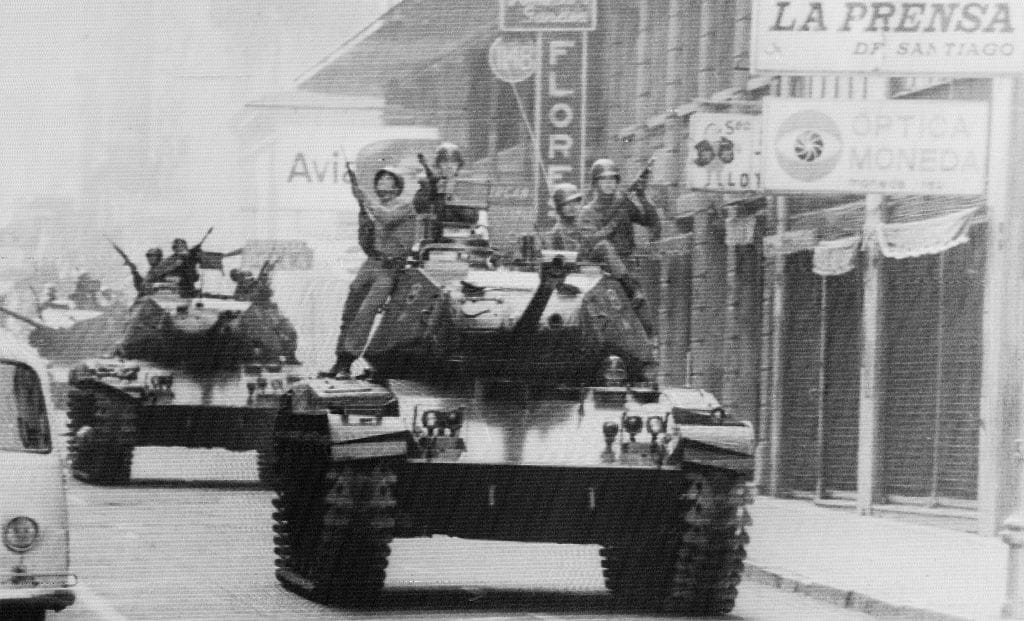
By the early 80s, the military’s oppression, and their destructive and demoralizing policies, finally brought about economic collapse. The crumbling economy, chronic inflation, as well as the fall of neighboring South American military dictatorships, led to civil unrest and massive demonstrations in the streets of the cities. In 1982, the first free elections in 20 years were held. In 1988, a new Constitution passed, and Brazil officially returned to being a democracy.
It is estimated that over 400 people were killed, or went missing, during the military dictatorship, and that more than 20,000 people were tortured. There are many human rights activists who assert that the figure could be much higher, and that it should include the thousands of indigenous people who died because of the regime's policies of neglect during this time too, but the military disputes this.
As always, those prone to fascism hate culpability more than anything.
So…
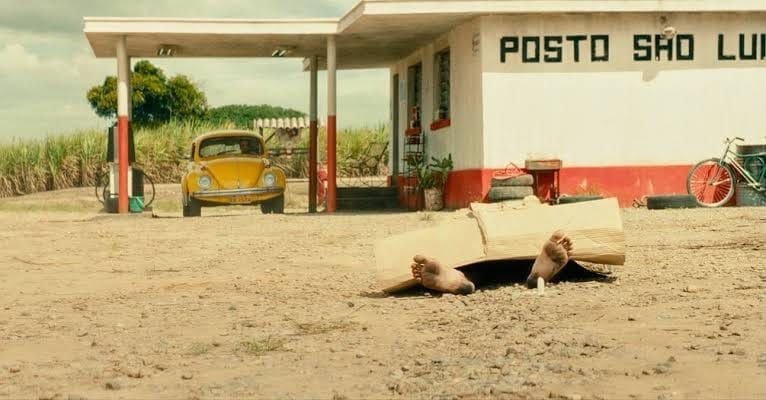
It is 1977, and a man named Marcelo, his actual name being Armando, is on the road to the town of Recife. Along the way, he stops at a gas station where the dead body of a robber lies in the dust, awaiting pick-up by the authorities. But it’s the carnival, so everyone is busy, so it's been a few days, and the body is beginning to stink, and attract wild dogs. Before he can leave the gas station, Marcelo is shaken down by the local cops. They let him go, despite the fact that all he has to give them are his cigarettes.
Marcelo is traveling to Recife, because back in his former life, back in São Paulo, Armando was a professor, and in the time of the military dictatorship, it is too easy for a teacher to cross the wrong people. His young son Fernando has been living in Recife with his in-laws ever since the recent death of wife, and now Marcelo hopes that the resistance can get he and his son the kind of forged documents they need to get out of the country before the corrupt authorities catch up to him.
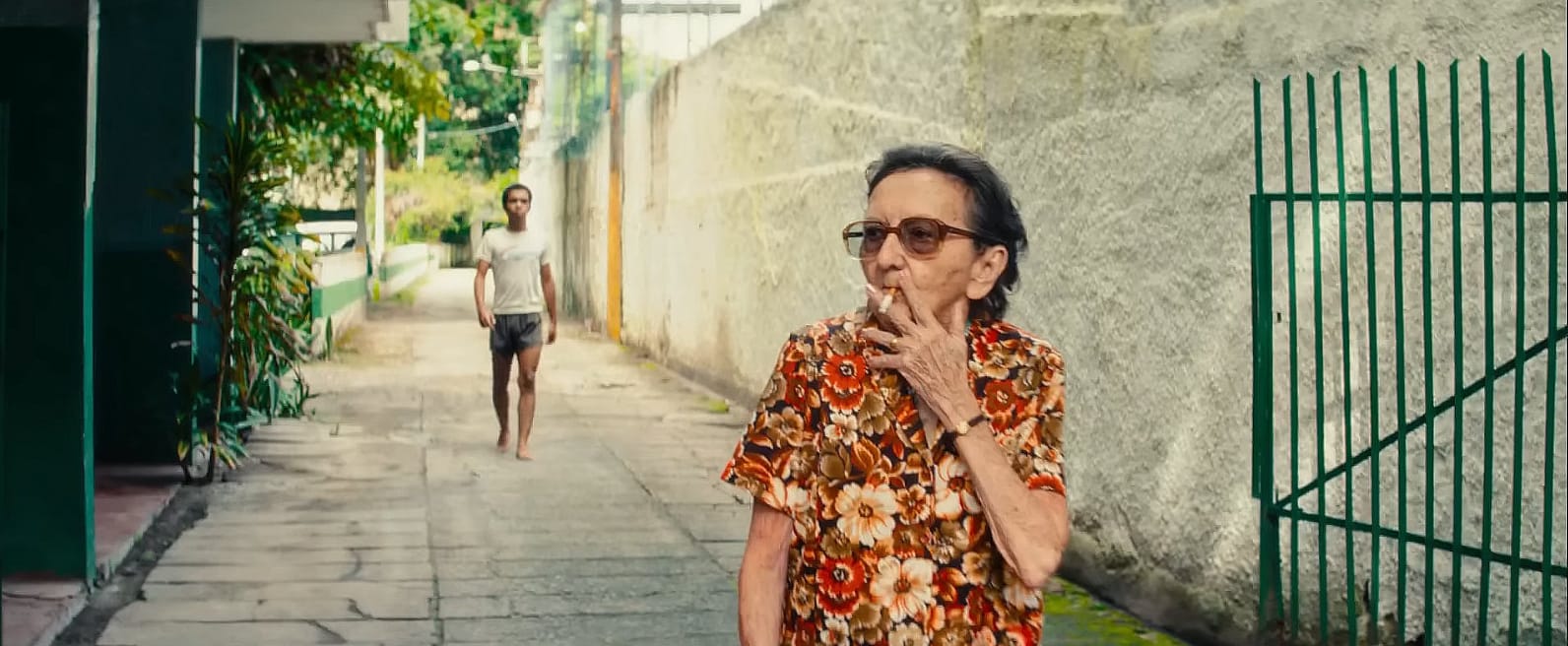
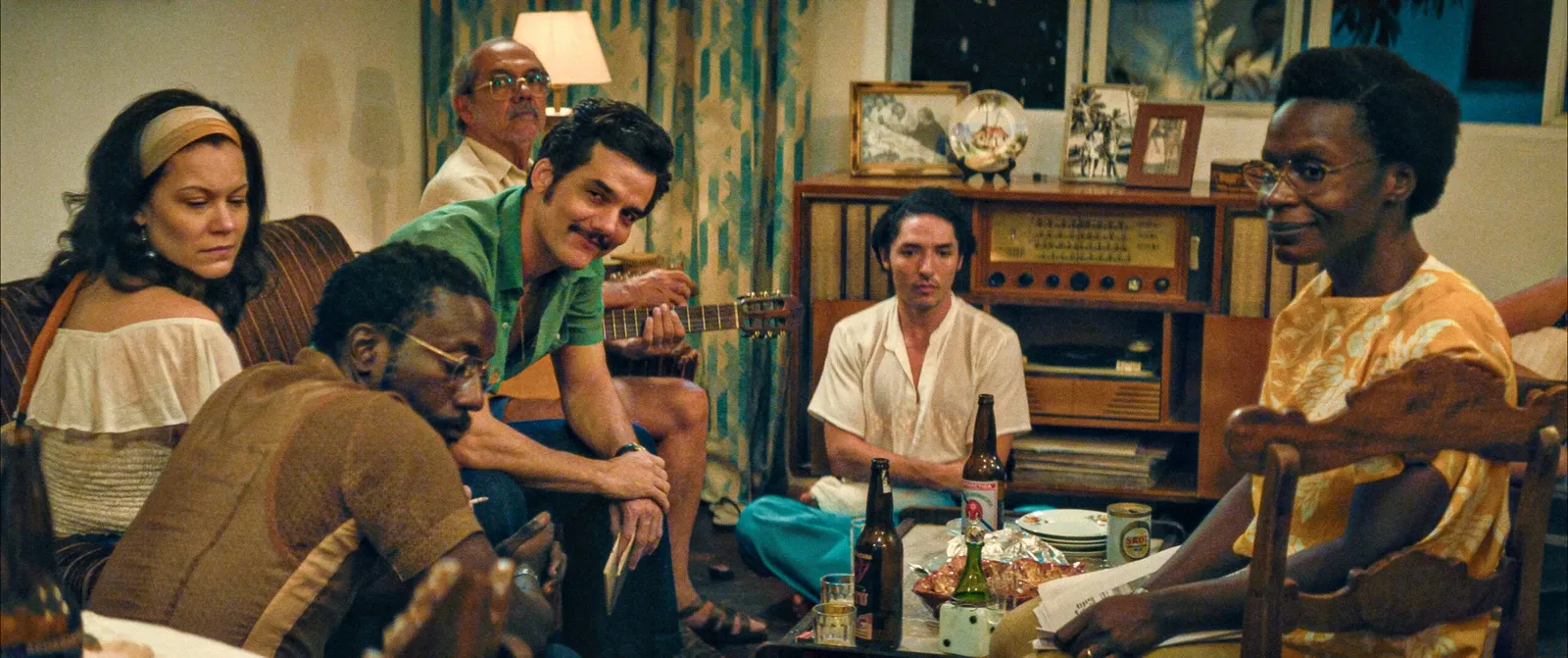
In Recife, he takes a room in a kind of hostel, owned and operated by a chain-smoking, leather-voiced, little old woman, Dona Sebastiana, a former anarcho-communist. Her place is a haven for dissidents, refugees, and outcasts. Marcelo befriends the others staying there, Claudia, Haroldo, and a pair of Angolan Civil War refugees, Thereza Vitoira and Antonio.
Meanwhile, the corrupt local Police chief Euclides, and his ever-present idiot thug sons, Sergio and Arlindo, are called in during the carnival holiday to investigate a severed human leg that has been found inside a captured shark. The single leg may possibly belong to a victim of the state's political violence, either another regime-ordered disappearance, or someone who crossed the police on the wrong day, and as a result, their body thrown into the ocean. It was only weird luck that this single piece somehow found its way back to shore inside the belly of a dead shark.
Meanwhile, as he waits for his papers, Armando is given a job by the resistance at the city's identity card office. Despite being more than a little nervous, due to the proximity to the police station, and especially because police chief Euclides seems to have taken a liking to him, this job allows Marcello the chance to search the files for any records on his late mother, who he barely remembers from his childhood.
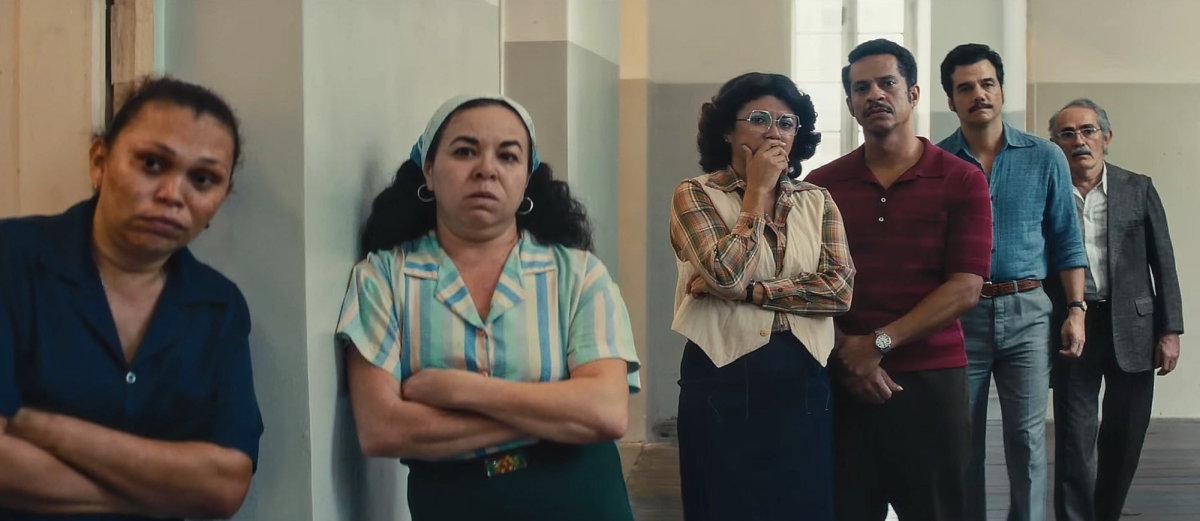
Meanwhile, back in São Paulo, the stepfather and stepson hitmen team, Augusto and Bobbi, are hired by Henrique Ghirotti, a corrupt executive. He wants them to kill Marcelo, who he knows as Armando, as Ghirotti is harboring both a political and a personal vendetta against him.
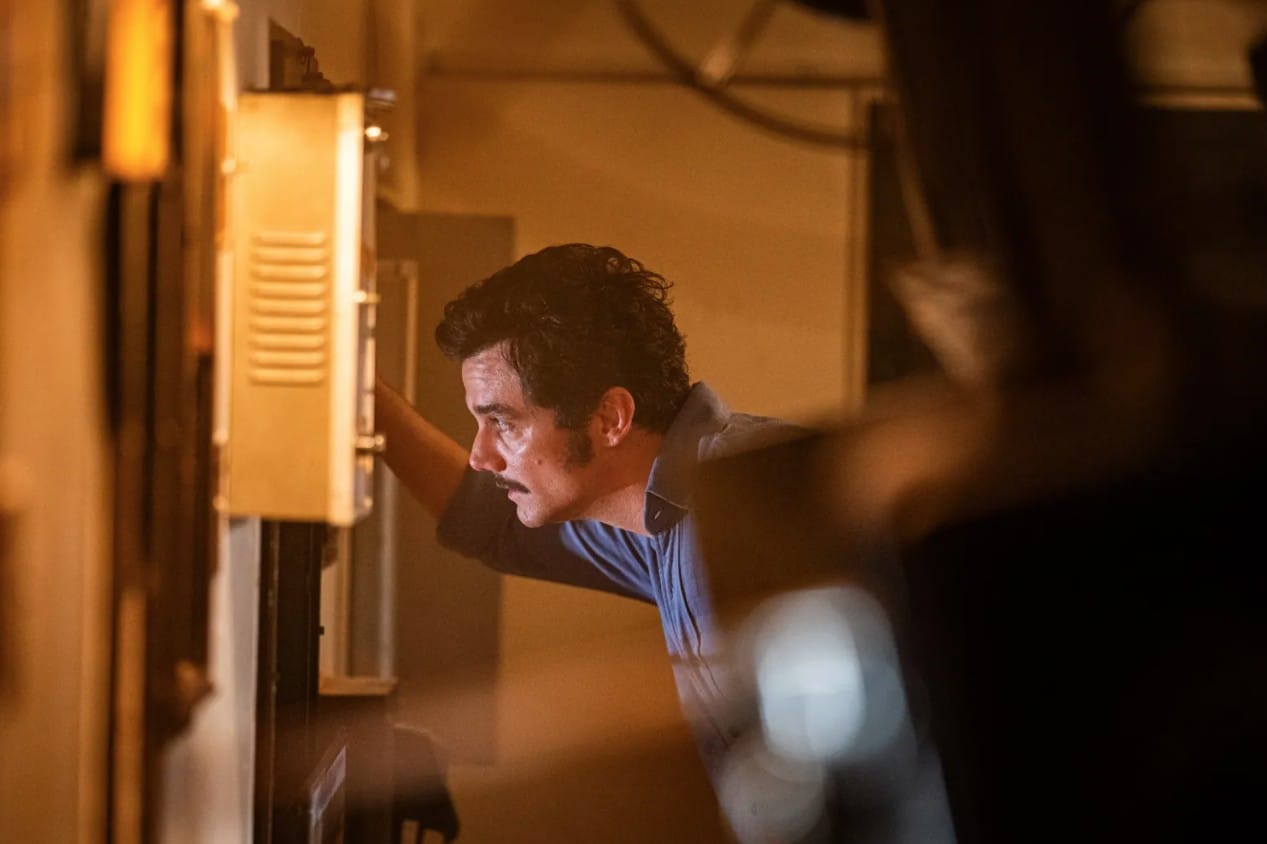
Marcelo, meanwhile, meets with the resistance in the upstairs offices at the Cinema São Luiz, where his wife’s father works as a projectionist. They record his testimony about Ghirotti's corrupt activities, and how Ghirotti’s interference at the university led to him and his wife getting into a physical altercation with Ghirotti and his son while at a dinner, all of which is what led him to having to hide out in Recife. The resistance tells Marcelo he has been officially labeled as a communist sympathizer by the government, and has not only been barred from leaving the country, but that a contract has been taken out on his life. Obviously, this is upsetting news.
Even worse, Marcelo is told that it will be four days before the resistance can get him the papers he needs for he and his son to escape Brazil.
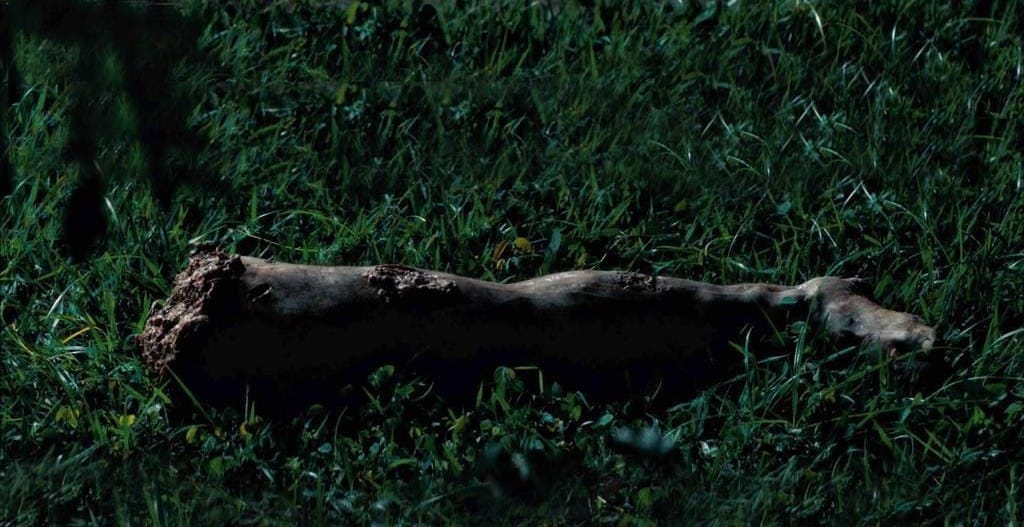
Meanwhile, Euclides has Sergio and Arlindo dispose of the leg. The pair take it from the morgue and throw it in the river, but it washes up at a notorious cruising park. The story that ends up in the paper claims that the leg then came to life and started kicking the various gay men who frequent the park at night.
During all of this, the hitmen, Augusto and Bobbi, hire a local impoverished day worker and gun for hire, Vilmar, to find Armando for them. When Bobbi manages to identify Marcelo's father-in-law and the cinema he works at, this leads Vilmar to where Marcelo works, and suddenly, this ticking clock begins to run out of time…
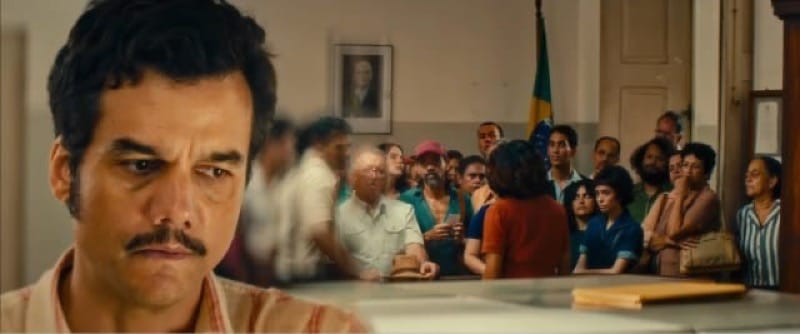
The Secret Agent is many things. It is a crime drama, a weird comedy, a political thriller, a pulp horror, and a piece of historical fiction. It is complex and deliberate and thought-provoking, a compelling story told by fantastic actors, with all of its social commentary covered by its striking visual style and surreal flourishes.
It's an engrossing and entertaining film.
It really is a gorgeous film too, bright and bold and wide, its inspirational roots apparent for all to see, but what I really loved about that is that this movie isn't just a throw-back to the 70s in terms of style, but also of intent. It's telling a story, and that story is pleasing to watch, but it's not being told in a way where your pleasure is a consideration. Mendonça is an unapologetic non-conformist here. This is a film that has it's own terms, and it follows them. It has a freewheeling sensibility to it as it navigates its nightmare world of facism, with its pervasive corruption and violence and disregard for truth. And yet, despite the film being a tragedy in many ways, it manages to maintain a sense of playfulness and joy throughout, mirrored through the carnival celebrations in the background, as well as its regular pauses in the story to focus on a dead shark, or a hairy yet vengeful leg, or even just the fact that in the 70s, apparently most Brazilian men never fully buttoned their shirts up.
I loved the opening sequence at the gas station so much.
It is phenomenal scene. Almost a short film itself, it's a herald of things to come, a perfect microcosm of the film's theme and intent and style, a mix of the mudane and the absurb and the terrible. From the body in the dust, to the resigned gas station attendant, to the looming threat of cops and the brazenness of their corruption, to the carload of children in carnival hats slowly driving by, screaming the entire time at the sight of the body, and all with Armando caught helplessly amongst it all. It's just brilliant. Absolutely incredible.
Is the film long?
Yes, it's over 2 hours and 40 minutes. Your mileage will vary, of course, but for me? For what is easily one of the year’s best and most distinctive of films? I barely noticed. I'm sure some out there will call the film meandering, or complain that it lacks focus, that it is bloated with too many random and self-indulgent digressions, but to me, it's all a commentary on the same subject.
The Secret Agent is told in three parts, and towards the end of the first part, a framing device is introduced, and it is revealed that Marcelo/Armando's story is actually being assembled from a host of incomplete sources by a pair of young women who are working to digitize/catalogue stacks of interviews and witness statements from the anti-fascist resistance during the military dictatorship. So there are gaps in the story in this film. Gaps like how exactly did Armando's wife die? What exactly was Dona Sebastiana doing in Italy during WW2 as an anarcho-communist? The whole ending of Marcelo's story! Or even... whose fucking leg was that? But the fact that there are gaps is the entire reason for their inclusion in the film, or lack of inclusion, if you will. These gaps represent the wreckage that comes after the fall of a fascist government, the struggle to preserve what survived those dark time, the active purging, this is the fight against forgetting, it is a statement that we must remember the horrors that were committed, because too many have been swept under the rug and forgotten already. And it's through the struggle of these young women to figure out what it is exactly they're hearing, who it involves, when it all happened, and to whom, and in the end, to only know for certain that something important was lost, that is the generational trauma, the gift to future generations by the monsters of the past. That's the lingering damage that is done by cruelty and entitlement of fascism.
It's a melancholy helplessness that seems so overwhelming.
Meanwhile, the whole leg story, a lurid and debauched stop-motion short film inserted part way through the movie, where a severed and decomposing leg hops through a night-time park full of people enjoying anonymous public sex in various states of undress, that then suddenly attacks in a frenxy of kicks, is not just a nod to a genre of light burlesque sex comedy films called pornochanchada that were popular in Brazil at the time, as well as the trashy genre films the director grew up loving, it is also based on real newspaper reports from the late 1970s in Recife. These stories, these absurb rumors and tall tales, where the newspaper is merely reporting whatever it is that people are talking about locally, were actually a way for the press to discuss topics like police violence, or corruption, or homophobia in society, for instance, to put in the public eye topics that would otherwise be censored by the military dictatorship.
But even if that wasn't true... the whole thing was hilarious.
And mirth like that is important in a world where an ever-present and threatening shadow hangs over everything. Mendonça uses the other inhabitants of the small hostel, and especially the incredible Dona Sebastiana, not to mention the raucus carnival celebrations happening everywhere, to not only highlight the danger, the constant and pervasive fear and anxiety, but the uncontainable nature of life, the exuberant joy, the willingness to celebrate each other, with music, with dancing, with drinking and fucking, often done in open defiance of the oppressive monsters who seek to grind them down and silence them. And they celebrate and smile and laugh to remind themselves, and us the audience, of what exactly is being fought for here, what is being lived for.
And the thing I liked most about all of these digressions? More than anything, not only do these little asides, these bright and sensuous details about the absurdities of daily life, bolster the realism of the film's world, they also make clear what might be the most important aspect of the film...
Marcelo is not some heroic revolutionary.
That's what I really loved about this movie. He's not an avowed freedom fighter. He isn't some central figure devoted to the revolution. He's not some guy trying to overthrow the government. He's just a regular person, someone who had a regular life, and his own love, someone who just wanted to be, and to be happy while doing it, someone who was just trying to stick with his values while everything crumbles around him, but he had been swept away by the horror. That's terrifying, and currently very relatable, and so massively sad and unfair.
And that's this film.
Tears of happiness. Tears of sadness. Fantastic stuff.
There was one last bit kind of tangentially involved here that occured to me, and I thought it was somewhat notable... In 1985, Brazil passed an amnesty law forgiving anyone who worked for the dictatorship, who had broken laws, killed, kidnapped, whatever. And directly because of this, Jair Bolsonaro, a former military officer in the dictatorship, became a far-right politician, and eventually President of Brazil. Then, when he lost re-election, he tried to overturn the election results illegally. He even attempted to incite another coup. It was a fate that Brazil narrowly avoided. He was arrested, and was sentenced recently to 27 years in jail, where he will most likely die, because he is a shitty old man.
Y'see, Brazil learned it's lesson.
If you don't kill these monsters off, all of them, every single one of them, from the very top to the very bottom, if you don't hunt them down, find them in their holes, burn them out, them, their friends, their children, and salt the very earth beneath them so that nothing will ever grow there again... they'll just come back.