Traditional Christmas Movies: 12 Monkeys
“Feel free to conduct an investigation at 2nd avenue at the secret headquarters of the 12 monkeys. They are the ones who are going to do it. I can't do anything more now, I have to go. Have a Merry Christmas!”

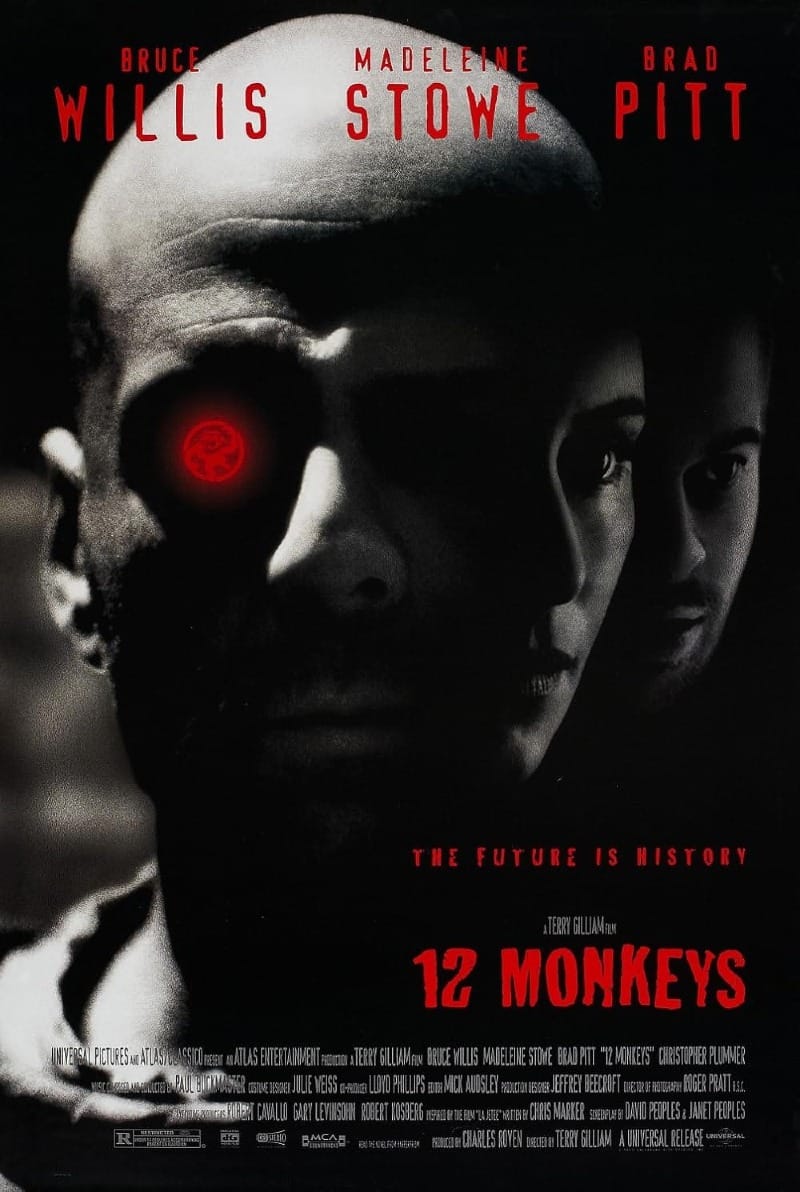
It's Christmas, and in the 2030s, humanity lives deep underground after a virus ravaged the surface of the planet. James Cole is recruited from prison for a mission that will send him back in time to the 1990s. Once there, he's supposed to gather information about the origin of plague before it exterminated the vast majority of the world's population, but he loses his way when he meets Dr. Kathryn Railly, a woman he knows from his dreams, or maybe his memories…
1996 was a big year for me when it came to films to pay attention to.
There were strange films. There were daring films. There were audacious films. There were films by up and coming directors, films by already established great directors, films with iconic performances, films that changed Hollywood, films that seized the zeitgeist of the country. It was films like Fargo, Hard Eight, From Dusk til Dawn, Frighteners, Scream, Bottle Rocket, Trainspotting, The Rock, Kids in the Hall: Brain Candy, Big Night, Dead Man, Bound, Romeo + Juliet, Cemetery Man, Breaking the Waves, Welcome to the Dollhouse, Swingers… capped by god damn Titanic dominating the world at the year’s end. It was a year that energized film culture for the internet age.
12 Monkeys was released on January 5th, 1996. It’s a great film. And it was one of the first films of the year. It basically set the tone. It was a herald of things to come.
But 12 Monkeys is more than just a great film.
For me at least—and I think this is true for many film heads of a similar age and disposition—it’s one of the films that was directly responsible for creating a whole new generation of film heads. A big part of that is because 12 Monkeys, like I said, is a great film. Hands down, it’s a great film. It’s weird and amazing and fun, but it’s also cool because it’s not really accessible for most folks. A lot of people dismiss it out of hand, without even having seen it, simply because, despite actually being a very mainstream, straight-forward film, it still sounds like it’s gonna be too weird for most people, and some people even find its style to be off-putting, so back then, it you were someone who liked the film, if you understood how great it was, it was a little like being part of an exclusive club.
And that’s a key thing right there, especially in film culture… the exclusivity.
Because a not-to-be-underestimated other part of its popularity is, due to the internet, 12 Monkeys is one of the first films to have a canonical back story, a good lesser known fact, something citable, the perfect “thing to know” when discussing the film. It‘s something that not only signals your membership in the club to fellow club members, but it also makes you sound knowledgeable, even if you generally are not, in fact, especially if you are not. Because it was impressive sounding, and made it seem like, because you knew this fact, that you knew things about movies, and could speak on them with knowledge. So, basically, 12 Monkeys was one the first film of the internet age to come with bonafides.
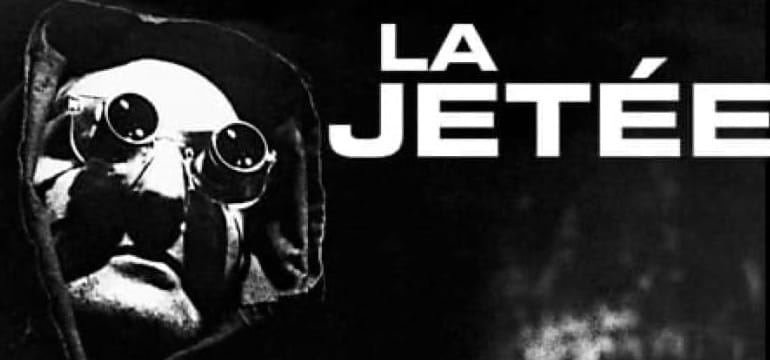
And thus, we come to La Jetee, 12 Monkey’s famous inspiration.
I’ve talked about this before.
I’ve talked about how La Jetee (The Pier) is a black and white artistic short film made up almost entirely from still photos, that tells the story of a time loop, due to a time travel experiment after a nuclear war. I’ve mentioned how, back in the 90s, back in the halcyon days of VHS, that La Jetee, along with Eraserhead and Tetsuo: The Iron Man, was 1/3rd of the Film Head Holy Trinity. I’ve talked about how, way back when 56k modems were the bleeding edge of tech, long before YouTube was even an idea, when the Internet as we know it now didn’t exist, niche experiences, like being able to see an obscure French New Wave sci-fi film from the ‘60s, were much more difficult to come by, especially if you lived outside of larger cities. So, to even know about this film meant that you were “well-read” to the normal world, so it was perfect for gatherings. “Oh, 12 Monkeys, you say? Yes, an excellent film, inspired by La Jetee, of course, it… Oh, La Jetee? It’s this obscure French New Wave short film from the 60s, you probably haven’t see it, anyway…” And that’s the whole thing right there. It’s just a flex for dinner parties. That’s basically what you did with that knowledge.
In the real world, the story was much more common. Universal had the remake rights to La Jetee and thought it was a potential feature. David and Janet Peoples wrote a very loose adaptation that is basically an entirely different story, and it was a great script. Terry Gilliam signed on to direct, one the few films he has directed that he did not write some part of, based solely on the strength of that script. That’s it. The funniest part? Gilliam, ever the butthole, has said multiple times that when he made 12 Monkeys, he actually hadn’t ever seen La Jetee, which is the ultimate filmhead flex. Respect. Does that mean that the whole idea of “bonafides” is just nonsense? Yes, but who cares. Have you seen La Jetee?
No. That’s cool. I have, obviously. No big deal.
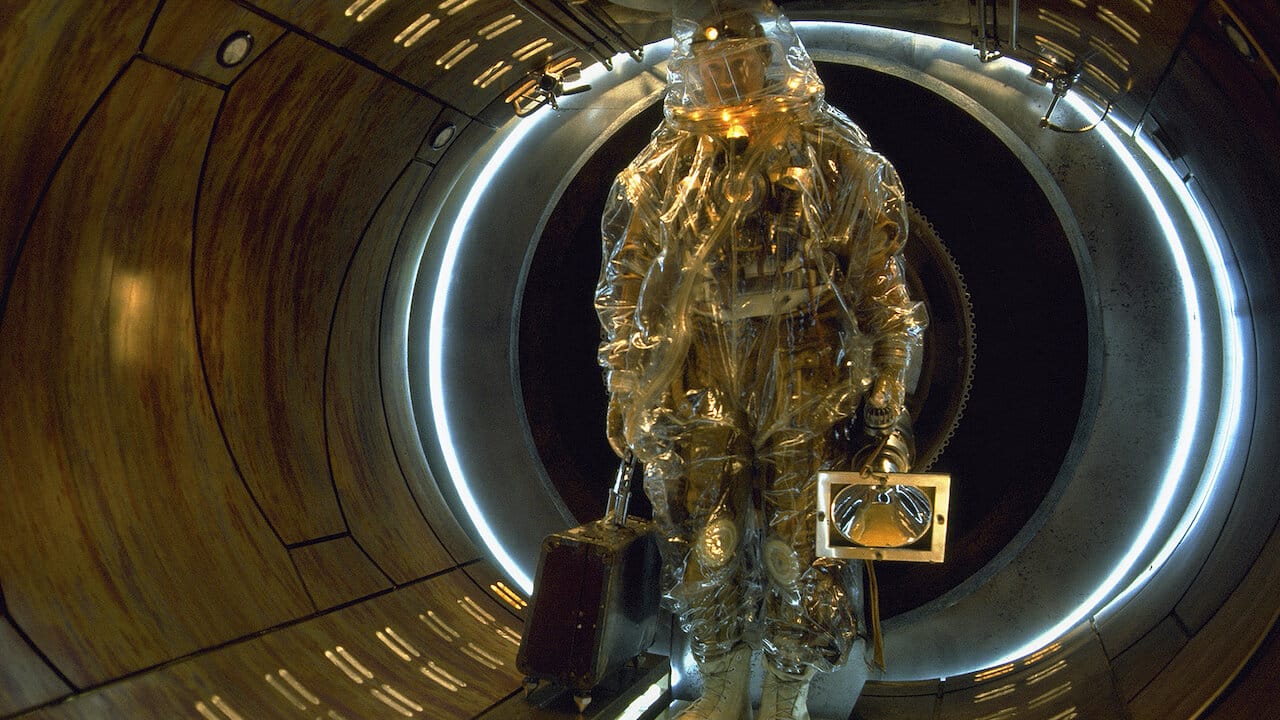
In 1996, a deadly virus wiped out 5 billion people, nearly all of humanity, and the survivors were forced to retreat deep underground.
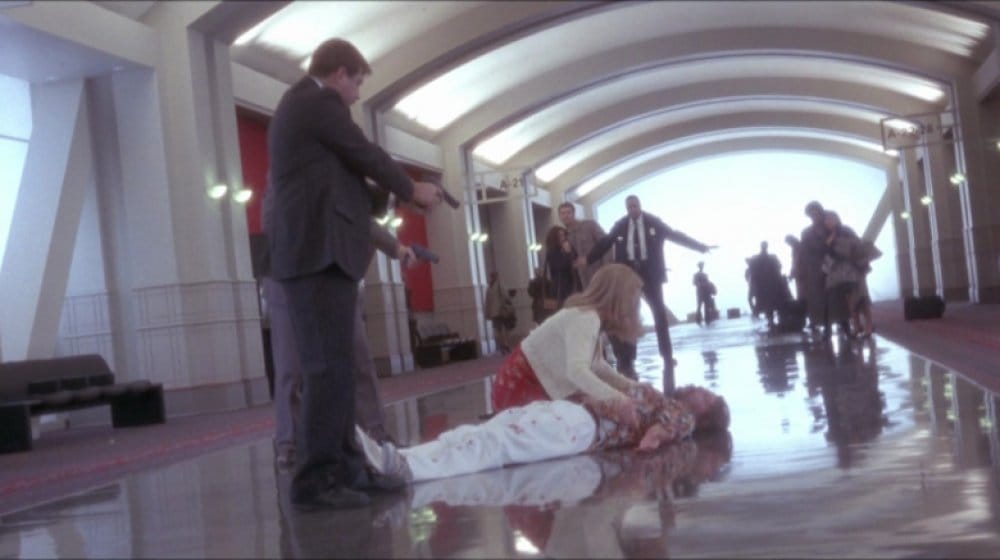
In 2035, in a bunker complex beneath Philadelphia, there are still scientists working on a cure for the virus. In that same complex, a man named James Cole is in prison for “aggressive tendencies.” He is troubled by a recurring dream about a memory from his childhood, from a time before the virus, of when he witnessed a foot chase and a shooting at an airport. Cole is ”volunteered” to make trips to the quiet and crumbling ruins on the surface world, a place where lions and tigers and bears (oh my!) stalk, while wearing a Hazmat suit, in order to gather random biological samples of the flora and fauna.
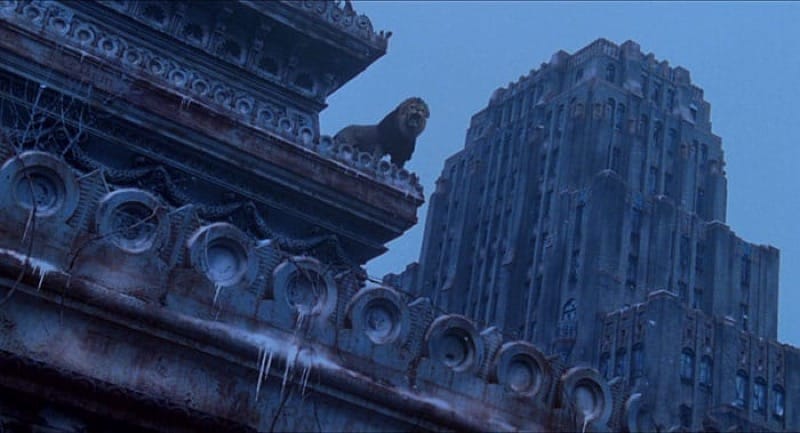
Cole’s reliability during these missions leads to him being selected to participate in a bigger and much more important mission…
In exchange for a reduced sentence, James Cole will be sent back in time to the year 1996, just before the plague. His mission is to find the original virus, so that he can bring a sample back for the scientists working on the cure. To do this, he will need to find a group known as the Army of the Twelve Monkeys, as they are believed to have been responsible for releasing the virus.
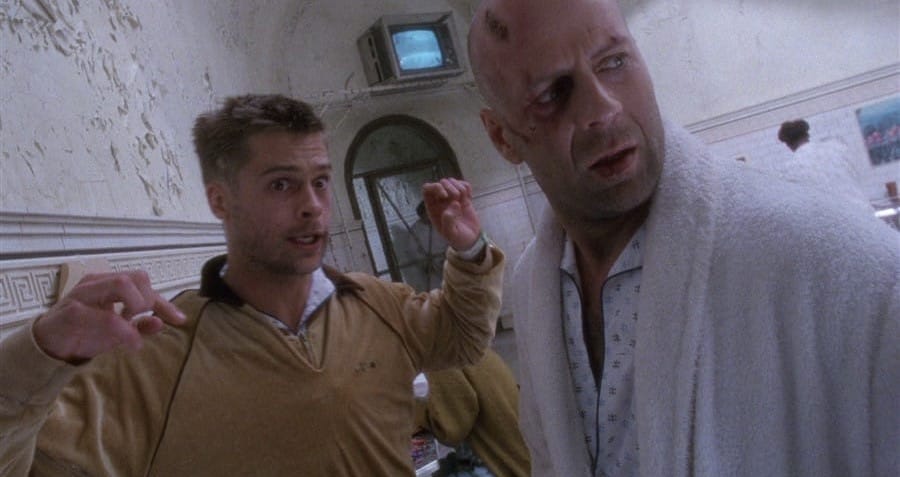
Unfortunately, Cole arrives in Baltimore in 1990, not 1996 as planned. He is arrested, and then incarcerated at a mental hospital, due to the diagnosis of Dr. Kathryn Railly. While there, he encounters Jeffrey Goines, a mental patient with extreme environmentalist and anti-corporate views. Cole is interviewed by a panel of doctors there, and he tries to explain what’s going on, and what he needs, noting that the virus outbreak has already happened and cannot be prevented, but he just sounds like a crazy person, and when he tries to call the number that the scientists monitor in the future, to let them know his status, he realizes that he’s six years too early, it’s just some random person’s number at this point in time. Returned to the mental hospital, Jeffrey helps Cole escape, but he’s too drugged up to do it, and is easily caught. Cole is heavily sedated, restrained, and locked in a padded solitary cell, but only a couple hours later, the hospital staff discovers that James Cole has somehow disappeared.
He awakens back in 2035.
There he is interrogated by the scientists, who play him a distorted old voicemail message from 1996 that asserts the association of the Army of the 12 Monkeys with the virus. James tells them that he knows nothing about it. He is shown photos of numerous people suspected of being members of the Army of the 12 Monkeys, and he identifies Goines. But when he tries to explain that he landed in the wrong year, the scientists won’t listen. They decide to give him another chance to complete his mission, and send him back in time once again.
Cole briefly awakens in the chaos of the trenches during a battle in World War I. While there, he sees fellow prison inmate from the future, Jose, who was also sent back in time. Cole is shot in the leg, and a moment later, he gets thrown back into the time-stream and transported to 1996.
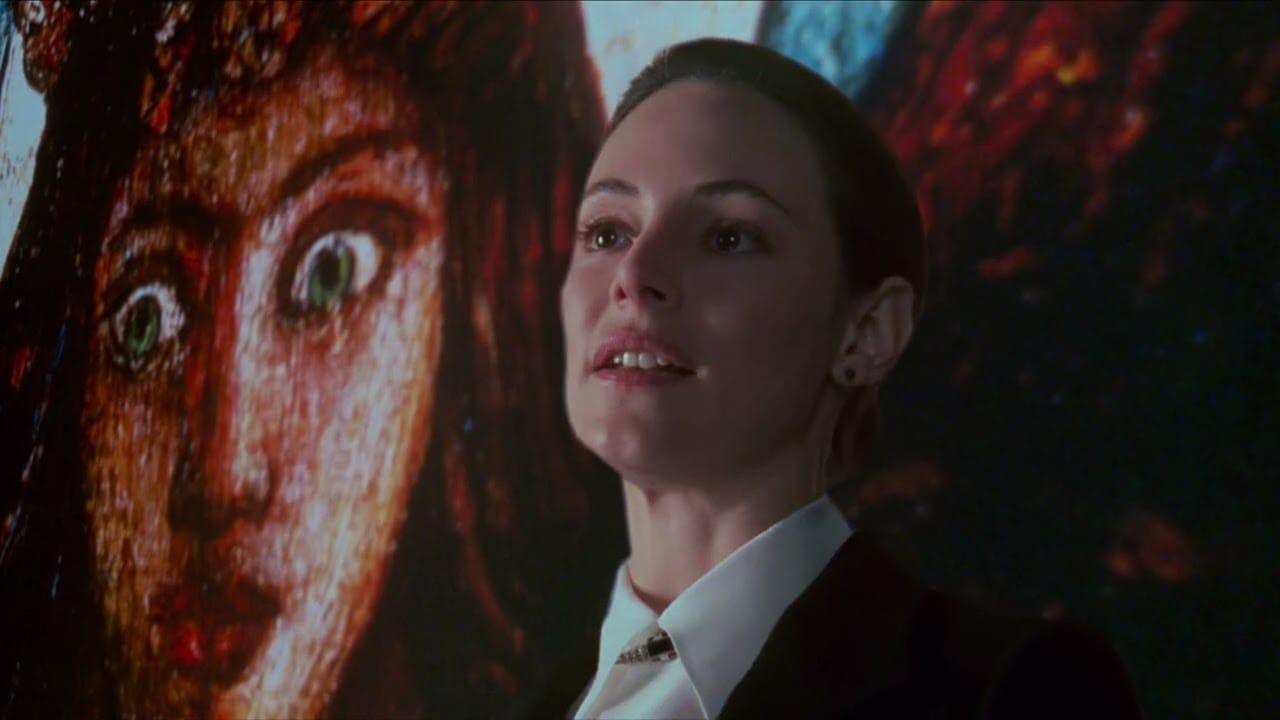
In 1996, Dr. Kathryn Railly is giving a lecture at a Baltimore university for her new book. Her book‘s central metaphor centers on Cassandra, the Trojan princess who was cursed by Apollo with the gift of prophecy, but to also never be believed. She uses this metaphor as a way to describe individuals she sees are so traumatized by current-day tragedies, they are driven to madness, which manifests as apocalyptic visions. During this lecture, she shows pictures of a man that she believes to be a wounded WW1 soldier, a man who, after they were wounded, reportedly lost their ability to speak French, and could only spoke English, but even then, he only spoke of a disease that would wipe out humanity in 1996. According to reports from the time, the man vanished from the hospital.
The man in the picture is Jose.
At the post-lecture book-signing, a man with a legendarily terrible red-headed ponytail introduces himself to Dr. Railly as Dr. Peters. He tries to engage her in conversation about how he believes apocalypse alarmists represent the reasonable response of the sane in a world that is clearly tearing itself apart. Dr. Railly politely nods along, and looks for an exit.
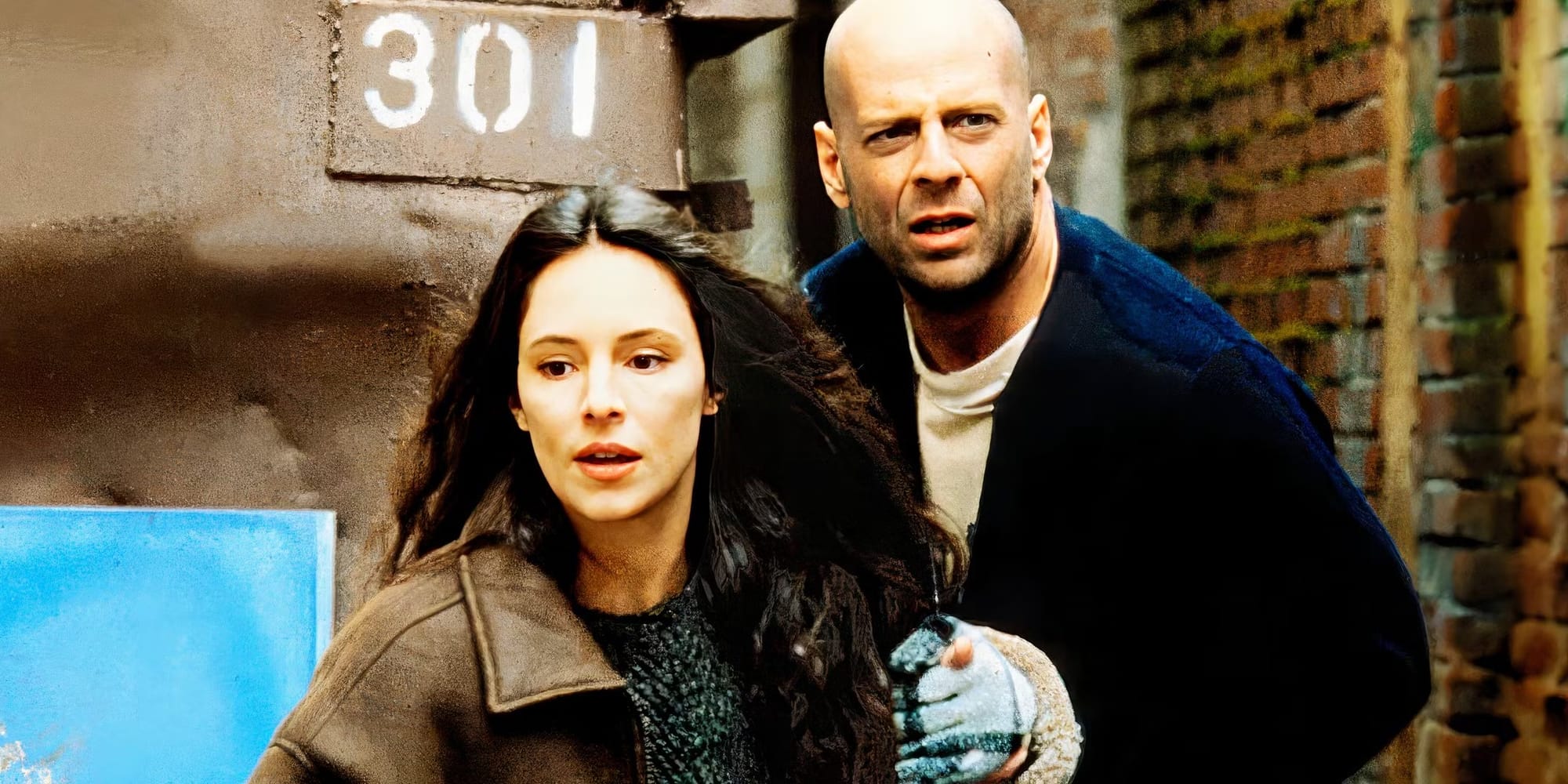
But as Dr. Railly is leaving the lecture and getting into her car, Cole kidnaps her, forcing her to drive him to Philadelphia. Along the way, she tries to help him, as he seems to be suffering from the same delusions she writes about in her book. While they’re holed up in a seedy motel, she removes the bullet from Cole’s legs as they watch news report about a boy trapped in a well, which James dismisses as a hoax. Their time in Philadelphia leads James to confront Jeffrey Goines at a fancy dinner being thrown by Jeffrey’s ultra-wealthy father, the Nobel Prize winning virologist, Dr. Leland Goines.
That night, both Cole and Dr. Railly learn a few things…
Goines surprises Cole by explaining that in 1990, it was Cole who gave him the idea of wiping out humanity with a virus that he plans on stealing from his father’s lab, which staggers Cole. In the chaos of his escape from the party, with the police hunting him, Dr. Railly, convinces Cole to surrender, but when she turns away for a moment, James Cole vanishes into thin air.
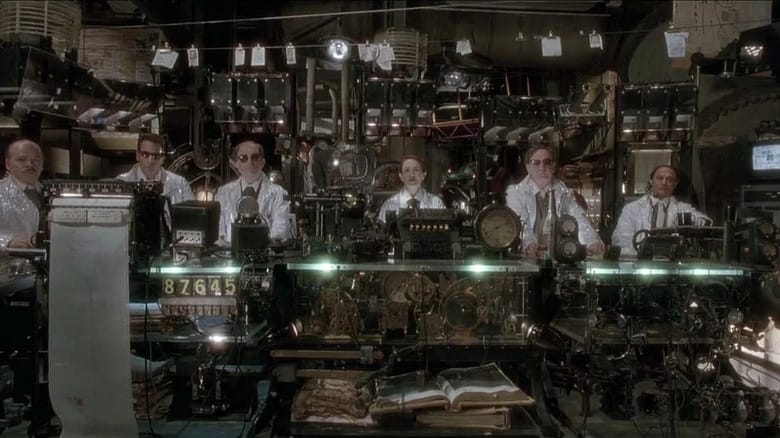
Cole awakens in 2035. Even though the scientists give him his pardon, thanking him for identifying Goines as the leader of the Army of the 12 Monkeys, and then assuring him that they will take it from here, James asks them to send him back, so that he can complete his mission himself.
When Cole finds Dr. Railly in 1996, as she is harassing the office space the 12 Monkeys rent, he tells her that he now believes himself to be crazy, as she had suggested, and that he wants help. But in the brief time that Cole has been in the future, much more time has passed in the past, and Dr. Railly has now discovered evidence of his time travel to the Great War, and not just from the bullet in his leg, or the fact that the boy in the well did turn out to be a hoax, but also a picture in her own research of both James and Jose in WW1. She assures him that he is not crazy at all. But Cole is unconvinced. Dr. Railly tries calling the number that the future scientists monitor, but when it turns out to be the answering machine of a carpet cleaning service, Dr. Railly is shocked and starts to think that both she and Cole really are crazy, so she leaves a silly message. But when she happily tells Cole of this, he realizes that it’s the same strange message the scientists played for him in the future.
Now they know for sure that they’re not crazy, and the end of the world is imminent. So they decide… fuck it… and book seats on a flight to the Florida Keys, where they plan to sit on a beach, and wait for the plague.
On their way to the airport, Cole and Dr. Railly learn that the Army of the 12 Monkeys really weren’t the source of the epidemic after all, and that the group's big protest was to release animals from a zoo, causing chaos in the city, and to also put Goines' father in one of the animal cages, which explains why there are lions wandering the ruins of the city in the future. At the airport, Cole leaves a message for the scientists, telling them that they are on the wrong track following the Army of the 12 Monkeys, and lets them know that he will not be returning to the future.
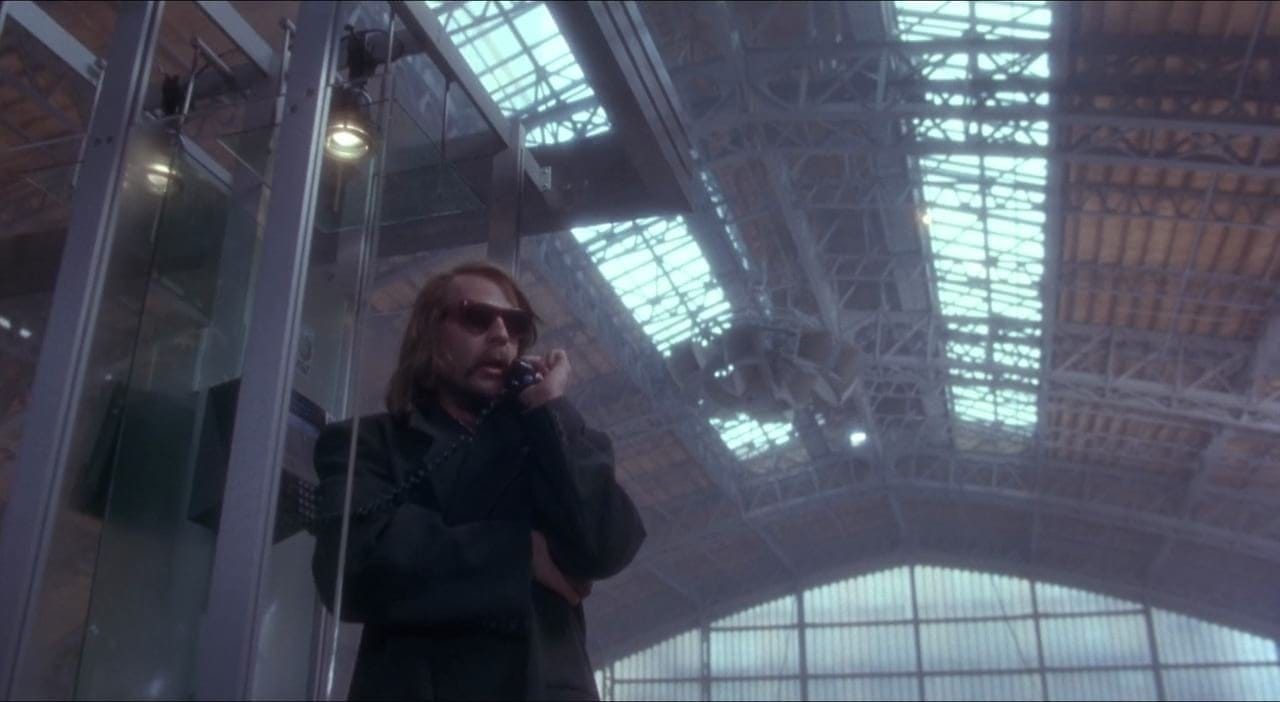
When Cole hangs up, he is confronted by José.
Jose explains to Cole that the scientists got his message. He gives Cole a handgun, and tells him that he better follow orders, or Jose is ordered to shoot the Dr. Railly. Meanwhile, Dr. Railly spots Dr. Peters, with his terrible redheaded ponytail, at the airport, and right then, she realizes two things… Dr. Peters is Dr. Leland Goines' lab assistant, and also, he is also about to embark on a tour of several cities, with a list that matches the historical viral outbreaks that James told her about, both chronologically and geographically.
Cole tries to force his way through a security checkpoint in pursuit of Dr. Peters, pulling his gun, and is shot by the police. As he lies dying in Dr. Railly’s arms, she scans the crowd around her, and makes eye contact with a very young James Cole, unknowingly witnessing his own death, a moment which will replay in his dreams for years to come.
Meanwhile, Dr. Peters is sitting down on the plane, the virus in his carryon. But sitting next to him is one of the scientists from the future, who tells him that her job is in "insurance.” The movie ends outside the airport, as a young James Cole watches the plane take off.
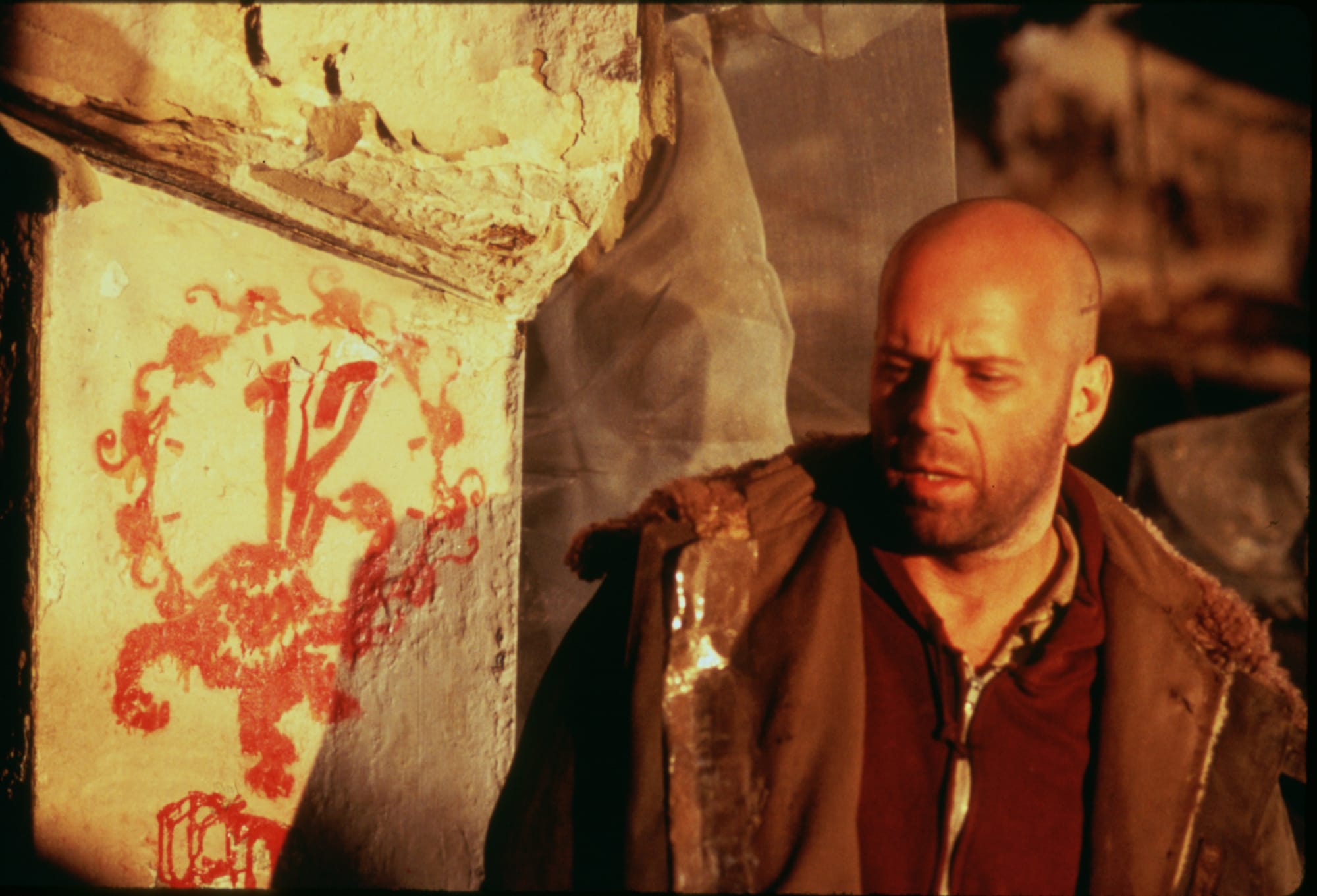
Inspired, as I mentioned, by the French short film La Jetée, where the characters are trapped in a time loop and haunted by images of their own deaths, which was then adapted into a brand new story by David and Janet Peoples, which was then directed by Monty Python alum Terry Gilliam, 12 Monkeys looks and feels exactly how you would expect a collaboration between the writer of Blade Runner and the director of Brazil to look and feel when they are adapting French New Wave source material. And while it’s true the film is long, running 2 hours and ten minutes, and the plot is convoluted as it twists through time, it’s still very easy to follow, despite it’s timey-whimy-ness. The film is definitely not as complex, or anywhere near as bewildering as the rather dubiously intelligent assholes might lead you to believe, that is, at least, as long as you don’t second-screen it, of course.
Because 12 Monkeys is a fantastic and weird time-travel thriller that centers not just on the frailty of the human mind, not to mention our species in general, but reality itself, it is, above all else, a fun and exciting good time at the movies.
Considering questions of determinism, the ethics of science, the repetitive and often destructive cycles of human history, as well as the nature of sanity itself, I really love how the movie doesn’t dwell on the idea that Cole can save the past at all, as from his point of view, the plague has already happened, 5 billion people in the past are now long dead for him, he can’t do anything for them, so all he’s trying to do is find a way to help the people of his own present. But that’s just one edge of the film’s question of determinism, as at the same time, all Cole's mission seems to do is ensure that things happen exactly as intended, that there is no beating fate, that time is a fixed thing. I also really loved how, at the same time, the film cleverly mirrors every one of the elements that we see in Cole’s present, the 203os future, in the present that is the 1990s past, which very subtly casts a tiny shadow of doubt on whether or not Cole’s entire reality is real at all, blurring the line between sanity and insanity. Another edge to that question of determinism is the time loop itself, as Cole and Dr. Railly barrel headlong into their fates over and over again, we are supposed to see this as a metaphor for the destructiveness of repeating the terrible cycles of history again and again, how we can become trapped in a loop of hate and violence, just as we are now, as the bigot Nazis of white America work to destroy the world if they aren’t allowed to control it, and the Ouroboros snake continues to bloodily devour itself forever.
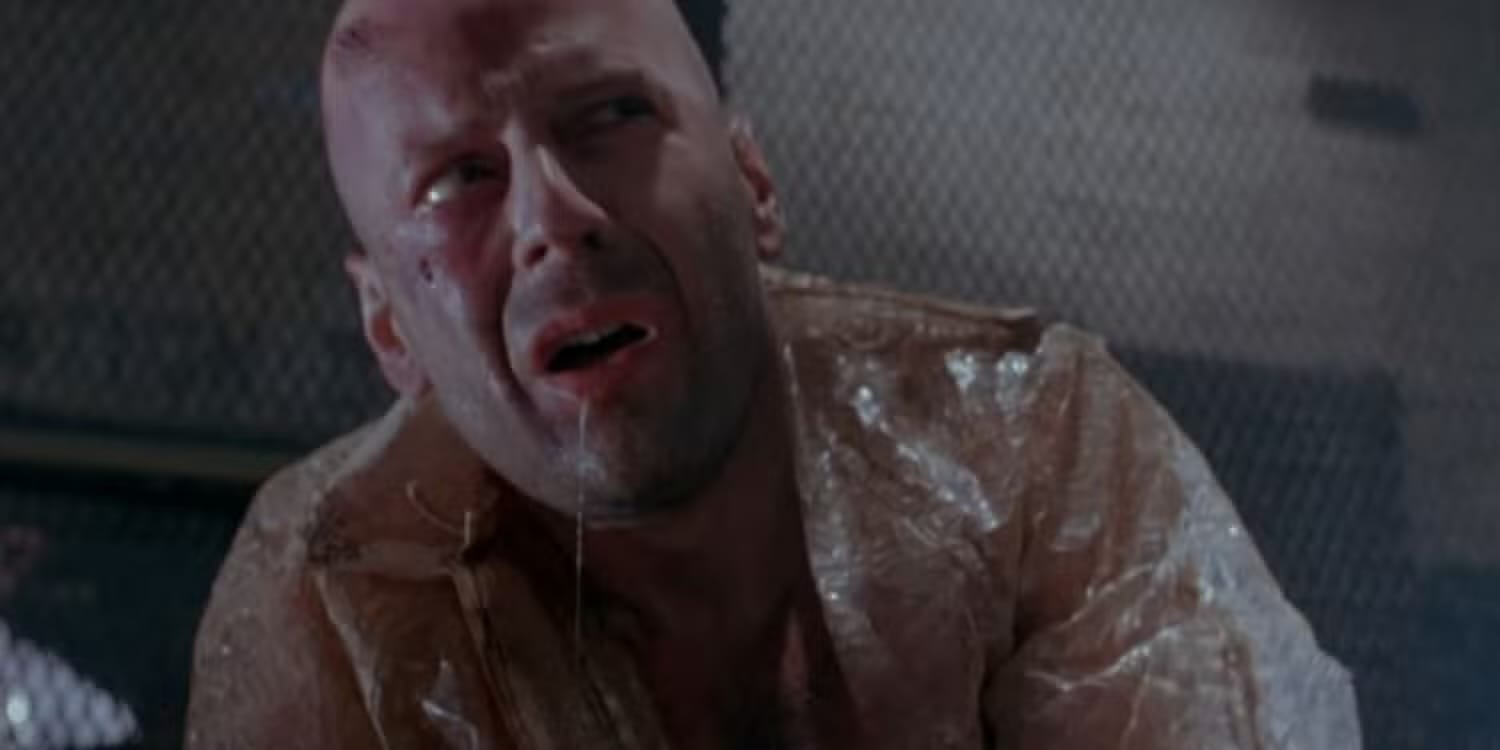
This is all meant to tell us that the past is unchangeable, and that any attempt to try to control the past, instead of facing it, instead of acknowledging the truth of it, to learn from it, and build off it, will only ever lead to once again living in a world of our same terrible mistakes. This is the lesson of the film’s dystopian, time-travel narrative, and all the while, it features Cole as clearly exhausted and confused and hurt and angry, bent beneath his own personal mental health issues, and haunted by his own broken memories of childhood trauma, which is meant to illustrate the psychic damage that comes from having to live through such experiences.
It’s unintended, obviously, as the film was released way back in 1996, but it is impossible to not view the central metaphor of 12 Monkeys to be about our own world right now, or to see James Cole as all of us.
So that’s all great.
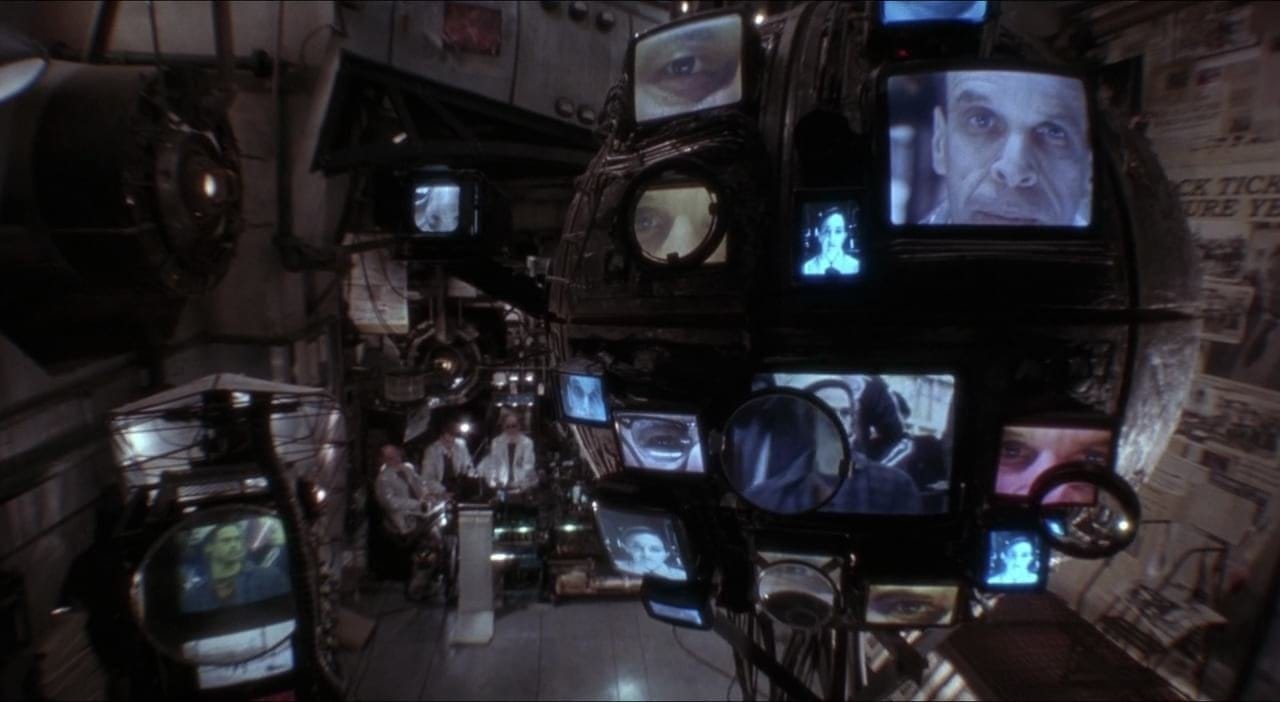
I also loved the art direction, the attention to detail on display throughout, especially in the future setting, where while it’s never stated outright, it’s clear that the majority of their tech is cobbled together out of the things they have available to them, the very limited mid-1990s era tech and equipment that they were able to bring with them in the pandemic panic of their intial surface evacuation in the 90s, and also anything that were no doubt scavenged by prisoners sent to the surface in the intervening years. That’s an awesome constraint to work within. I love how the result—like the Hazmat suit Cole wears in the beginning of the film, or when Cole is being interrogated by the scientists, and they have this big ball of tv screens on an extended armature that they use to get in close to him—is both strangely alien and high-tech, but also so primitive and rundown feeling. The whole mix of a Steampunk/Cyberpunk-feeling is appealing to me.
Apparently, Gilliam's initial casting choices were Nick Nolte as James Cole and Jeff Bridges as Jeffrey Goines, which would have been… crazy, something that I can’t even imagine what that would have looked like, but Universal objected. Other actors like Nicolas Cage and Tom Cruise were possibly up for the roles too, all of which would have led to such a strange and different chemistry.
Gilliam apparently met Bruce Willis during The Fisher King, and saw James Cole in him, a man who is strong and dangerous, but also vulnerable and scared, and at times, very child-like. Whereas Madeline Stowe was obvious for Dr. Railly, as they needed someone who is not only able to project the confidence of a someone who knows that they stand on the solid, unassailable ground of science and psychology, and could also portray a person when they suddenly find that world cracking open beneath her feet, forcing them to confront the terrifying and strange true reality of the everything.
Brad Pitt, meanwhile, is the perfect person to be Jeffrey Goines—a role he plays with iconic gusto—a lunatic entitled asshole, born of privilege, indulgence, and also wealthy parental neglect, turned loose to wreck havoc on society, all in the name of whatever personal bugaboo they’ve latched onto, and in a myriad of ways that are harmful and thoughtless and self-centered, and also being pointless and dumb, in essence, he is the all too common societal cancer that we are plagued with now.
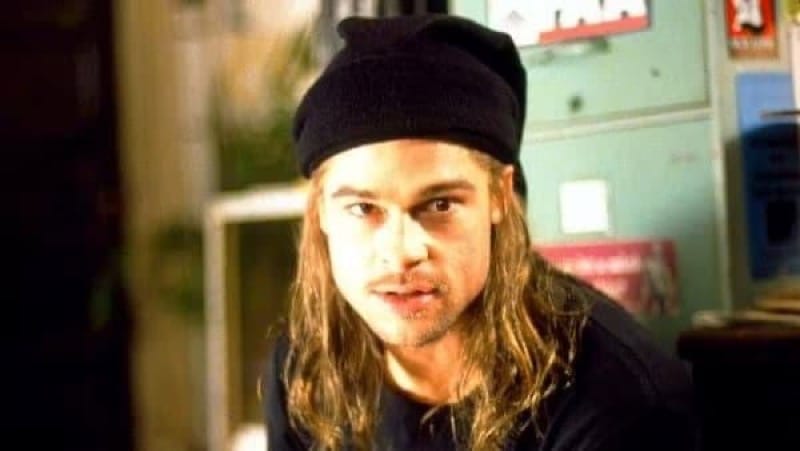
And also, notably, much like Madonna in that weird classic Vision Quest, Pitt was cast when he was still relatively unknown. But by the time of 12 Monkeys came out, Interview with the Vampire (1994) has already been released, as was Legends of the Fall (1994), and also Se7en (1995) meaning that Pitt was now an A-list actor, which worked out great for the film, as Pitt in this smaller, and much stranger role than he was now known for, definitely brought in a lot more audiences than maybe would’ve gone to this strange little time-travel dystopian sci-fi flick in the first place, which helped 12 Monkeys’ box office take considerably.
With a budget of a relatively small $29.5 million, as Waterworld‘s budget and eventual box take has made Universal a little skittish when it came to sci-fi films, 12 Monkeys went on to gross $57 million domestically, with a worldwide total of $169 million in the end. That‘s a huge take. It was even Number One at the box office for two weeks in January, but then From Dusk till Dawn, Mr. Holland's Opus, and Black Sheep came along, and what're ya’ gonna do?
In the end, 12 Monkeys is a classic for a reason, and that reason is that it’s simply a good movie, and it’s definitely worth checking out.
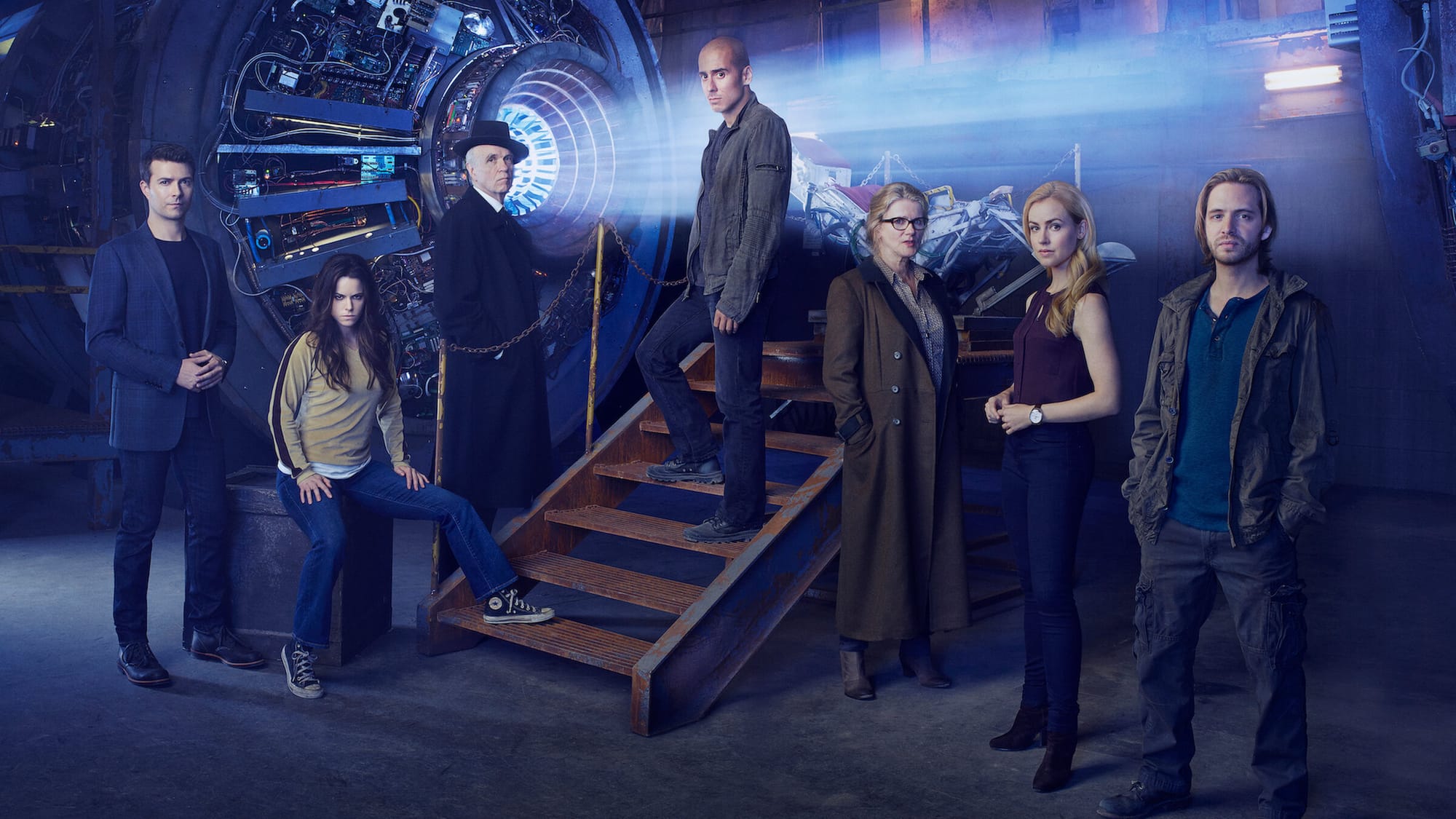
Plus, if you like the idea of time travel and time loops and dystopian futures behind the film, and you’re looking for some more stuff along those same lines, then good news for you! There’s a 4 season tv show version available to watch. It started in 2015, and was able to tell its entire story, so it has a narrative ending at the end of season 4. But just fyi, it’s an alternate universe take on this same basic story, and it diverges at a few specific points, before spinning off into its own very fun version. Much like the original movie, the Tv show version is also very much worth checking out.