Wake Up Dead Man: A Knives Out Mystery
“Scooby-dooby-doo.”

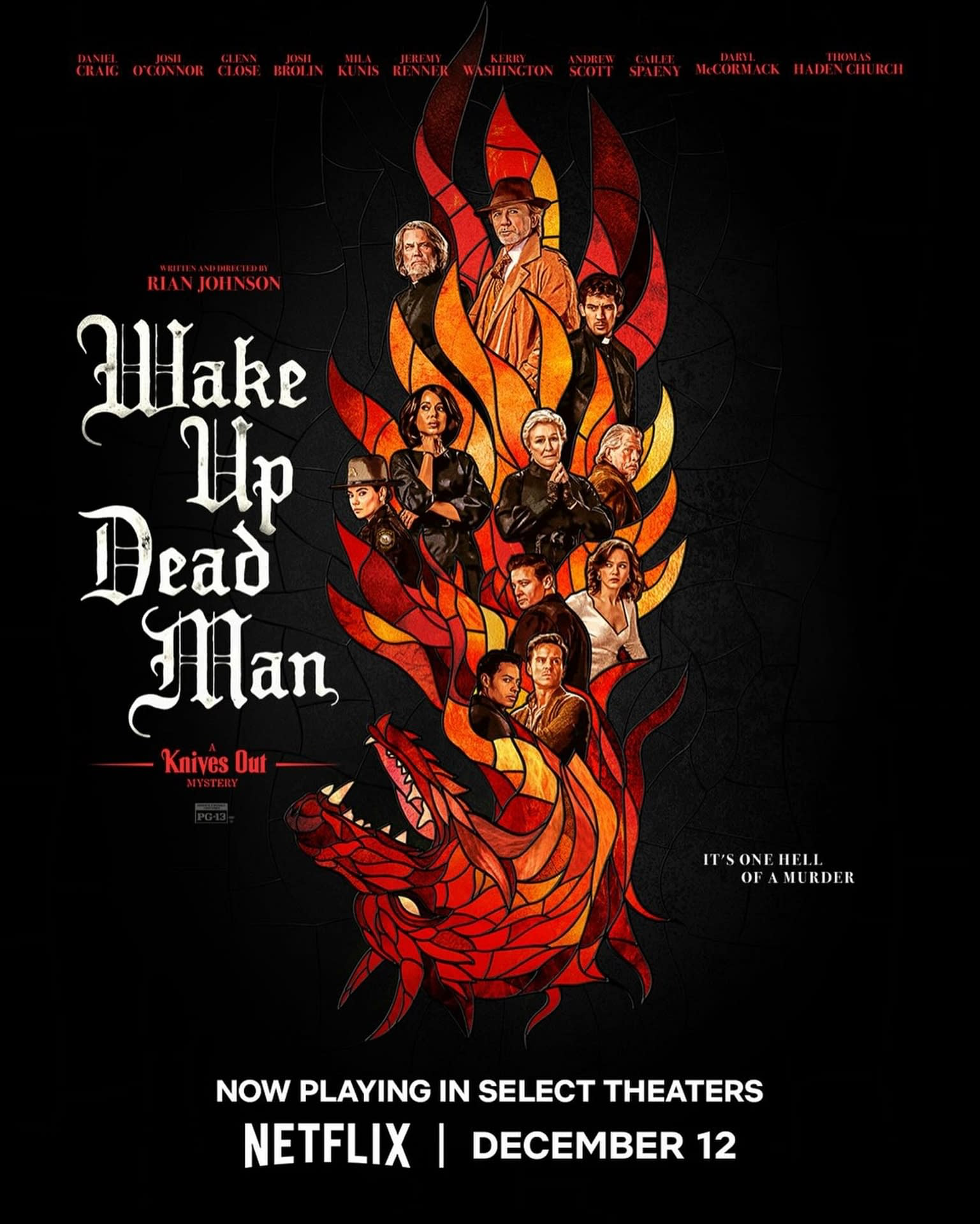
A baffling death inside a quiet church draws Benoit Blanc into a tense investigation where faith, secrets, and suspicion blur, as the congregation turns against itself.
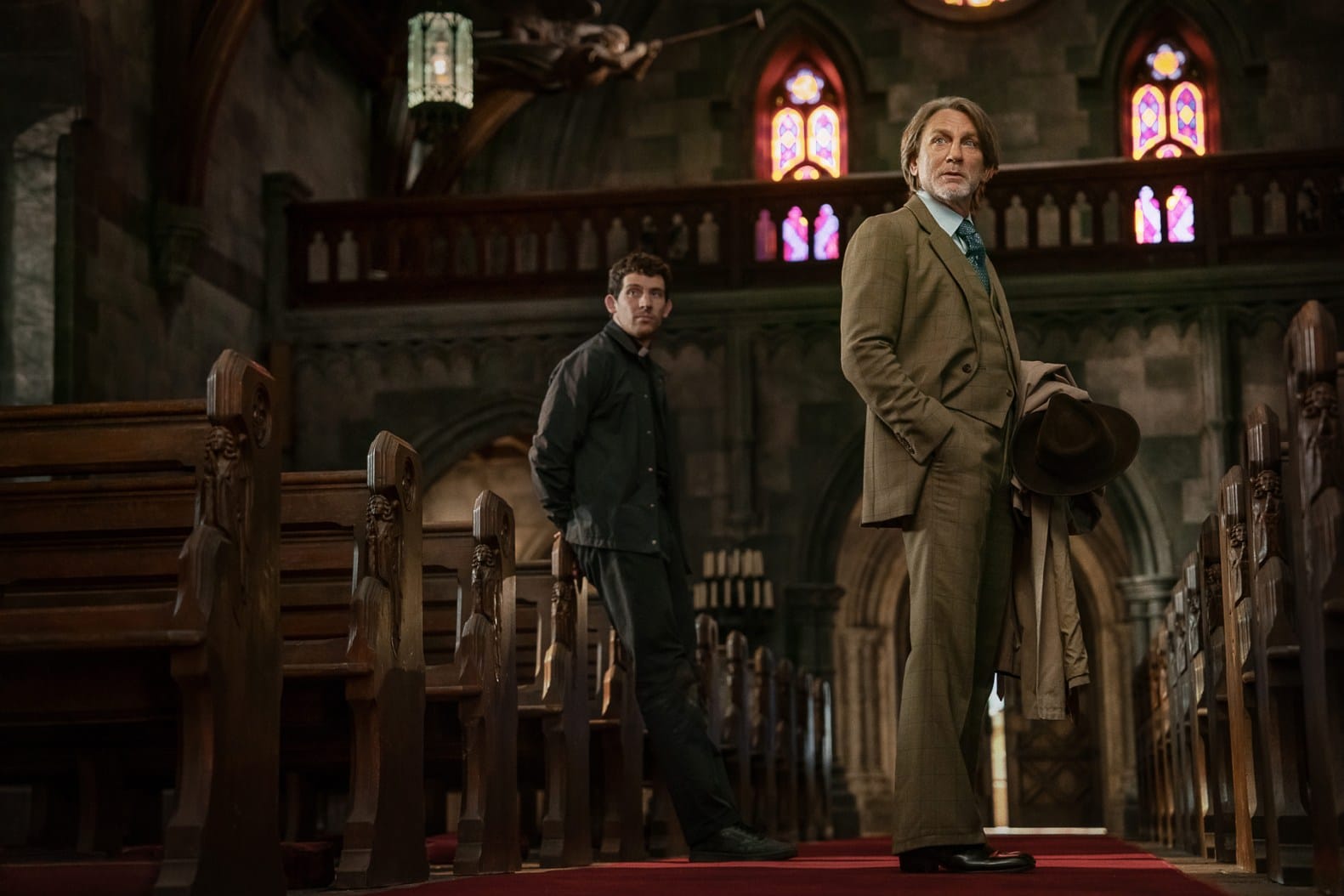
Before we get started, let’s talk about the most important stuff first…
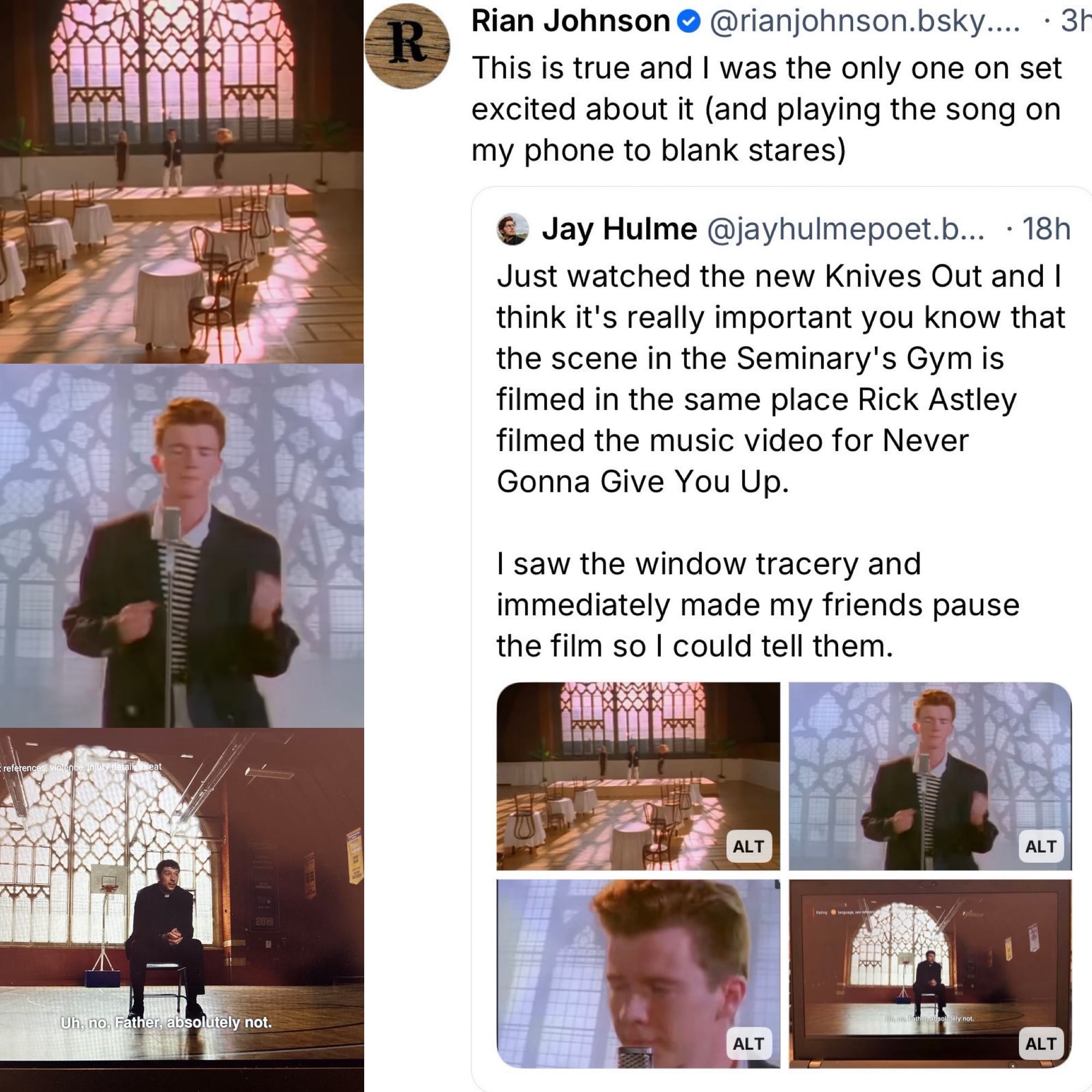
One scene in Wake Up Dead Man: A Knives Out Mystery was filmed in the same place as the music video was for pop music icon Rick Astley’s signature hit, the worldwide sensation, “Never Gonna Give You Up,“ which was the first single from Astley's 1987 debut studio album, Whenever You Need Somebody, and of course, also the source of the famous ”Rickroll” internet meme.
This has been confirmed by writer/director Rian Johnson.
I’ve always been a big fan of Rian Johnson, mostly because he makes good things.
From Brick, his Dashiell Hammett noir murder mystery set in a modern-day high school film, to The Brothers Bloom, his romantic caper comedy-drama about one last big heist, to Looper, his brilliant and twisting sci-fi time-travel movie, to The Last Jedi, one of the few actually good things to come out of the storied Star Wars franchise since the Original Trilogy, to the two films in his own ongoing whodunit murder mystery franchise–the same franchise that this film is a part of–the Benoit Blanc movies, the Oscar nominated Knives Out and its follow-up Glass Onion, not to mention his Columbo-riffing murder mystery TV show, Poker Face…
I absolutely love his stuff. Love it.
But I don’t just love Rian Johnson’s work because he consistently makes good movies. I also love his stuff because of how he is always willing to very openly and unapologetically portray white Democrat Centrists and Trumper Christian Nazis as the irredeemable, amoral monsters and pure evil, untrustworthy and greedy fucks that they absolutely are. I love how he consistently and clearly states how these god awful people are always—ALWAYS—the root of every problem in this country, and most importantly, how the truth never truly matters them, not if it stands in open opposition of their own entitled demands and bigoted agendas, because they only ever serve their own interests. In this modern day and age, I appreciate the clarity with which Johnson sees the world, and the way that he is willing to stand up on his own very visible platform and say this directly to the world’s face.
So, spoiler…
For those reasons, I am always gonna lean toward giving whatever Rian Johnson’s latest film or tv show is a positive review. If that bothers you at all, then I want you to know that this pleases me, and that I encourage you to cry about it more.
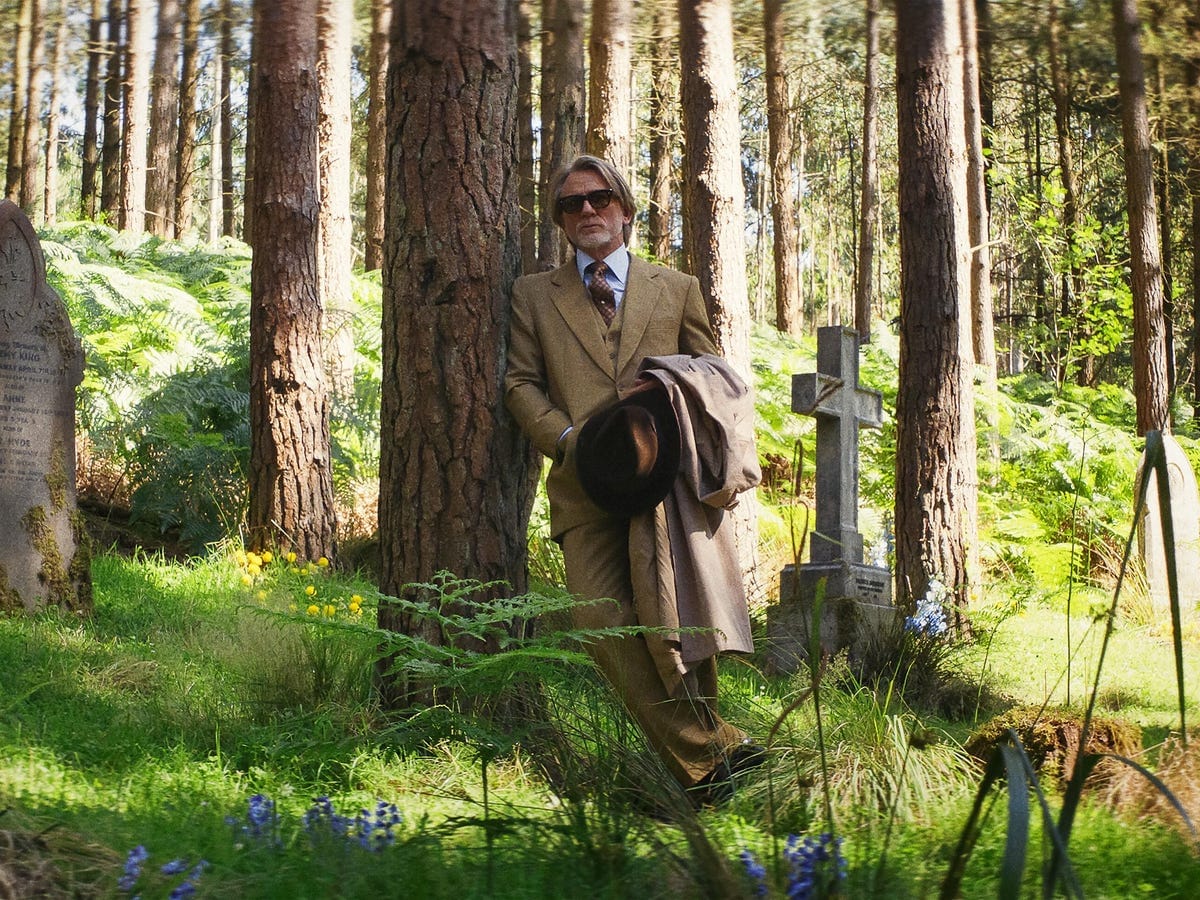
So, with an eye toward maintaining the secrets of the film’s central mystery, just in case you haven’t watched it yet, let’s talk about the movie…
After punching out a rude deacon, Reverend Jud Duplenticy, a former boxer turned Catholic priest, is reassigned as assistant pastor of Our Lady of Perpetual Fortitude, a small rural parish in the town of Chimney Rock, in upstate New York. The church is led by the infamous Monsignor Jefferson Wicks, an intimidating and incendiary priest, one the church dismisses as being a “few beads short of a rosary” all while he regularly abuses and harangues the flock gathered in the pews from his lofty position in the pulpit. At this point, Monsignor Wicks’ actions have driven all but a small congregation of very strangely loyal and incredibly toxic parishioners from the fold, and the small church is in danger of closing permanently.
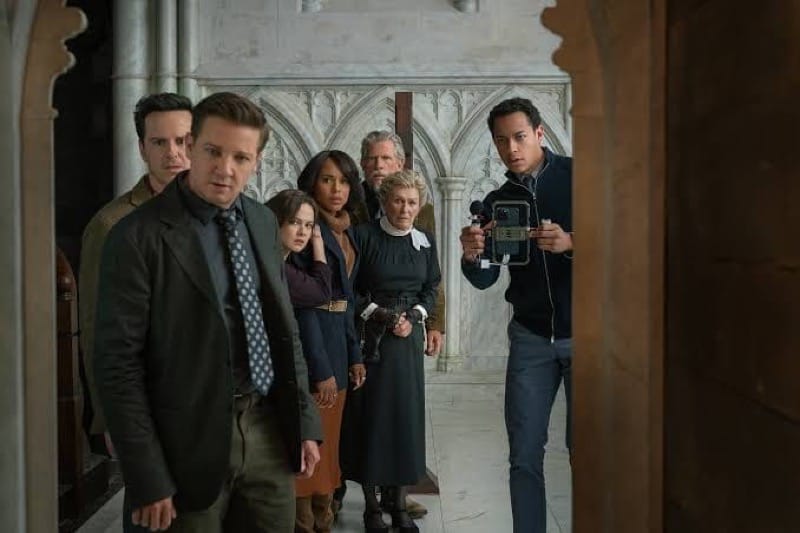
The small congregation includes… the zealous church administrator, the penitent groundskeeper, the alcoholic doctor, the rigid lawyer, the right wing YouTuber, the washed-up men’s right novelist, and the wealthy cellist so desperate for a cure for her disability that she has turned to God as a last resort.
Our Lady of Perpetual Fortitude has a dark history, one that is marked not just by Wicks’ domineering presence, but by the noticably absent central crucifix that is no longer hanging in the church. Wicks won’t allow it to be replaced. Jed finds himself immediately in conflict with both Monsignor Wicks and the church‘s congregation.
Then, during its Good Friday service, seemingly in full view of the congregation, and most importantly, Reverend Jud, Wicks dies in a small storage closet just off to the side of the pulpit. Murdered in plain sight. No one sees the blow land, but Wicks was stabbed in the back with a knife, the handle fashioned from a devil's-head ornament Reverend Jud had drunkenly stolen from a local bar and thrown through a church window just the night before, after an argument with Monsignor Wicks. To the police, Reverend Jud is the only suspect. But with no real evidence, Police chief Geraldine Scott summons private detective Benoit Blanc, the world’s greatest detective, to investigate.
What follows is a twisting tale of faith, forgiveness, empathy, and the power of belief, as old grudges, deep loyalties, new Resurrections, and the same old politics of lies and entitlement, attempt to bury the truth behind this classic locked-room murder mystery…
Will you figure it out before Benoit Blanc does?
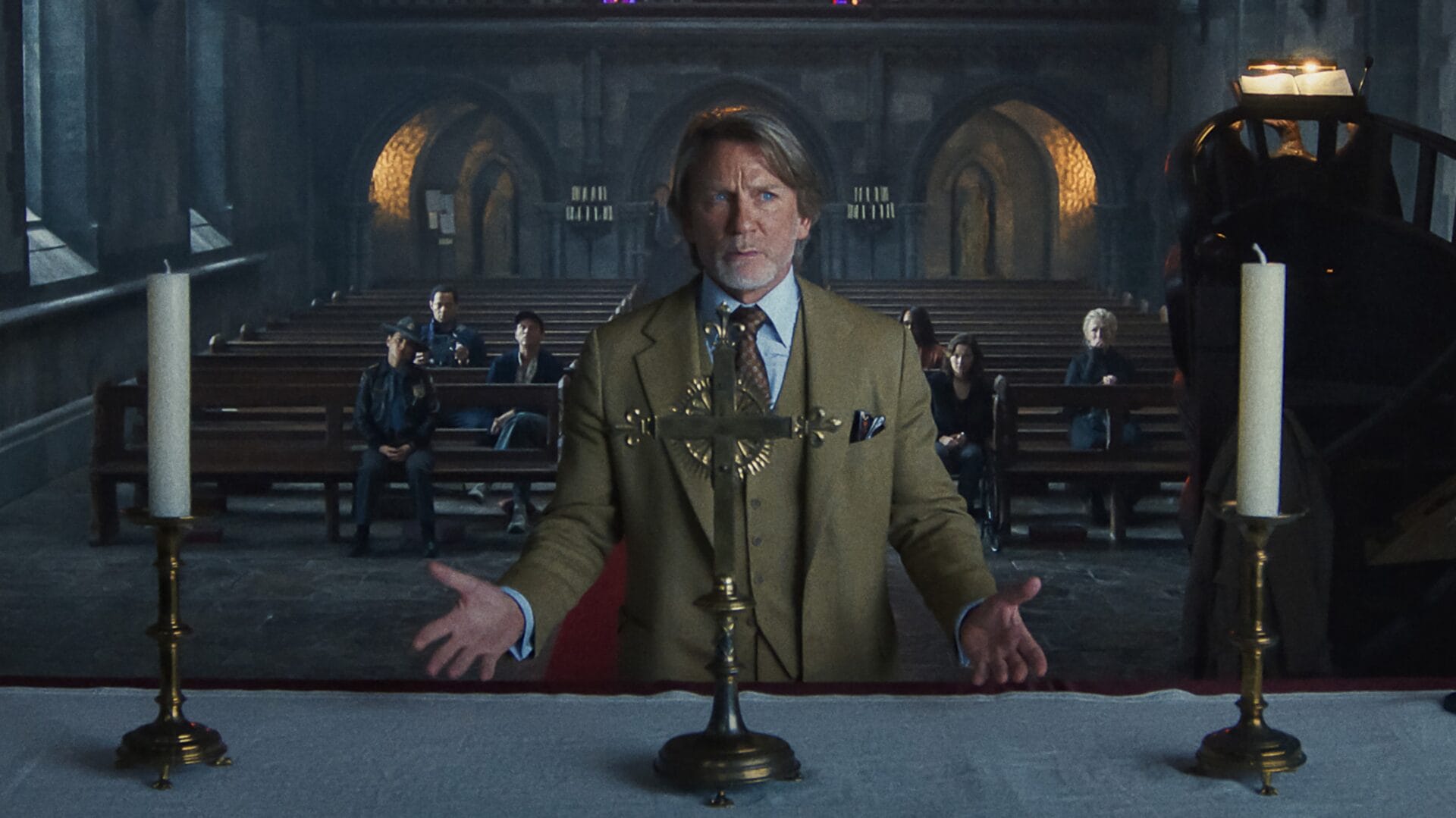
Inspired by classic “locked door mysteries” like Edgar Allan Poe's “Murders in the Rue Morgue” or John Dickson Carr‘s “The Hollow Man” or Agatha Christie‘s “And Then There Were None,” Wake Up Dead Man is the third film in the Benoit Blanc franchise (I hate that these films are called “A Knives Out Mystery”). An anthology series of classic whodunnit murder mysteries set in modern day America, with the detective Benoit Blanc at its center, the films allow writer/director Rian Johnson to skewer modern American culture with all its ugly warts and asshole citizenry while having a fun puzzle for audiences to solve.
Where the previous films in this franchise explored themes of class, privilege, hypocrisy, racism, and entitlement, as well as the hollowness of celebrity, the myth of the meritocracy, and the lack of accountability of the wealthy, Wake Up Dead Man talks about the beauty of faith versus the toxicity of influencers, about rotten men and the lasting damage wrought by misogyny and the patriarchy, and about the dichotomy of the tyranny of religion and the church’s mission of love. It’s a film about the stark difference between religious people who believe that “a priest is a shepherd and the world is a wolf“ and those who believe that a priest is not meant to fight the world, but to embrace it.
Normally, I don’t have any time for Christian shit. Not anymore. Not ever, if I’m being honest, even when I was very small, but especially not these days, especially not from white Americans. For me, for the most part, if you’re gonna talk about the struggles of priests and pastors and Christian churches and blah, blah, blah, snore, I’m gonna turn you off. I’m not interested. It bores me. I don’t know if I‘d say that I have no faith. I don't know that I'd say that I do either. Maybe I’d say that I just do not fucking care. Mostly, I think I'd say that it's none of your fucking business, but if you must know, it definitely doesn't involve any of the biblical myths, or really any religion’s myths for that matter. If pressed, I'd say that my own personal set of beliefs are just that... personal, and that I mostly wish everyone else would shut the fuck up about their own when they’re outside of their private homes and whatever house of worship they choose to attend, because if they did that, then maybe the world would a better place.
I accept that the fact there are those out there who need some reason to be that is greater than themselves, that they need external ideals to live up to, and strive for. I accept that, even if at the same time, all I see are the piles of bodies these people built their churches upon, and the death and destruction that their “inspirational” tales have brought to the world. If that's something you can stomach, then go on with your bad self, but me, much like our hero Benoit Blanc, all I hear is “a story I do not believe” and I’d rather hear one that I “can swallow without choking.” So, long story short, I mostly avoid the Christian shit, with the only real exceptions being The Righteous Gemstones and Noah.
I'm telling you all of this so that you understand when I say…
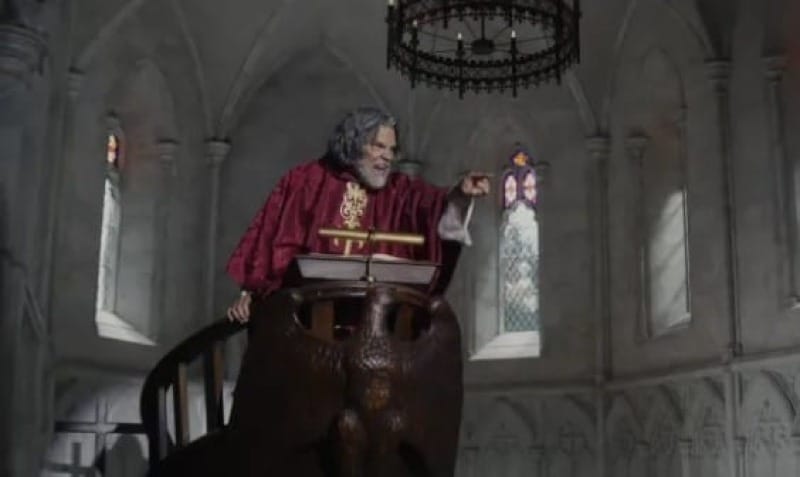
Before you panic and bolt, while I have seen a few folks claiming this film is a “faith-based film” or even a Christian film, I heartily disagree with that. It most definitely is not. That said, at the same time, I wouldn’t call it an attack on faith either, or even a deconstruction of it. I think, instead, this movie is about complex characters in crisis, questioning ideas that are foundational to their existence, with the threat of disappointments and betrayals hanging over them, and with nothing but a slim hope of redemption to keep them going, all with an undeniable feeling of anger bubbling beneath the surface. So, to me at least, this film is clearly not about whether or not God exists, but the power of belief, the meaning of having faith, and the strength of the values that you claim to adhere to.
And also… murder.
So, yes, while watching the film, it’s clear that this is a film all about American Christianity, one made by someone who used to be more of a part of that world, but now isn’t. But it’s also clear that this isn’t propaganda, it’s a commentary on faith and religion. And while it is a film that is farcical in the way these kinds of whodunit mysteries should he, it also treats the ideas of religion and faith and the role it plays in people’s lives with what I think was a appropriate amount of weight. So yeah, this is definitely a film about American Christianity, but it is not a “faith-based” film.
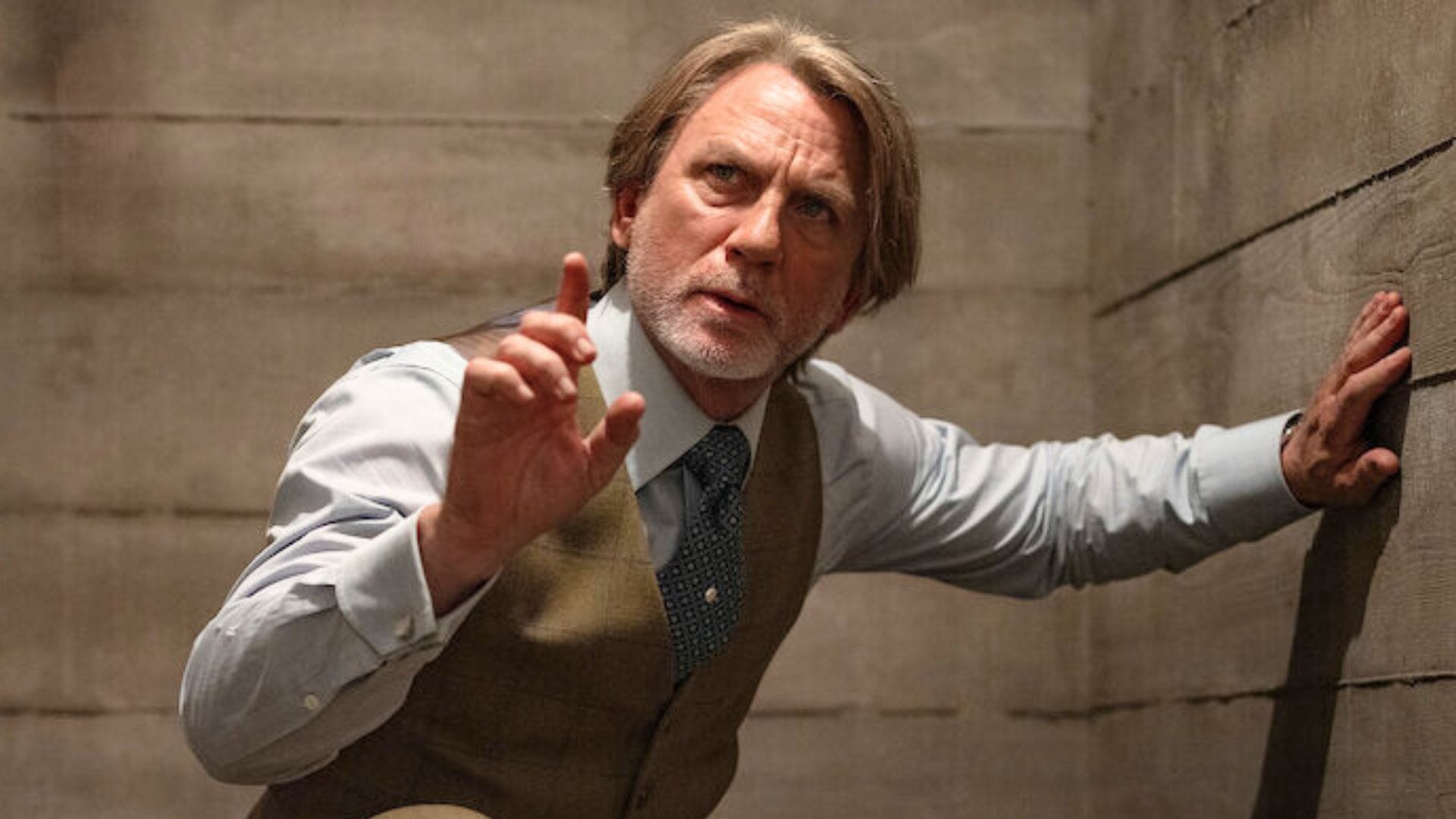
What it is, is an impressive balancing act, because this film is about Johnson struggling with his own faith and what that means to him, while also trying to create an entertaining and intriguing murder mystery. Now, like I said, usually, the whole "struggling with my faith" thing is something I can’t understand, or honestly care that much about. I mean, show me a movie about some guy agonzing before the cross about the question of faith, and I'll show you a movie that I am not going to watch. But... in this world we are all stuck in, with its constant betrayals and its disappointments, all by people and things that you thought you could rely on, with the way this film focuses on a small group of close-knit people in a small town setting… well, I suppose I can relate to the general idea this time.
Still, with this in mind, I really liked that Johnson then made this into a movie about storytelling, the stories that people tell themselves, the stories that people tell each other, and the stories that they base their lives and entire identities on. I appreciate him taking that route, rather than indulging in a maudlin dwelling on the legacy of myriad disappointments that come with deciding to leave the church, or the seemingly endless litany of hypocritical and harmful failings of the church as a political structure, or lingering in idiot nostalgia for the white supremacy-rooted lies of “simpler” times, all while lamenting the fact that things aren’t pure and good because of a "few bad apples" all while refusing to acknowledge their own personal complicity, and blah, blah, blah, all the usual boring shit (white) people always end up getting stuck on whenever they want to avoid confronting the problems that infest the various clubs that they eagerly claim to be part of.
So, Johnson gets a lot of praise from me for doing this.
I think it’s very important that this film talk about how American Christianity is toxic and broken and is the main tool of the fascist and bigoted monsters actively destroy our world. And I like that this film then states that, if we want to repair the damage the church has done, and defeat the monsters that squat at its heart, and redeem its “holy” mission, American Christianity requires people who are inside of the system, people willing to do the work, even though it may be inconvenient and messy and make them uncomfortable, as well those who are outside of that system, who are willing to extend some grace to those efforts, once it‘s clear that this work is actually being done. I like how it says that the idea of the church itself isn't a bad thing, it's just that systems are made up of people, and people… fucking suck. And that sometimes, in order to do all of this, to make things better, your only option is to shut it all down, take out the trash, and then start again anew.
I really liked this honesty.
I also liked the unexpected tribute to the great Shimbleshanks, the railway cat.
And I really enjoyed that the Star Wars reference was used to highlight how it is these dimwit bigots can still believe they’re true Star Wars fans, how it is that they can believe that they're the rebels in the story, not the empire, and that it's mostly because they’re mad that women won't have sex with them.
Most of all, like with all of the Benoit Blanc films, I really liked how the clues are laid out clearly, and are actually completely visible for anyone paying attention, or at least, for those of us who just so happen to be looking in the right place at the right time. That’s one of my favorite parts about these films, that simply by using the clues presented, this is a solvable crime for the audience. Usually, I’m firmly on the side that movies aren’t Rubik’s Cubes to be solved, and that people who treat them this way are bad at watching movies, usually because they lack media literacy skills in general. But in cases like this… yeah, the clues are there, and you can solve it. I love that. I love how it’s all being done right in our faces.
So, watch closely, maybe you’ll figure it out.
Now, I have seen people grousing that the mystery is too convoluted to be probable. I would counter that by saying that every single one of these types of cozy murder mystery whodunits, the ones that feature a detective who reveals all in the final act, are all overly-convoluted and improbable. That’s just their nature. How else do you expect an “impossible” crime to happen, if not by an incredible amount of planning that in the end seems to be more than a little bit reliant on coincidence and luck?
Either way, it’s on Netflix, so maybe watch it again, if you were lost or unsure, or if you want to see if it all happens right in front of you. And when you do this, maybe keep in mind what Truffaut said about watching movies a second time, how this allowed him to stop worrying about what happens in a film, and allowed him to start seeing how it happened.
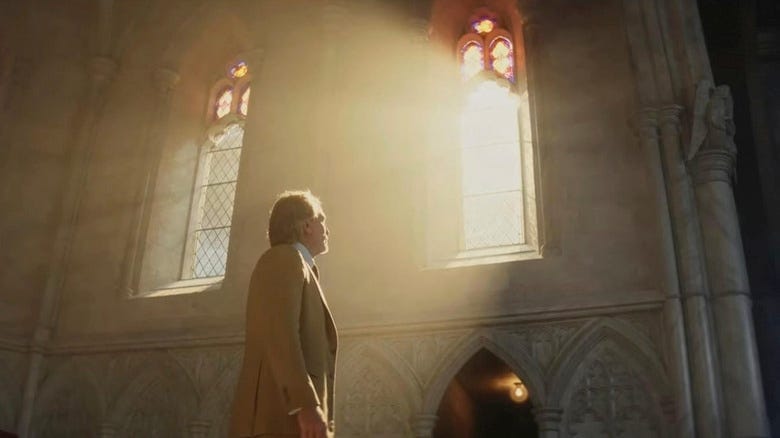
Best of all, I loved how this is not just a well-done, fun, and really entertaining film with something to say, it’s also a frankly quite beautiful film. This is a “movie” and it was shot in a way to be impressive on the big screen. It’s constantly playing with the contrast between the colors of verdant green forests and oppressive stone, as well as the way the sunlight changes on overcast days, or with the inky black of the shadows on a country night. It's a gorgeous film. The difference is basic cinematic quality here is starkly apparent when compared to how most streaming films look these days. I don’t hold with the whole “they don’t make em like they used to” kind of rose colored glasses nostalgia bullshit, but in this particular case, I will say that Wake Up Dead Man felt infused with an old school Hollywood care and craft that you truly don’t see very often anymore.
It was a pleasure to watch.
Finally, I think my actual favorite thing about the Benoit Blanc films is how, much like Black Bag, this is a film that proves that movies for adults still exist. Because this is a good adult film, it’s smart, it's funny, it's fun, it's interesting and it proves that you don’t always need fireworks to keep people’s attention. It’s an incredibly well-made film, all around, and if it isn’t my favorite of the year, then it’s in my Top Five, easily.
In short, Wake Up Dead Man is a revelation. Big thumbs up.