Hoppers
Potato. Potato. Coconut Hospital.

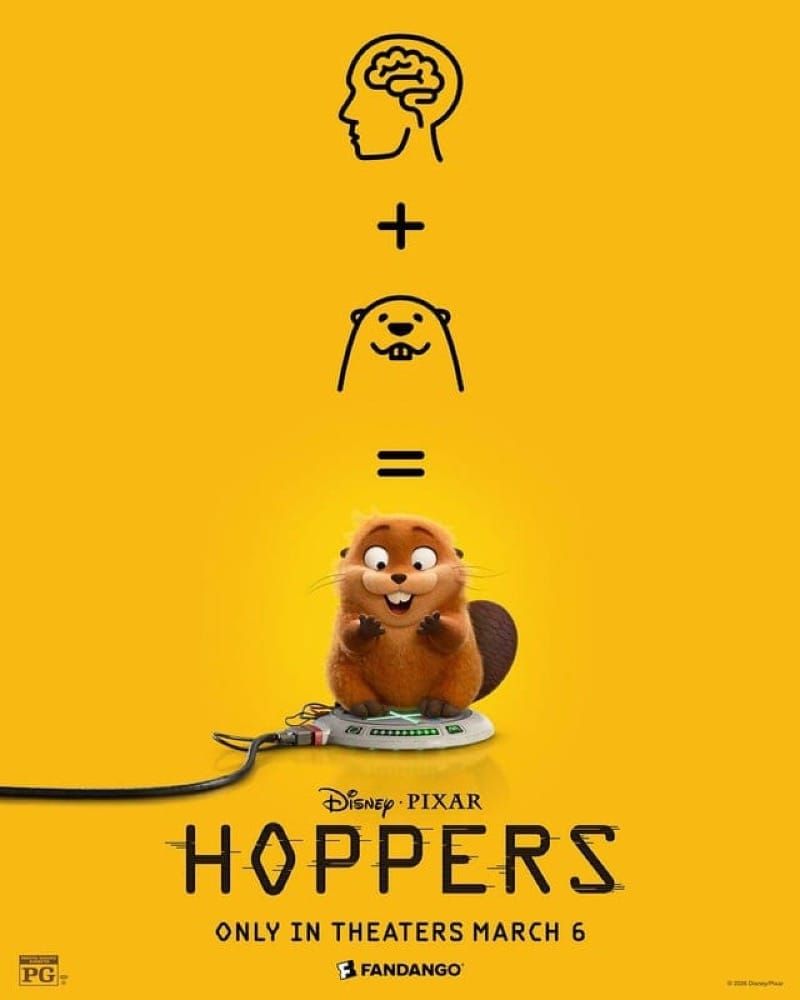
When a corrupt mayor tries to destroy a local forest, an animal-loving college student uses mind-swapping technology to transfer her consciousness into a life-like robotic beaver, and inadvertently sparks an animal uprising.
Pixar Studios started in 1974, making it the third most important thing to happen to Pop Culture that year, after the creation of Wolverine, and of course, me.
It all began when New York Institute of Technology founder, Alexander Schure, established the Computer Graphics Lab (CGL), staffing it with fellow nerds who shared his dream of 1. making the first computer-animated film, and 2. I presume (if every movie and tv show about Nerds is to be believed), meet girls.
For the next few years, everything was going just swimmingly, but then in 1979, George Lucas and Francis Ford Coppola poached a big chunk of CGL's employees. Those guys became known as the Graphics Group, and they worked on a number of movies with computer effects as part of Lucasfilm's Industrial Light & Magic (ILM). Their section eventually became known as Pixar, a name which, depending on who's telling the tale, is the result of either a corporate brainstorming session, or maybe a three martini lunch. Pixar eventually became their own corporation in 1986, after the double whammy of George Lucas' divorce and the release of Return of the Jedi caused a very sudden dropoff in Star Wars related work, threatening Pixar's future as a division of the Lucasfilm corproate entity. Reading the writing on the wall, and in an effort to seize their own destiny before being sold off, the Pixar nerds left and struck out on their own.
It was around this time when the studio's mascot, Luxo Jr., the hoppy little desk lamp, first appeared.

Things were a bit dodgy for the studio for the next decade.
But then, in 1995, Toy Story was released. It was a massive hit. Massive. Suddenly Pixar was an undeniable presense on the Hollywood scene, and a long string of hits followed. After that, Pixar was a powerhouse.
Disney purchased them in 2006 for 7.4 billion dollars.
An insane amount of money...
Over the years, Pixar has produced 31 feature films, with the first one being Toy Story, of course, which is also the first fully computer-animated feature film, and its most recent film is Toy Story 5. So... Full Circle. Its feature films have earned over $17 billion total at the worldwide box office, with an average of $589 million per film. Five of their films–Toy Story 3, Finding Dory, Incredibles 2, Toy Story 4, and Inside Out 2, have grossed over $1 billion at the global box office. Thirteen of Pixar's films are in the 50 highest-grossing animated films of all time, and Inside Out 2 was the third highest-grossing animated film of all time, after Zootopia 2 and Ne Zha. In short, Pixar makes a product that a lot of people out there seem to like, further evidenced by the fact that Pixar has also won a slew of awards over the years, including 23 Academy Awards (11 for Best Animated Film), 10 Golden Globe Awards, and 11 Grammys. Two of the Pixar movies, Toy Story 3 and Up, were even nominated for the Best Picture Oscar.
Not all of Pixar's films are winners, of course... Cars 2 was terrible.
Anyway, Directed by Daniel Chong, and written by David Chong and Jesse Andrews, Hoppers is Pixar's 30th film. It grossed $389 million worldwide during its theatrical release, which currently makes it the ninth-highest-grossing film of 2026, which, again, means that a lot of people really liked it.
And so we begin.
In the town of Beaverton...
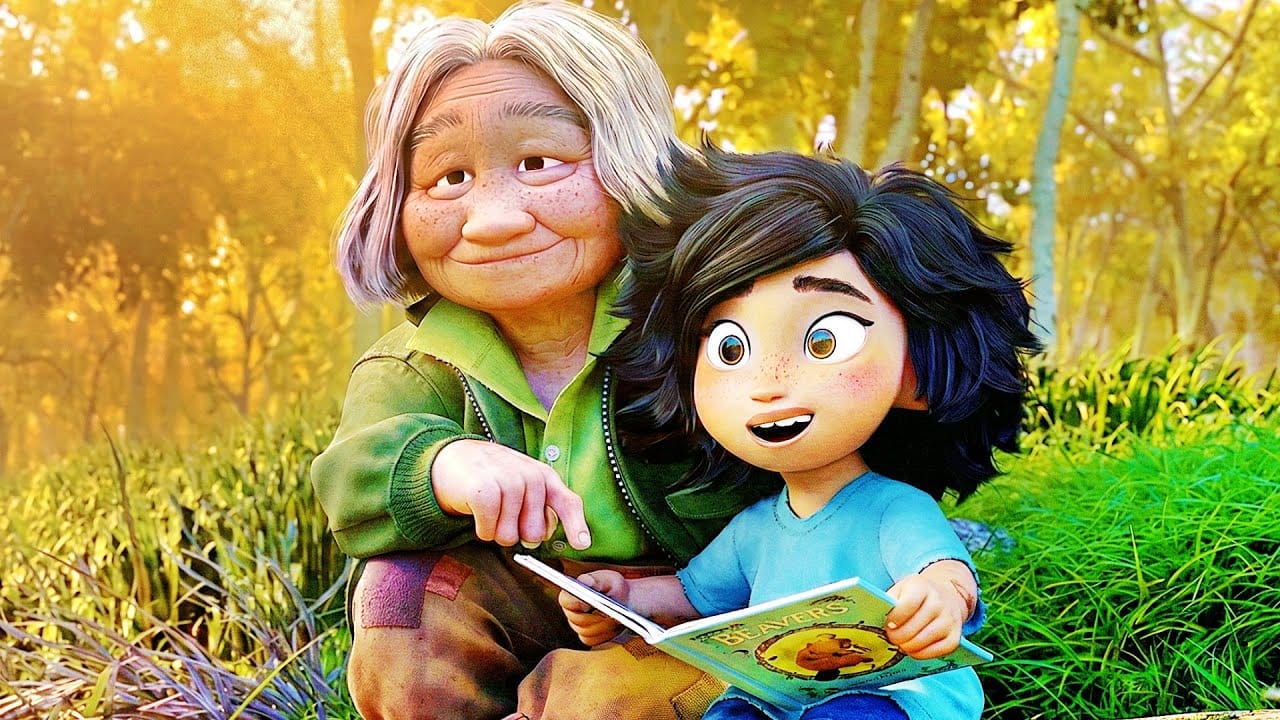
When 6-year old Mabel Tanaka once again attempts to free every one of the classroom animals in her elementary school, resulting in her biting a teacher in order to get away with a backpack full of turtles and hamsters, she is suspended. Frustrated, and with no other option, as she has to work that day, Mabel's mother drops her off with her grandmother. Mabel's grandmother takes young Mabel to a nearby forested glade, and talks her through her day. Mabel loves the glade. Her grandmother loves the glade. They spend a lot of time there together. Over the years, their shared love of the glade, and all of nature, results in a deep bond.
At one point, her grandmother dooms them all by smiling, sighing happily, and saying something like: "At least we will always have the glade..."
Years pass.
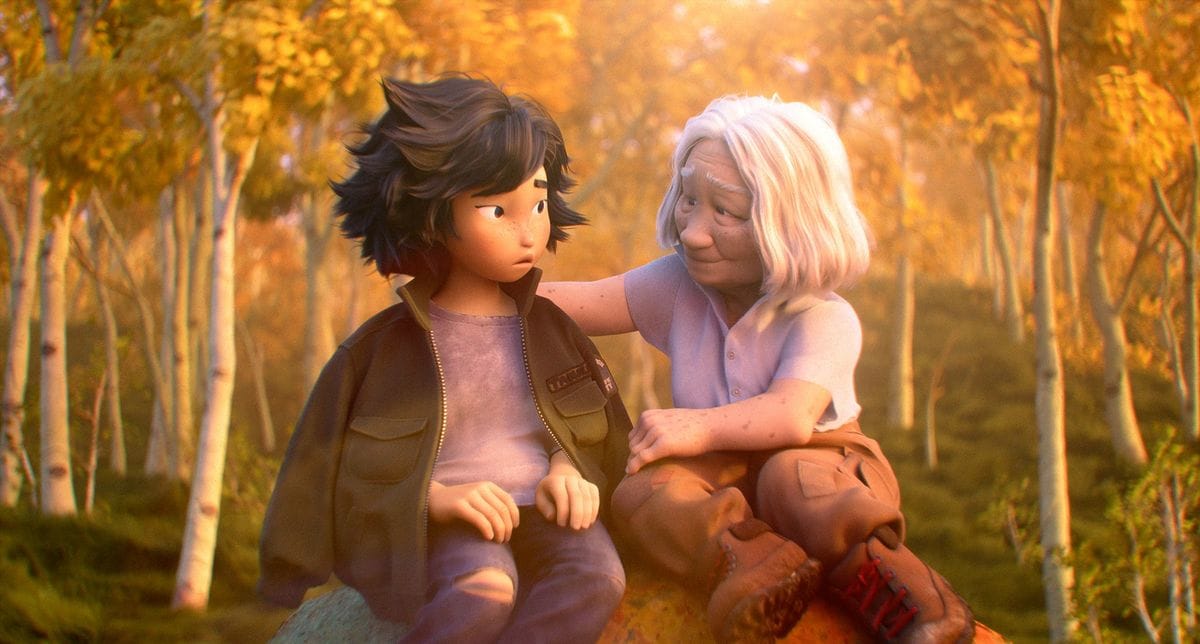
Mabel's parents move away for reasons unimportant to the story, and also her grandmother dies, mostly because her main function in the story is to be a vague inspiration, and that works better if she's dead. Mabel, meanwhile, is in college, a skateboard-riding, Bikini Kill-listening, environmental activist, who is currently at war with Beaverton's mayor, Jerry Generazzo, a stereotypical but so-true-it-hurts, glad-handing empty suit handsome guy son of a bitch Centrist Democrat asshole, who, like all Centrist Democrats, is only concerned with being liked, and also their own enrichment. Mabel's war with Jerry escalates when Mabel discovers that Jerry is destroying the glade for his new highway, claiming that all the animals have left the glade anyway, so it's okay. And while it's true that the animals have left, Mabel knows that this is somehow all bullshit, and that Jerry is lying, so she starts a door-knocking campaign against the project, but gets nowhere with it.
During this effort, Mabel is told by her college biology professor, Dr. Sam, that Jerry isn't lying, that the animals actually have deserted the glade, and it's because the beavers left. As a keystone species, beavers are important to maintaining the glade's ecosystem, and without their presense, the other species moved on to.
Moments later, the main plot point is revealed, and we hit the point of no return. Mabel discovers that Dr. Sam, and her colleagues, Nisha and Conner, have secretly developed "Hoppers" technology, which allows them to transfer human minds into robotic animals in order to study the unaware animals closely–basically the entire hook of the Avatar franchise, despite Dr. Sam's strenuous objections that there is no similarity. Realizing that she could use this technology to get beavers to return the glade, and against Dr. Sam's warnings, Mabel transfers her mind into a robotic beaver and escapes the lab before Dr. Sam and Nisha can catch her.
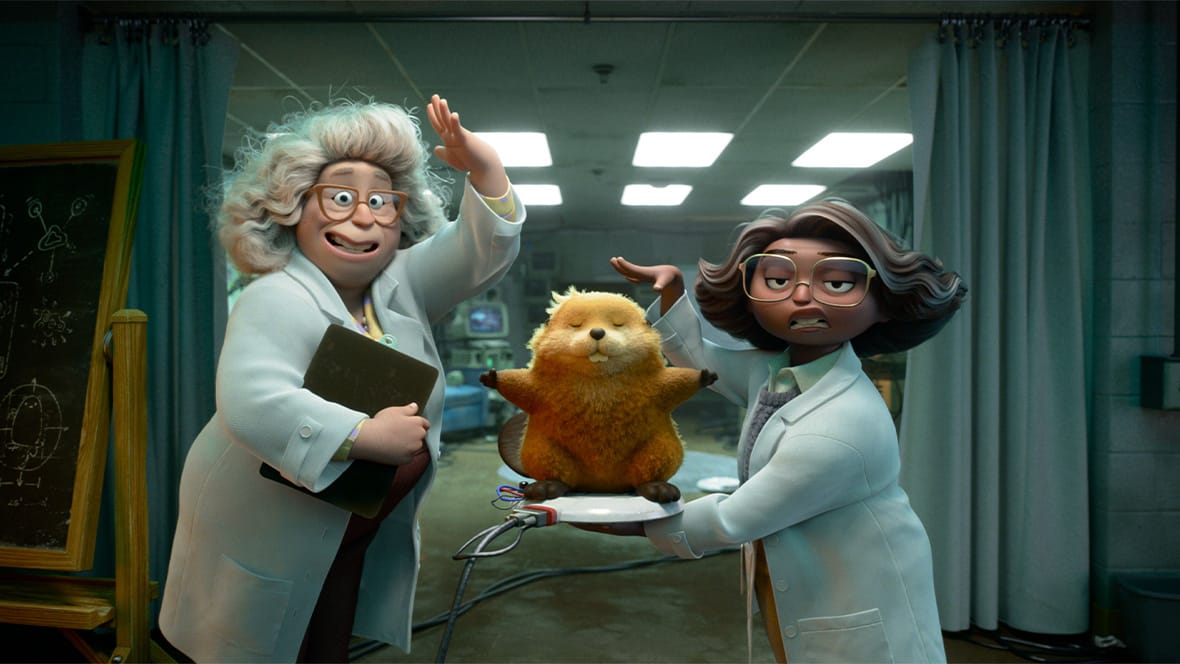
In the glade, Mabel immediately discovers that animals speak English, but only animals (and robot animals, obviously) can hear them.
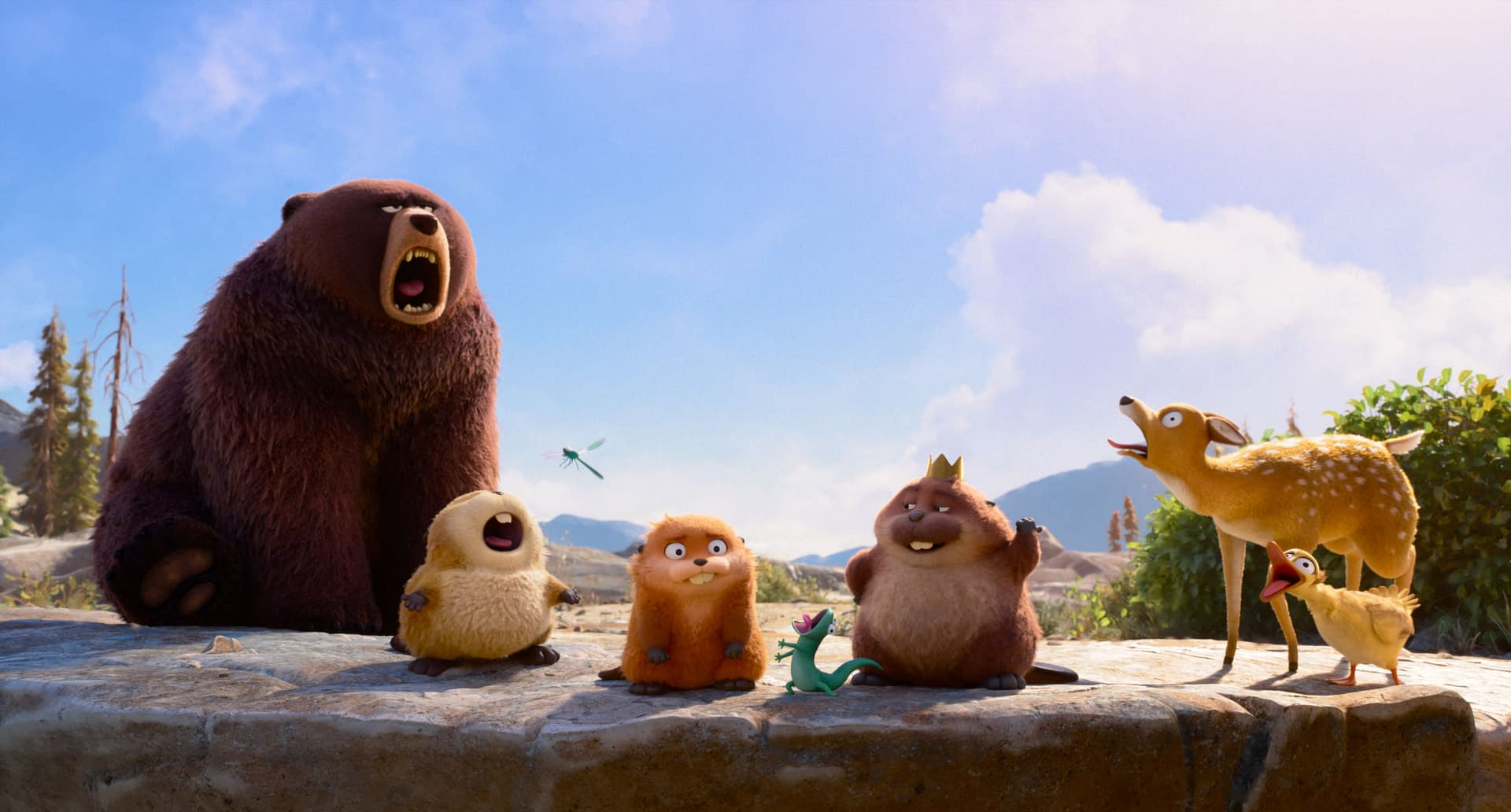
Mistaken for a real beaver, Mabel violates Pond Rules–which basically state that everybody's got to eat and since they're all in this together, that means sometimes you get eaten–by stopping a bear from eating a beaver. She is brought before the Mammal King George, a beaver, at the Superlodge, a massive beaver den. George is new to the crown, having only recently claimed it, after his jealous uncle killed his father, which sparked the Twig Wars, an act which forced the previously living-happily-in-exile George to take the crown, stepping uneasily into a destiny that he did not want, but in the end, he is a good monarch, and beloved of his people.
At the moment, George is doing his best to maintain a sense of order at the Superlodge, all while working hard to keep up morale, as the Superlodge is now overcrowded and bulging at the seams. This is due to the many animals who have been recently displaced by the greed and encroachment of humanity, and are now forced to live there together.
Realizing that this overcrowding is Jerry's doing, Mabel returns to the glade and discovers an artificial tree emitting sound waves audible only to animals (but not to robot animals) that Jerry secretly installed to drive the animals away. Despite Dr. Sam's attempt to bring her back to the lab by using her grad student, Connor, who has "hopped" inside a bird, Mabel manages to destroys the fake tree, which allows the animals to return to the glade, including beavers, and she is hailed as a hero. With her work now complete, Mabel is about to leave, about to return to the lab and her own body, when Jerry shows up with a big construction crew, some dynamite, and even more sound-emitting fake trees.
The animals are driven away once again.
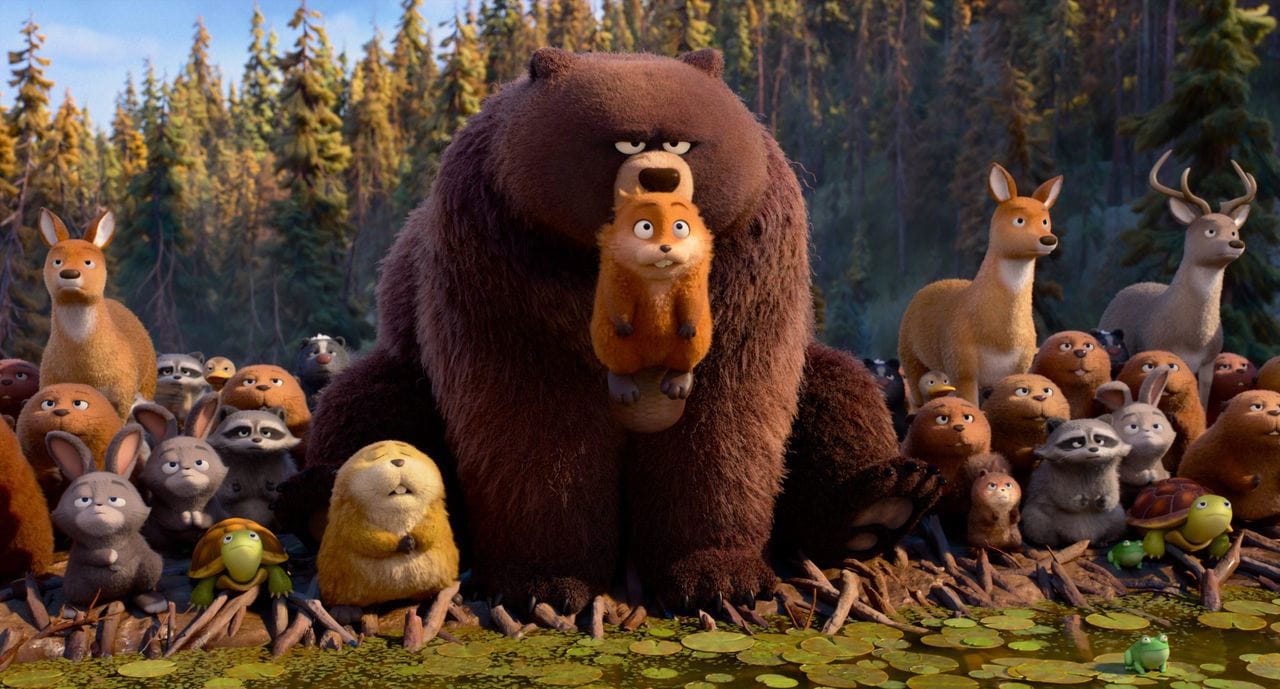
Refusing to accept defeat, or to return to the lab, Mabel convinces George, as the Mammal King, to call a meeting of the Animal Council. Soon the various monarchs of the Insect, Amphibian, Fish, Reptile, and Bird kingdoms arrive. The other kings and queens are initially unconcerned, believing this to not be any of their problem. Incensed, Mabel explains to the Council how they are all intertwined, how they are all actually dependant on one another, and that if the glade falls, so too could their own kingdoms.
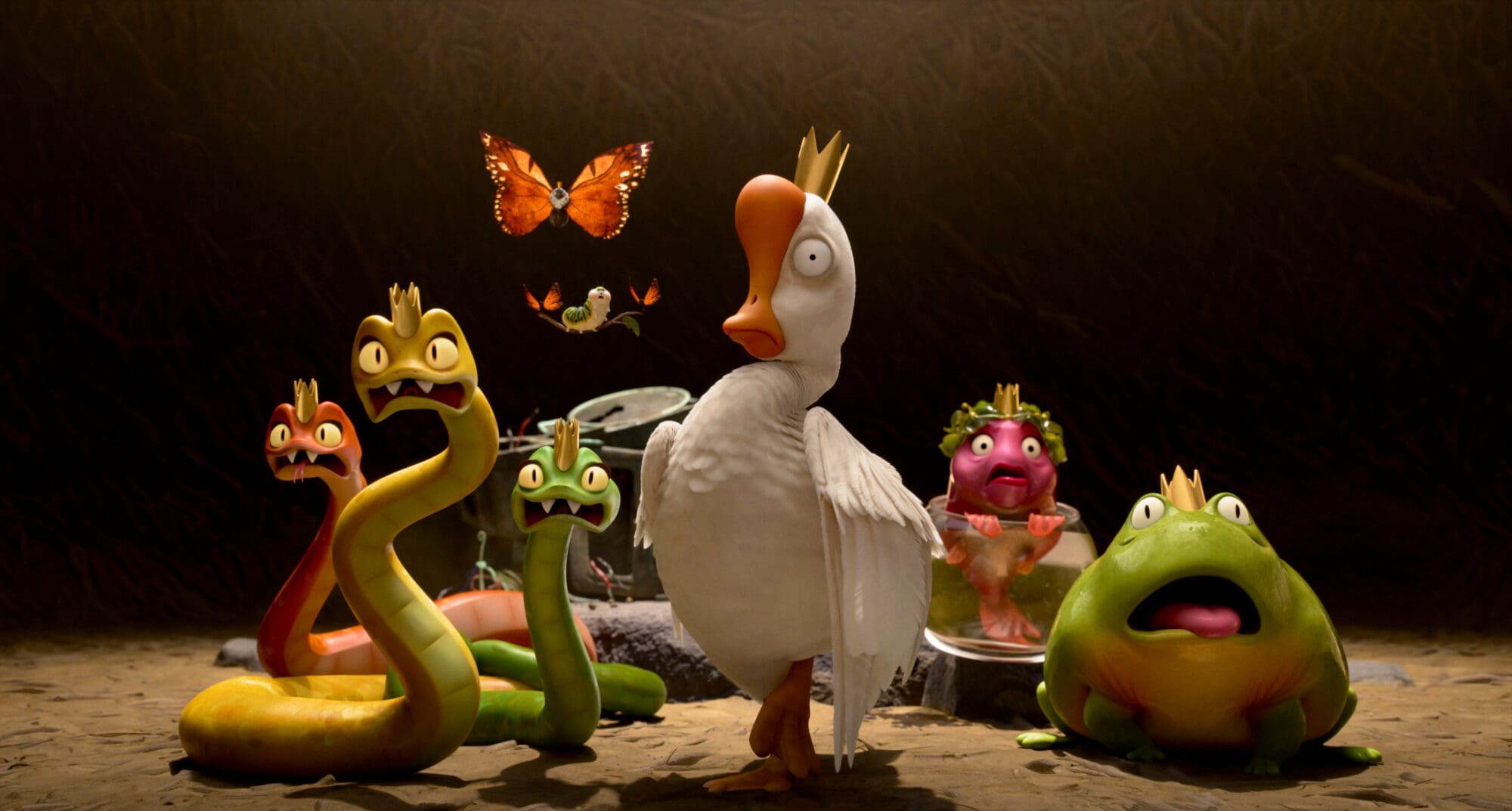
Unfortunately, her speech accidentally inspires the Council to kill Jerry.
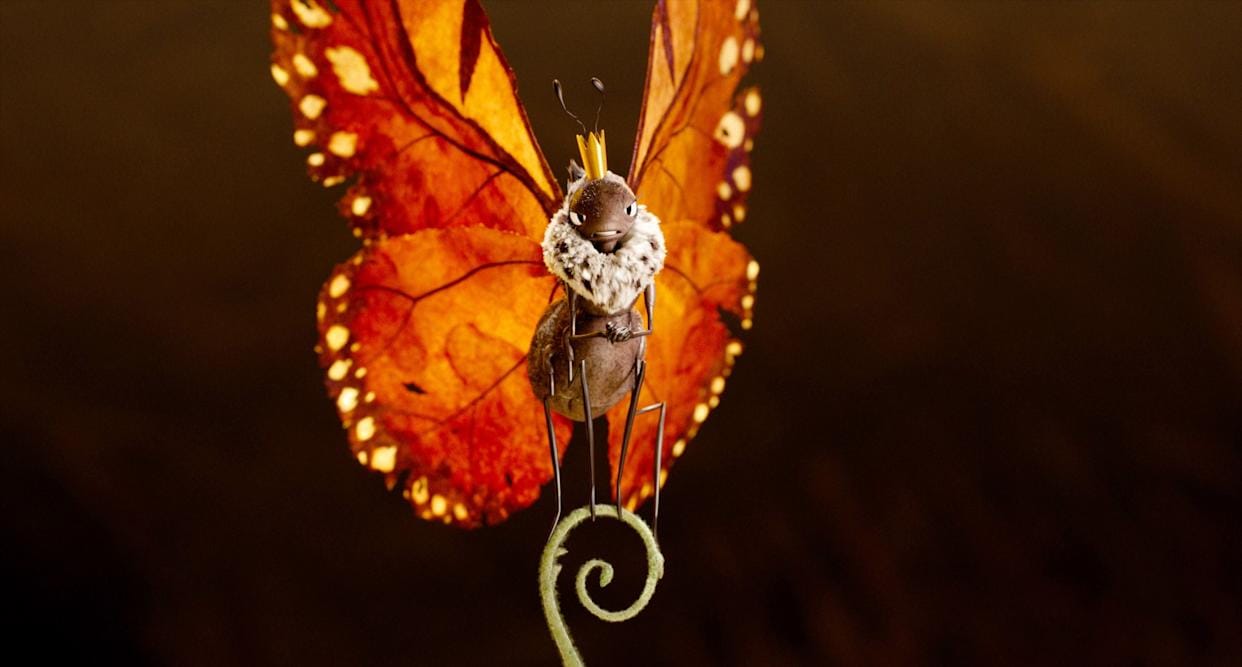
When Mabel tries to stop them, she accidentally kills the Insect Queen. She and George are forced to flee, as the other kingdoms unite against the traitorous milk-drinkers. In the process, the other kingdom's armies destroy the robotic bodies that Nisha and Conner were using to spy on the meeting, accidentally exposing the humans' deception. This makes things even worse. In the aftermath, the son of the deceased Insect Queen, Prince Titus, a tiny catepillar tyrant, crowns himself king, and then seizes control of the Council through sheer force of will. He demands the Animal Council take action while he pupates... Jerry must die.
And so it is decided... It's time to bring in an apex predator.
Despite being a little bit upset at Mabel, George is a good guy, so he forgives her and agrees to help her protect Jerry. Joined by Loaf the beaver, Tom the lizard, and Ellen the bear, they ambush Jerry, and using text-to-voice on his phone, force him to drive to the glade in the hope that he will understand the hurt he is causing, stop the highway project, and leave the glade alone. Unfortunately, while they are on the way there, a group of seagulls drop a great white shark named Diane onto Jerry's car. They all manage to escape the surprisingly upbeat and friendly, but nonetheless deadly Diane, but still... Jerry refuses to abandon the project.
Frustrated, Mabel reveals their location to the Animal Council. Dr. Sam, and her colleagues, Nisha and Conner, arrive then and manage to disconnect Mabel from the robotic beaver, causing her to faint, revealing Mabel's deception to the shocked George mere moments before they are all overrun by snakes.
The chickens having finally come home to roost (not literally), Mabel awakens to find that the Animal Council has taken everyone hostage, and they have forced Dr. Sam, and her colleagues, Nisha and Conner, to build a robotic clone of Jerry for Titus to inhabit.
No longer a catepillar and now a monarch butterfly, Titus cackles evilly, revealing his plans to impersonate Jerry at the big highway project/re-election rally that will be taking place at the glade later that day. There, they will switch the sound trees' frequency, and use them to massacre all the humans. Titus then takes a moment to "both-sides" Mabel, during which Jerry piles on. This causes Mabel to feel guilty, so she patches things up with Jerry in order to stop Titus.
At the rally, everyone is running around doing stuff, and eventually Titus throws a tantrum and reveals his insect kingdom world domination plans, causing the rest of the Animal Council to turn on him. This results in a wildfire that threatens both forest and city, and the only way to save everyone is to kill Titus, and to then work together to put out the fire.
This group effort includes Diane, the Great White shark, but no one seems to care that a salt-water shark gets dropped into a fresh-water pond with zero issue, which really bugged me...
In the end, everyone lives happily ever after, except for Titus, obviously, and the world manages to spin on, and is somehow not totally shattered by the realization that not only do all living creatures talk to each other, they can also understand us when we talk, and the only reason we don't already know this is because we are too stupid to understand them, all of which can easily be proven simply by transferring your mind into an incredibly life-like robotic animal built by three people in the basement lab of a small college located in a third-ring suburb of Portland, Oregon. Additionally, every living creature in the world besides humans apparently live in a monarchical society, and the ruler of each respective kingdom wears a tiny golden crown all the time, the existence of which implies that there are Mammal, Insect, Amphibian, Fish, Reptile, and Bird metalsmiths.
The End.
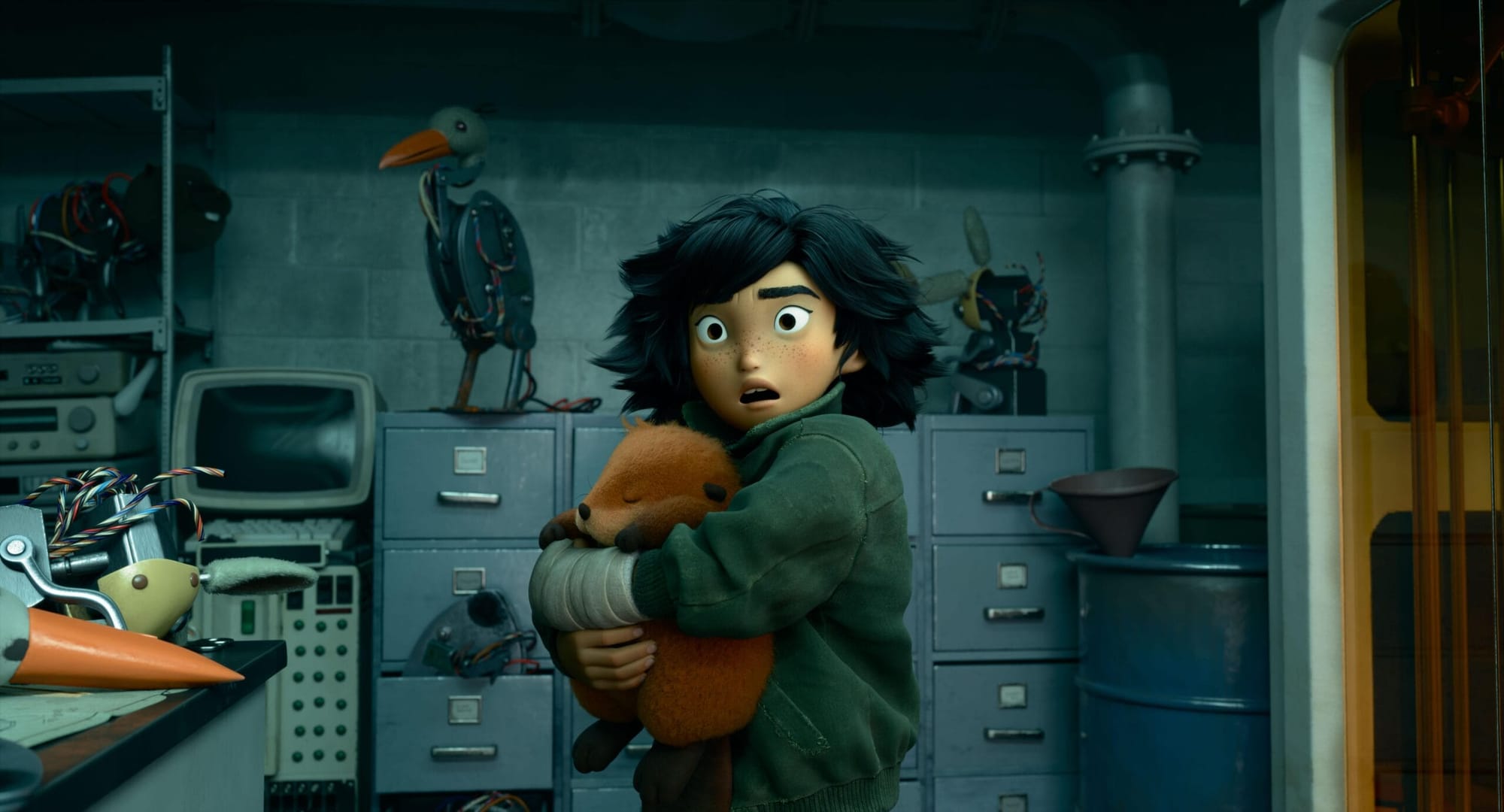
For me, I think the most notable thing about this film is that it finally happened. This movie might be the first time that Avatar has ever been used in separate piece of pop culture as a cultural reference point. Congrats on making that final cultural milestone, James Cameron.
To be fair, Hoppers isn't just a rehash of the plot of Avatar (which was only a rehash of white-savior films like Fern Gully, Last Samurai, and of course, Dances With Wolves, obviously), it's surprisngly similar to the story of the comicbook Bug Wars, which is not only a white-savior/stranger-in-a-strange-land tale, it's also a "beware the insect kingdom" story. This isn't a bad thing. In fact, if it's done well, and under the right circumstances, this set-up can still lead to a pretty fun story.
So as far as that's concerned, Hoppers is a pretty fun story.
It's packed with celebrity voices, as is the traditional way of these kinds of films, and it's cute and funny and exciting in all the ways that you would expect a Pixar film to be. None of that is surprising. In fact, the only surprising thing about this film is that it manages to pull that off, while also being about climate refugees, mass displacement, the pros and cons of regicide, and a War of Kings, and all while highlighting the feeling of exhaustion that result from constantly being attacked by a powerful system that you are helpless to stop, all of which are pretty dark topics. But then, the film also shows how a society's true strength lies through community and empathy, making an effort to show that we’re all in this together, and that greed and unfettered capiltalism is always bad. So that's all good.
Unfortunately, this is where the film starts to tip over into not-so-good...
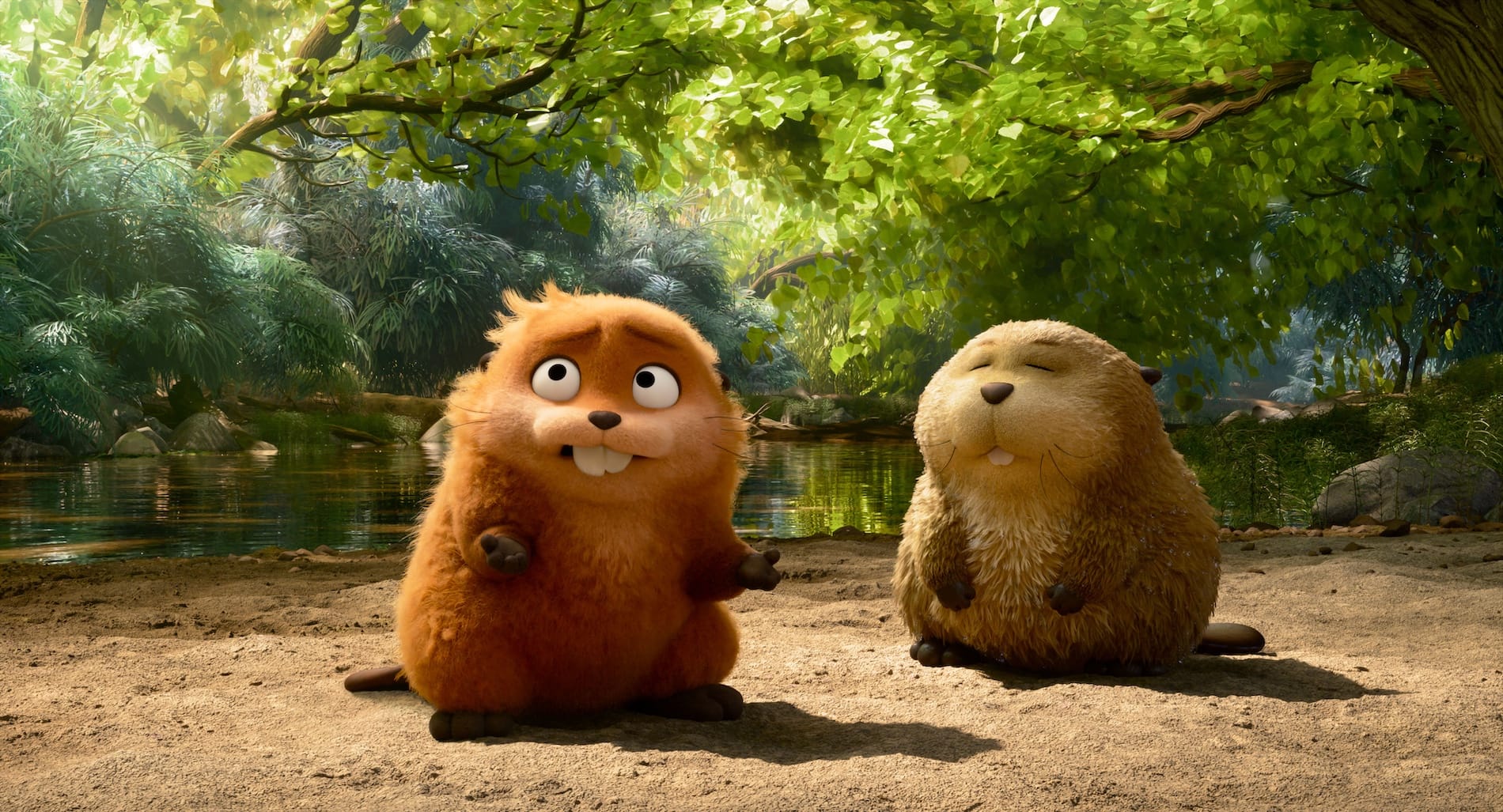
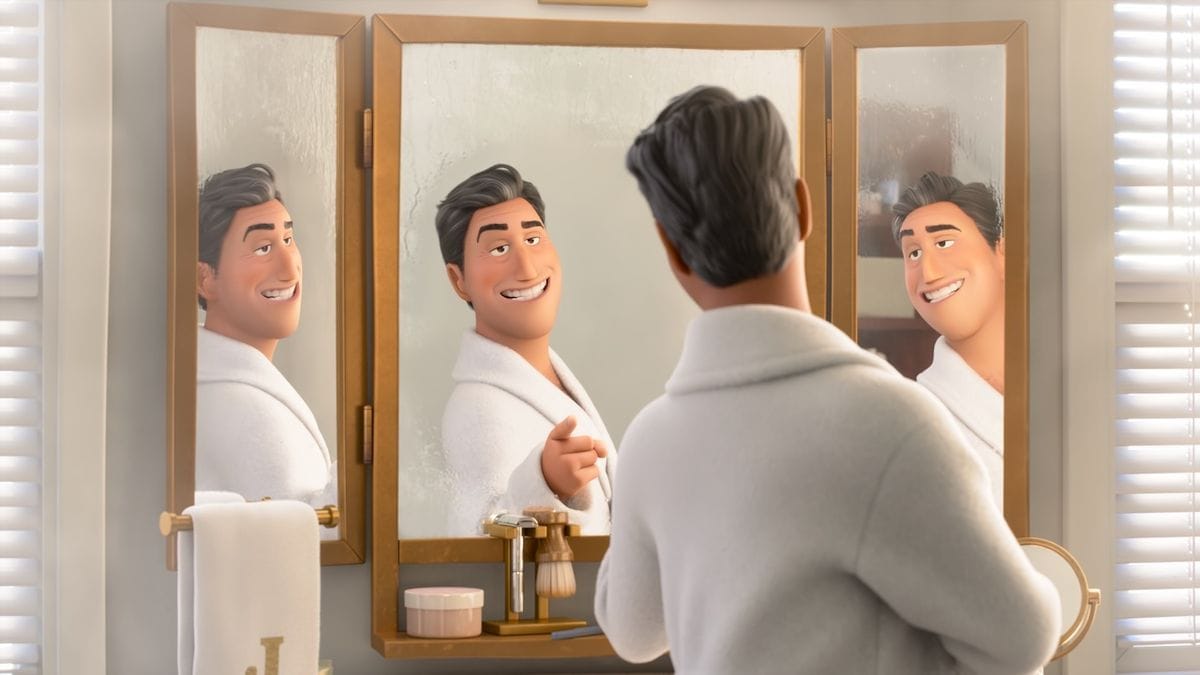
The film's main problem is rooted the film's bad guy, or more, his presentation. Jerry is played by Jon Hamm, whose entire thing is he is handsome and likable, even when he is being terrible. This makes him the perfect choice to play Jerry, who is a white man who believes himself to be a good guy. He is also a handsome guy and a likable guy, and a politician devoted to "progress" all while he is actually driven by his own blind ambition and insatible avarice, all while being protected by a seemingly sociopathic disregard for any of the fallout that results from the cruelty he casually inflicts upon the world.
The problem isn't that Jerry is like this, understand? After all, who he is and what motivates him is a pretty basic and familiar bad guy template, right?
The problem lies in the fact that Jerry is also a 100% accurate representation of the type of person who holds the purse strings at places like Disney, as well as the kind of people that those people live with, have dinner with, work with, and probably do stuff like play golf or fucking Pickleball with. Jerry is an accurate representation of their children, their parents, and their friends.
Jerry is them, and their people.
This means that they can't allow for Jerry to be portrayed as the kind of bad guy that he truly is, the kind of bad guy we see people like him being in the real world every single day, because that would mean, when all the real-life Jerrys go unaware to a showing of their fellow real-life Jerry's film, and end up seeing a very obvious version of themsevles up on the silver screen being upapolegetically portrayed as a smarmy, selfish, and evil asshole, they will get upset. This is a problem because, if real-life Jerrys get upset about something that one of their fellow real-life Jerrys is responsible for, well I'm sure I don't need to tell you this, but something like that could very likely lead to some uncomfortable interactions the next time they're all at some charity dinner at the club, or a ball during the upcoming debutant season, or while sitting around the family dinner table at this year's Thanksgiving, and that... is the worst thing that can possibly happen to a real-life Jerry.
Truly.
The implication that real-life Jerrys might not be good people? All despite their very strident claims otherwise? All despite their occasional posts to the 'gram? And for that implication to be made by one of their own? Bothersome. Uncomfortable. Inconveniencing. Not to mention, it's rude to openly discuss such things in polite company. And let's be honest here, isn't it better to just set politics aside and enjoy each other's company? Isn't this world divisive enough? Can't we all just relax for the weekend and have a nice dinner together and not be so judgey over who voted for who, or who called the police on that Amazon driver for "clearly not belonging in the neighborhood," or who thinks the southern border should have a wall, or who finds the transgenders to be "icky" as their personal opinion, or who's not vaccinated, or who thinks who might have some good points despite their rape allegations and giant Nazi tattoo? Isn't it just better to enjoy a nice night together without worrying about "politics"?
So... long story short, there ain't no way that Jerry is going to be allowed to be a bad guy without being redeemed as an "actually good guy all along, if only Mabel had just shut up and let the guy talk." Clearly, phone calls were made, lunchs were had, other sides were heard, mandates were handed down that were expected to be followed or else, and so it was deemed... changes were clearly made. Because when real-life Jerrys are inconvenienced, and feel like they aren't allowed to do whatever they want, without any pushback, resulting in them getting a little butt-hurt, they lash out, and no matter what else happens after that, one thing's reliably true... When real-life Jerry's real-life lash out, real-life Non-Jerrys get real-life hurt.
That's how America works.
So as a result, there's a ton of bullshit “both side-ism” in this film, all insinuating, and often out-right stating, that Mabel not being polite enough in her quest to save the environment from what is clearly stated in the film as needless destruction is somehow just as bad as the actions of the people who are doing the harm just to fill their own pockets and wrap themselves in glory. It's the same thing, according to this film. That's what they're telling your kids. One is just as bad as the other. The film's big climax literally hinges on Mabel being forced by the film's bad guys into "realizing" her refusal to compromise in her efforts to save the world is somehow more responsible for its destruction than what the bastards actively seeking to destroy it are doing. They openly say that shit.
It's an insane level of fucking centrist bullshit nonsense.
And why? You know why. You may have even heard people say it. There was something about Mabel they just didn't like. They can't quite put their finger on what it was, and it certainly had nothing to do with her being Asian, or refusing to follow strict gender rules, or having loud opinions that she wasn't afraid to share loudly, no, no, no, no, because they believe in that stuff... feminism, racial equality, protecting the environment, protesting, "Orange Man Bad," all that stuff, hashtag no kings, right? They totally believe in that stuff, just not like that, and not so loud, or so stridently, or in any way that insinuates their complicity, and also, don't be mean to their bigot friends, or to their Nazi-loving dad either.
The Caucasity! As they say...
As a result, what started out as a film about saving the enviroment, and how that benefits all of us, what starts out as a film about the uplifting beauty of community and empathy, becomes the most wrongheaded jerk-off about the redemption of white America's greed and entitlement that you've ever seen. As if the rampant evil currently plaguing us all now deserves redemption. As if all of this harm, all of this destruction, hasn’t been the result of their repeated and deliberately-made choices, despite all attempts to dissuade them. As if all this shit that we're slogging through, as the country crumbles around us–the results of their deliberately-made choices–is not the entire reason why we’re all currently so fucked. And yet they continue to stomp around, throwing their tantrums, whining about how their complicit asses get treated, as if everything would be fine if the rest of us would just stop being so mean about their actions, and instead pat these assholes on the back and say:
"That's all right, buddy, I know you didn't mean to be a bigot. You were just trying to order the world the way that God intended, with white people on top. I get it. I understand. You're a good person. You always have been. You clearly have no interest in white supremacy, it's just common sense, right? It's just the way things are supposed to work. You just want to go back to the way things used to be, where everyone got along, and you didn't have to listen to or acknowledge anyone you didn't want to. Gosh, it sure was great back then, wasn't? Please, go back to being in charge of us."
Because that's the whole thing, right? Like Jerry, other than their own personal enrichment, the only thing these fuckers truly care about is being liked. Everyone must like them. You must like them at all times. LIKE THEM! LIKE THEM, DAMN YOU! ALSO, SMILE!
Or they'll fucking kill you.
Fuck that bullshit. To somewhat liberally paraphrase the martyred Insect Queen, “some mother fuckers need to be squished.”
And you know this is true too. You know they did this on purpose. You know that they suddenly saw their Catalina Wine Mixing asses up on screen as the bad guys, and they were not going to allow that to happen, because that's exactly what's been happening in animation recently. The Hollywood Reporter published a story in December of 2024 about all of the cowardly, what they callled "conservative" but are clearly centrist, agendas being pushed onto filmmakers in animation. Some projects have been pushed to remove trans characters. Others were given a bunch of shit over a chaste same-sex kiss. In the case of Hoppers, the filmmakers were told that they needed to "downplay" the message of environmentalism, which had to have resulted in a moment of stunned silence after that announcement, as that's the central theme of the whole film.
And yes, these issues in animation may be relatively small things in comparison to the world's many other issues, but it's a perfect microcosm of THE PROBLEM...
And that PROBLEM is that it's only ever about what they want. It's only ever about what they believe. Even if it does not affect them at all, it doesn't matter, they will not allow it to exist if it in any bothers them even a little bit, because all they care about is their own comfort, and their own need to be liked, or at least deferred to, by everyone. This is how we keep ending up with dull, forgettable, corporate-approved garbage masquerading as "art" for the masses, because as everyone knows, the best art is the art that says nothing at all, not even the most shallow of messages, because it's too busy trying to be liked by everyone, especially the monsters, because it's those very same monsters who hold the purse strings.
I know what you're thinking... hey, calm down, buddy, right? That's what you're thinking? Relax, it's a kids movie.
But that's the most insidious part.
This message of "both sides are just as bad" and that "passsion is rude" is a message that is only concerned with making you, the person who's being harmed, excuse the assholes of the harm they are causing you. Despite them showing zero contrition. Despite them making no amends at all. And if you don't, you're the bad person. That's a message that is awful in itself. It's an awful, ugly message crafted by awful, ugly people strictly for the benefit of other awful, ugly people.
And it's even worse when they're aiming it directly at kids.
I'm not saying this film is solely responsible for the issue, I am saying that it's a part of a wider effort, all of which is about toeing the line, about quieting down, about allowing the privileged to enjoy their priority, to be appropriately thankful that you're allowed to present, that it's better to bow your head in deference than speak up. That's awful. And the damage that such a message might do to a child's burgeoning interests? To their blossoming passions? Shhhh, be quite? Don't make waves? Know your place? Like I said, insidious.
Fuck that.
And that's why they'll act like looking for subtext in cartoons is stupid. That's why they'll act like thinking about these things is not worth their time. Meanwhile, your little darlings are falling down the bigot rabbit-hole algorithm on Youtube, on their way to becoming little Kyle Rittenhouse/Erica Kirk Nazis...
So yeah, that shit sucked.
But all that having been said...
I do think the filmmakers stil managed to eek out a small victory, as there's still a hint of a good final message in this film, which is... Sometimes you gotta burn all of the bad shit down if you really want to put something new and good in it's place. Good things can grow from the ashes, right?
Also, I really loved that they killed the Insect King in the end. I loved that they made no issue of it, or even pretended to be upset about it, or that he didn't have it coming, and that they clearly did it because he was bad, because he was clearly incapable of being redeemed, and if they hadn't done it, then he would have only continued to be a problem.
That was a good message too.