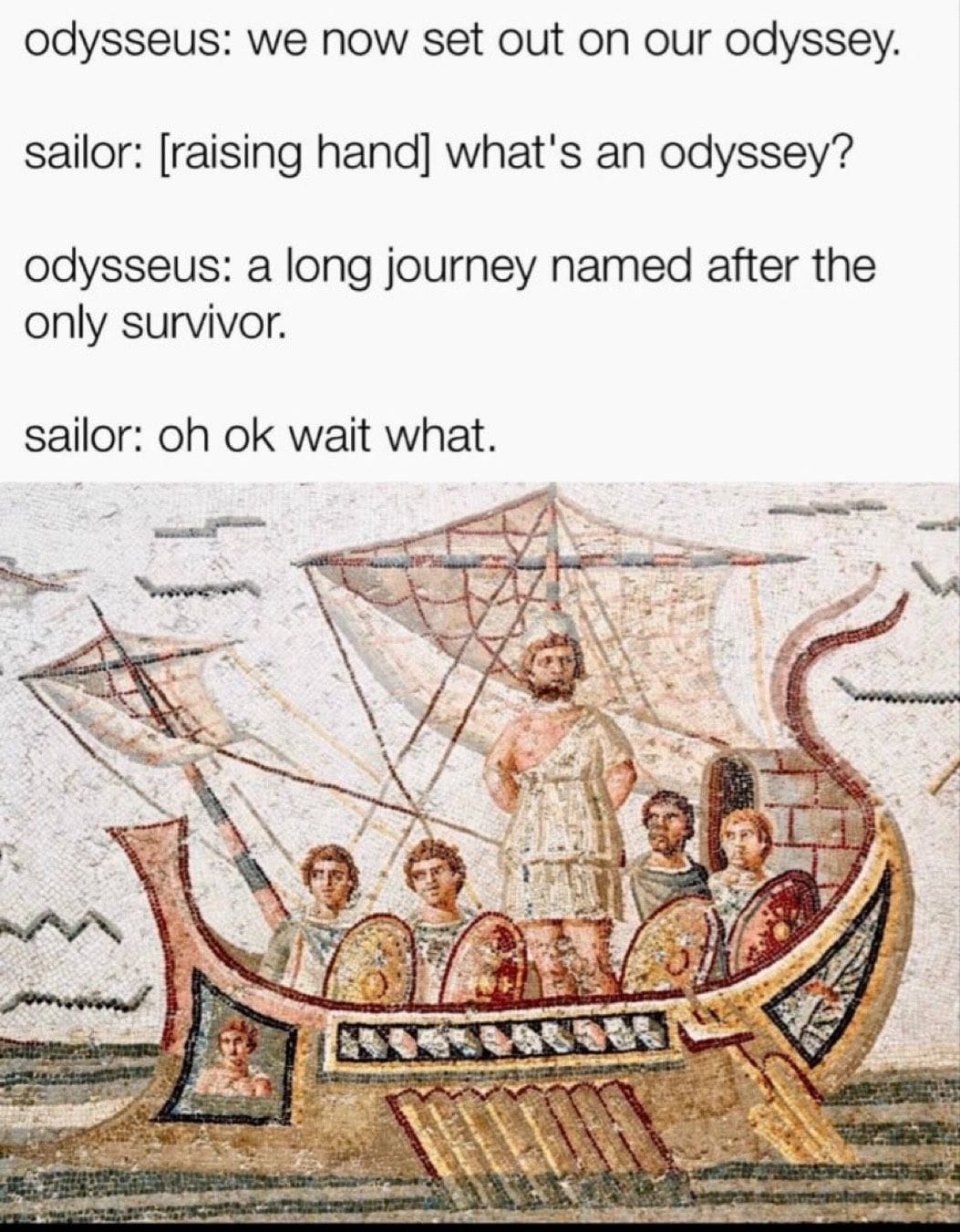
The Odyssey
“So when the day comes to settle down, who's to blame if you're not around? You took the long way home! You took the long way home!” — Take the Long Way Home, Supertramp, 1979

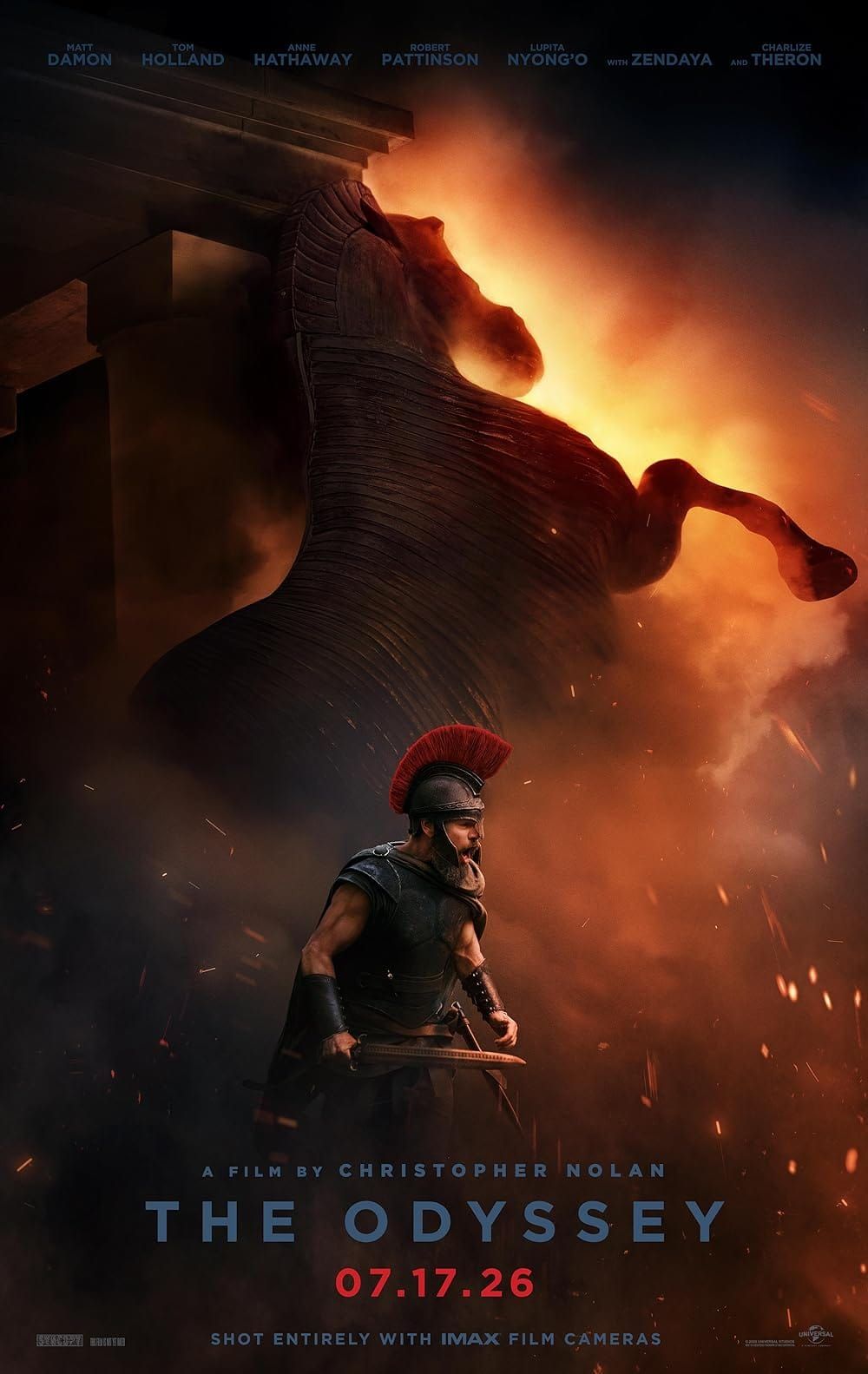
After the Trojan War, Odysseus takes the long way home.
Everyone knows this story. Or some part of it. Or they’ve at least seen the movies. If not a direct adaptation, then a somewhat updated version like Cold Mountain, or O Brother, Where Art Thou? The idea that this is undeniably true is actually pretty amazing. Imagine writing the equivalent of a pair of adventure novels, and then, nearly 3000 years later, people are still talking about them.
Talk about echoing in eternity…
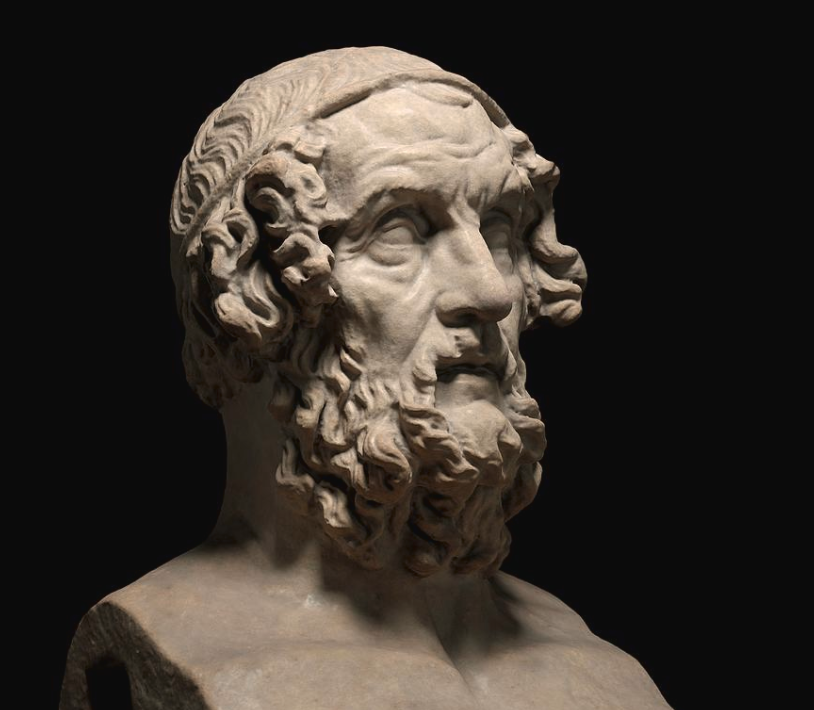
The question of whether or not Homer actually existed at all is apparently up for debate amongst scholars. But if he was a real person, basically the Clive Cussler of the ancient world, and was solely responsible for the pair of epic poems, The Iliad and The Odyssey, making him one of the most influential authors to ever live, then Homer was born in the 8th century BCE in Ionia, which was on the western coast of present-day Turkey.
Believed to have originally been recited orally long before they were ever written down, The Iliad is set towards the end of the Trojan War, the 10-year long siege of the city of Troy by a coalition of Mycenaean Greek city-states, and focuses on the last few weeks as a quarrel arises between the celebrated warrior, Achilles, and the leader of the Greeks, King Agamemnon. The Odyssey then follows Odysseus, king of Ithaca and the architect of the fall of Troy, on his ten year long journey back home after the end of the war.

According to the story, the Trojan War was the result of a tiff between the goddesses Hera, Athena, and Aphrodite, because Eris is a messy bitch who loves drama. This makes sense because she’s also the goddess of discord.
So, Eris was feeling petty when she wasn’t invited to the wedding of Peleus and Thetis, which, let's be honest, seems fair. Like I said, she’s the goddess of discord, and it’s your wedding day. Who wants more discord at their wedding than what your dipshit family members have already volunteered to bring? But still, Eris was hurt, because she really never gets invited anywhere, because… y’know, discord. So she crashed. And when she gets there... right away, she spots Hera, Athena, and Aphrodite across the room, enjoying the pre-reception cocktail hour with all its various signature cocktails, having a little Prosecco, sampling the bacon-wrapped dates, the cheeseburger sliders, and the mini caprese skewers, just having a great time, socializing and talking shit about the wedding decor, and Eris was like “those bitches…” Because they told her they weren’t going to the wedding! So Eris rolls a golden apple right at their feet, and inscribed on it is "to the fairest." Immediately, all three goddesses assume this means them. They all happily go “oh!” and bend over at the same time to pick it up, bonking their heads. This hurt, and made the mercurial goddesses all glare at each other while rubbing their foreheads, but it made a funny sound that Eris enjoyed.
And that was it, the tiff was on.
Eris left the wedding, vindicated, presumably snubbing her cigarette out in the wedding cake on the way out, then picking up a hot but married Satyr wedding guest in the parking lot, after which, the two of them then took off together in someone else’s chariot, because y’know… discord.
Meanwhile, Hera and Athena and Aphrodite’s good time was ruined, because now they had to know: Which one of them was the fairest?
Their eyes happen to fall on Paris, the youngest Prince of Troy, and a big himbo without a plus one. He was over at the buffet, grimacing, trying to find a garbage can, because to his disappointment, the mini sesame miso cones turned out to be filled with tuna tartare. The three goddesses hustled over. They surrounded him, looming over him, and all at the same time were like… “Paris! Who’s the fairest among us? Answer! Answer right now!” And Paris was like, “What?” his mouth all sticky and filled with tuna tartare taste. And Hera was like “Look, Paris, you’re obviously handsome and smart, so if you pick me, I’ll give you so much power.” And Athena was like “Whoa, bitch, don’t go trying to flatter Paris, he’s way too smart for that! Besides, he already knows, because he’s so smart, that if he picks me, I’ll make him even more smart!” Aphrodite snorted, rolled her eyes, threw back the last of her Aperol Spritz, smirked at Paris, and said, “You wanna fuck the hottest chick ever?” Immediately, Paris was like “It’s Aphrodite. Aphrodite is the fairest.” Aphrodite was like “ha ha,” to which Hera and Athena were like “fuck you, bitch,” then they both pointed at Paris, and Hera says “You done fucked up, son. You done fucked up.” Athena nodded, “You fucked up big time. We’re gonna get ya’.” Hera nodded, repeating, ”Gonna get ‘cha. Gonna get ya’ good.” Then they both gave Aphrodite and Paris the double birds as they backed away into the chicken-dancing wedding crowd. Clap-clap-clap-clap. Aphrodite waved them off, shaking her head at Paris, smug in her victory, and leaning in, her arm thrown across his shoulders. “Ppffft… so basic, right?“ Then she says to him as she leads him away, “Come on. Wait ‘til you a‘load of this lady…”
The next day, Menelaus wakes up in the hotel, in a tangle of sweaty sheets, groggy, hung-over, probably with a charcoal penis drawn on his face by his asshole brother after he passed out at the wedding reception. Groaning, he staggers out to the big marble balcony, so he can pee like an elephant off the side, and he looks over, all bleary-eyed, and sees this massive stone tablet on his bedside table. There’s a message chiseled on it to him, and it begins: “Dearest… darling… I had to write to say that I won't be home anymore…”
His wife, Helen, Queen of Sparta, has run off with Paris of Troy.
Menelaus did not take this well. Immediately, the Spartan king called on all the kings of Greece to join him, and his brother Agamemnon, King of Mycenae, as they bring war down upon Troy. Then Agamemnon added, “We should probably leave soon too, because I’ve already sacrificed my baby daughter to Athena for good sailing weather, and my wife is not happy with me, so….”
A thousand ships were launched.
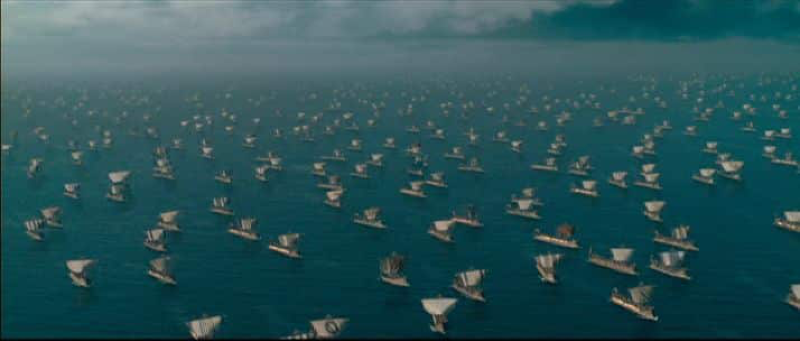
Did this really happen?
Obviously not, there’s gods and magic and monsters involved. Still, was it real or not, was The Illiad and the Odeyssey a retelling of actual events, or were they just the Infinity War and Endgame of their time?
Herodotus wrote about it, of course, so there’s that. He tells of a war that was waged by the Achaeans against the city of Troy after Paris of Troy took Helen from her husband Menelaus, king of Sparta. It was believed then that Troy was located in the Dardanelles, in modern-day northwestern Turkey, which is a narrow 40 mile long strait that connects the Sea of Marmara with the Agean and Mediterreanean seas, and separates Asia from Europe. It was a place they seemed to know. Plus, the whole wedding story seems believable when it becomes a possible cover story for an attempted power-grab by the Greeks, who were looking to seize a strategic navigation point. Making it even more likely is that the war supposedly took place around the same time as the Late Bronze Age Collapse, which was a time when social unrest, multiple wars, a few natural disasters, and the resulting trade disruptions brought about the end of that era.
This belief fell out of favor though, and stayed that way for a while, until the late 1800s, when archeological efforts began in earnest to try to locate Troy. It's is now believed by many to have been found, but still, the whole thing is a question that is still being debated. But leading up to the modern era, it was commonly believed that the Homeric stories were just a mix of half-remembered histories experienced by the Mycenaean Greeks during the Bronze Age with the names changed and a few flourishes thrown in. This included the horse, which was said to be nothing but a literary tool meant to encapsulate the themes of betrayal and punishment and fate in the tale, nothing more than the kind of dramatic flair that makes stories endure, so that they will be told and retold for nearly 3000 years.
And here we are...
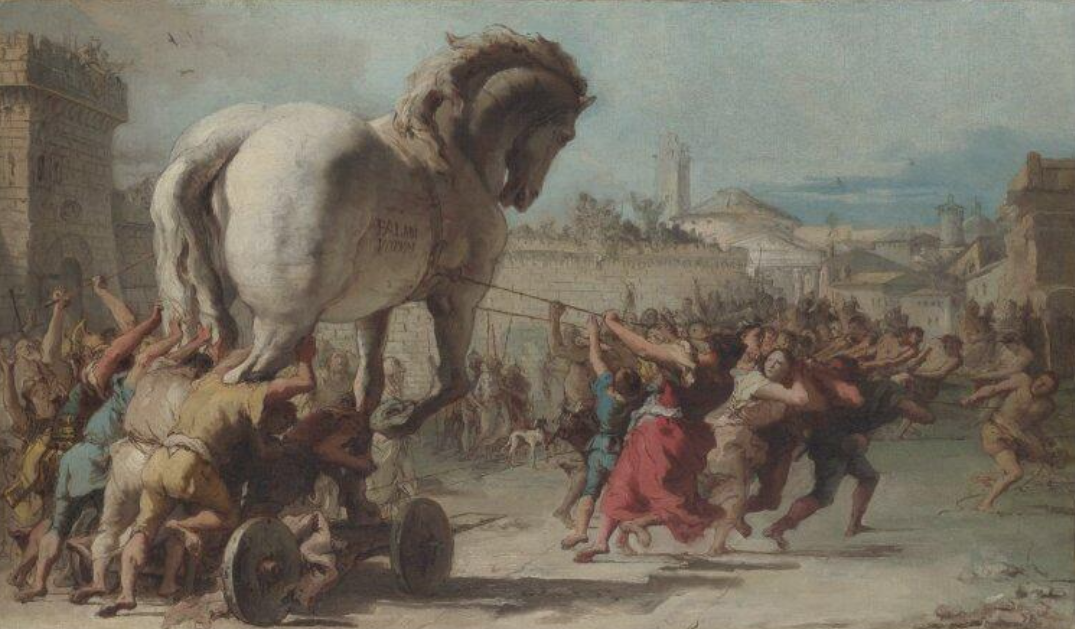
I pound my staff upon the table, calling for quiet in the hall...
“Tell me, Muse, of the man of many ways, who was driven far journeys, after he had sacked Troy’s secret citadel.”
The Trojan War is over. After ten long years, it was finally over.
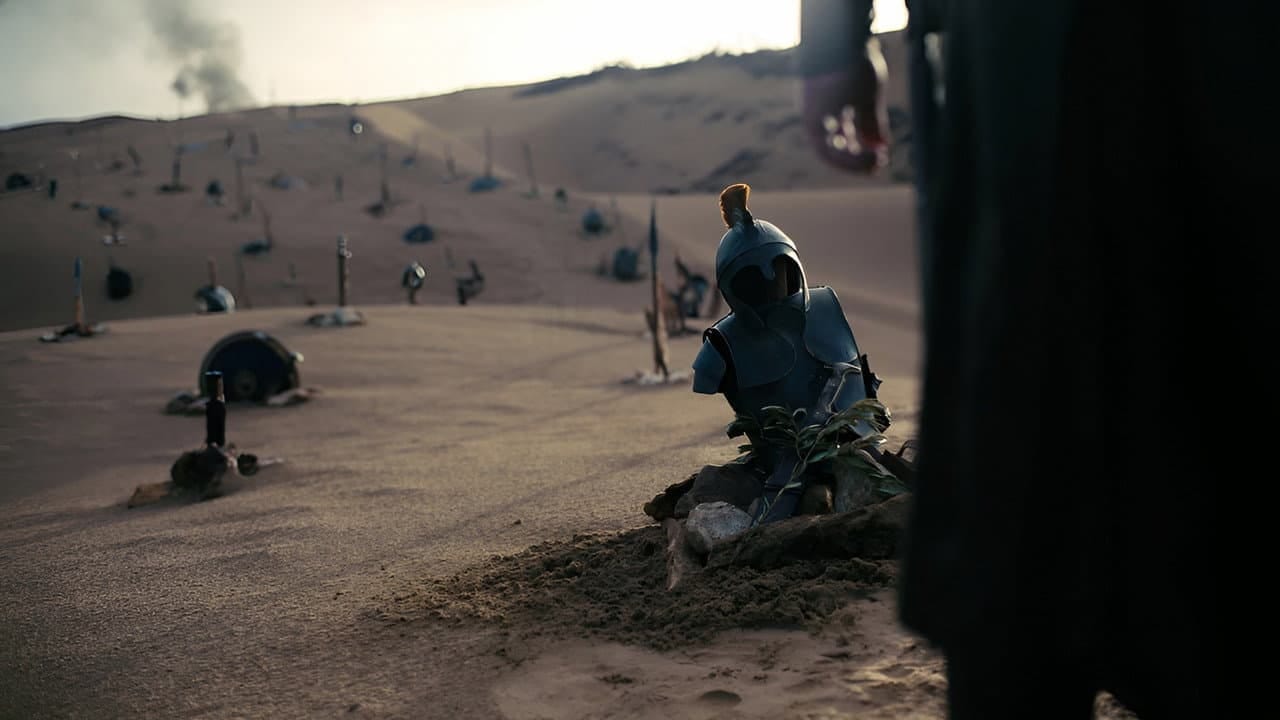
But that was nearly ten years ago…
So, for nearly 20 years now, Ithaca has been without its king, as Odysseus never returned from the Trojan War. Somewhat reasonably believing that Odysseus is dead, multiple suitors, including the wily nobleman Antinous, now hang out all day in Odysseus’ house, eating his food, drinking his wine, and generally befouling the place, all while they “court” Odysseus's wife, Penelope. They are banking on the fact that eventually, Penelope will relent in her steadfast belief that Odysseus will return, and she'll choose one of them to be her new husband. Then they will assume the throne before Odysseus and Penelope's son Telemachus can.
Only Penelope, Telemachus, and the half-blind old servant Eumaeus still hold faith that Odysseus will one day return. Telemachus is not happy with this, and wants to fight, which is a bad idea, not just because it's a violation of Zeus's Law, known as xenia, a sacred ancient moral code of hospitality which says guests must be treated as if they were Zeus himself in disguise, but Penelope also knows this is what the suitors want. They want the angry young Prince to provoke them so they can then kill him, and so, she is doing everything she can not just to save Odysseus’ throne for her husband, but to keep his son alive too. Desperate for news of Odysseus’s whereabouts as she is desperate to occupy her son's mind, she sends Telemachus away to look for answers. The young prince travels in secret, along with his teacher and bodyguard, Mentor, to visit Menelaus in Sparta.
But Antinous learns of this, and with the other suitors, sets a plan in motion to kill Telemachus upon his return to Ithaca, but before he can actually return home...
In Sparta, Telemachus finds only fear and uncertainty, as rumors of attacks by people from the sea float about. But unfortunately, Menelaus and his wife Helen–who is now horribly scarred as punishment for her transgression–know nothing of Odysseus's fate, and can only offer Telemachus retellings of the tales of his father’s exploits, including his plan with the great wooden horse, the opening of the gates of Troy, and the burning of the great city.
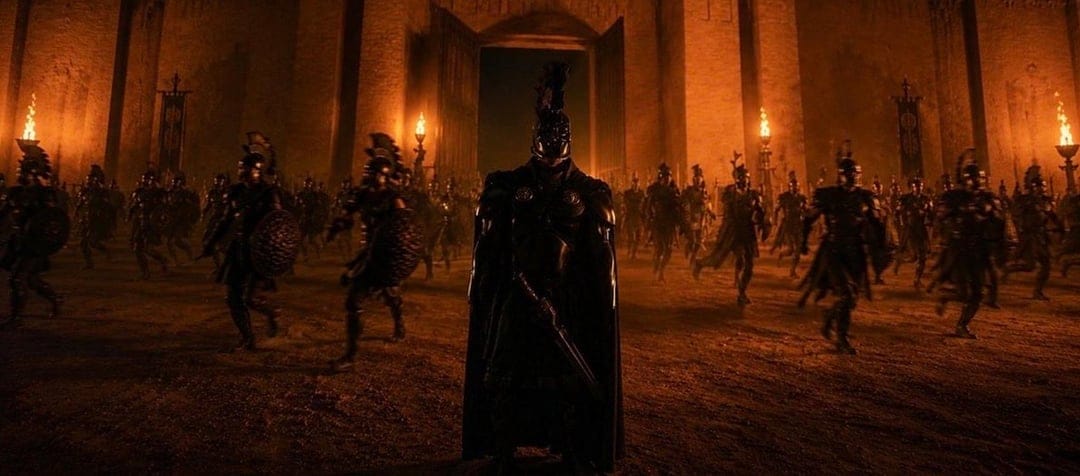
Meanwhile, for the past seven years, Odysseus has been living in a haze of drugs and sex on the isle of Ogygia with the nymph Calypso. Nothing but lotus eating and beach banging 24/7, all day, every day. And yet, he is plagued with a vague longing for a family that he cannot recall, all while the memories of his adventures, and the story how he came to be in this place, slowly return to him.
He rememebers the first three years following the sack of Troy, watching as Agamemnon and Menelaus sail for home together, while Odysseus and his army decide to follow a slower route. He recalls how he and his men were looking for supplies, and were trapped in a cave by the cyclops Polyphemus, who feasted upon them each night. He recalls how eventually they escape by blinding the monster’s single eye, then slipping out among his flock of sheep. And he remembers how, as they escape, they heard Polyphemus crying out to his father Poseidon about their transgressions.
He remembers how they were beset by harsh storms, and lost their way.
He recalls how it never occrued to him to ask literally anyone for directions, and how they landed on Aeaea, where the giant Laestrygonians kill most of his party. He remembers how, in desperate need for supplies, they try sailing to the opposite side of Aeaea, and seek refuge with the witch Circe, who then turns them into pigs. He remembers how he is able to persuade her to change his men back, and how the witch then warns him that in order to reach Ithaca, he must first cross Oceanus to the realm of the dead, Hades. He remembers how he met the shade of Tiresias in Hades, who told him this prophecy...
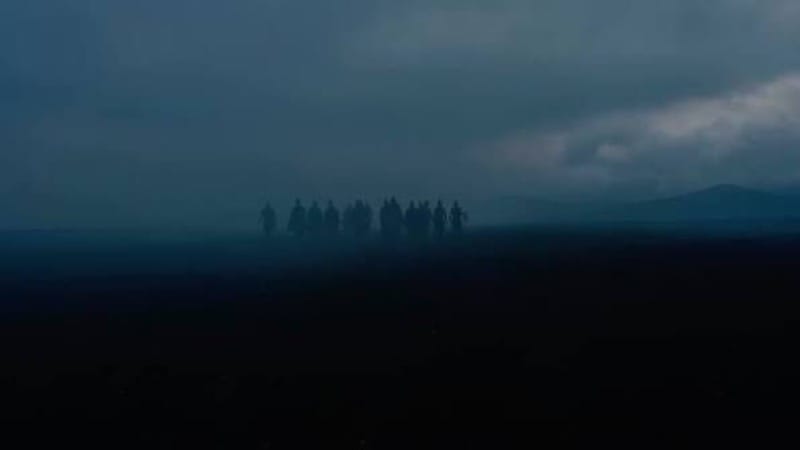
Only Odysseus will return home.
He recalls how the dead of Troy gathers, and how, amongst them, there was the shade of a young man named Sinon, who he had sacrificed in order for the ruse of the Trojan Horse to work, for which Sinon is not happy. He remembers how the shade then revealed Antinous's treachery, and how he was manipulated into taking Antinous's place in the Greek army, giving the lot that Antinous drew, and then forced upon him, to Odysseus as proof. Lastly, he recalls how Agamemnon's shade then appeared, how he told Odysseus of how his wife, Clytemnestra has murdered him upon his return home, as revenge for him sacrificing their daughter for fair seas a decade earlier.
Then the gathered Dead are basically like: “And now we eat you.”
He remembers racing back to the ship, the dead on their heels, and sailing away. He remembers how he followed Tiresias's guidance in order to survive the enticing songs of the Sirens, the massive whirlpool known as Charybdis, and the tentacled cliff-monster known as Scylla. He remembers how they landed on the island of Thrinacia, and how he had warned his men not to kill the cattle, as they all belong to the Sun God, Apollo, because he had been told that, if they did, they would all die. But as they are stuck on the island by a lack of wind, eventually his starving men did eat a cow, and the wind then picked up immediately, and they hurriedly sailed away on it, only to be sunk by Zeus's storms. Finally, Odysseus remembers how he washed ashore on Ogygia all alone, and how the nymph Calypso had found him, and fed him amnesia-inducing lotus flowers for seven long years...
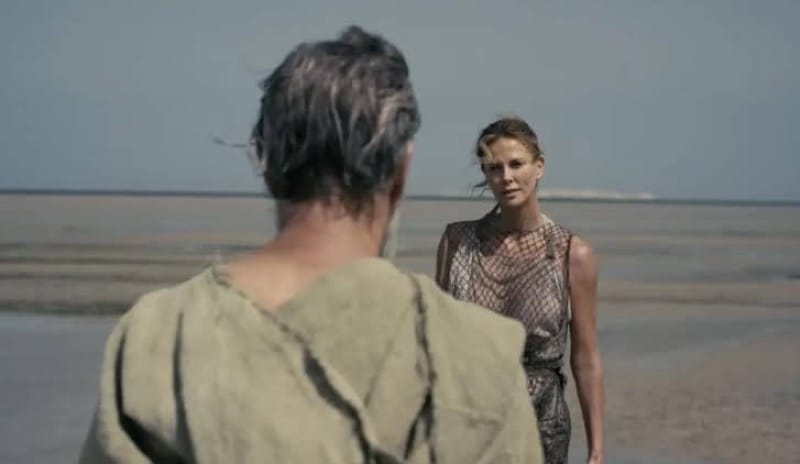
Calypso begins to feel pity for Odysseus and his longing to remember who he was and who his family was. She tells him to stop eating the lotus, to make a raft, and to surrender himself to Poseidon.
He does so, and miraculously washes ashore in Ithaca.
Taking Sinon’s name as disguise, he walks towards home, the tale of Agamemnon ringing in his ears. In disguise, he learns almost from Eumaeus that mercenaries mean to assassinate Telemachus and Mentor when they return from Sparta, and are lying in wait for when the pair when they stop at the temple of Apollo to give thanks for their safe journey. Odysseus hurries there, and almost arrives too late. Mentor dies in the fight, but Odysseus rescues Telemachus and kills the assassins. Telemachus asks the stranger to accompany him home.
For the past two decades, Odysseus’ valiant hunting dog, Argos, has been waiting for his master’s return, and in that time, he has grown very, very, very old. When Odysseus arrives at the palace, still disguised, Argos recognizes him, and after he feels his master’s kind hand one last time, he dies peacefully.
Seeing this, Telemachus recognizes that the traveler who saved him is his father. Odysseus swears him to secrecy, and then he enters his own house for the first time in 20 years.
During a tense feast that night, the disguised Odysseus shows Antinous that he knows Antinous betrayed Sinon, and because of that, Antinous thrashes Odysseus the beggar before Penelope intervenes. After the meal, still disguised as a beggar, Odysseus confesses his guilt to Penelope, guilt for violating Zeus's law with the deception of the Trojan Horse, guilt for the killing the innocent Trojans, guilt for desecrating the statue of Athena in her temple, and guilt over the killing of her priestess, whose form Athena has since assumed in order to punish him whenever she appears to him. Odysseus then reveals to Penelope that the rumors of "the sea people" were in actuality just the victorious Greeks returning from Troy. He reveals how his actions have destroyed the world.
He begs her forgiveness.
In sudden realization of who she is speaking to, Penelope announces to the suitors her readiness to remarry and instructs them all to return at dawn. Once the hall is empty, some very A-Team-like preparations are made for the next day.
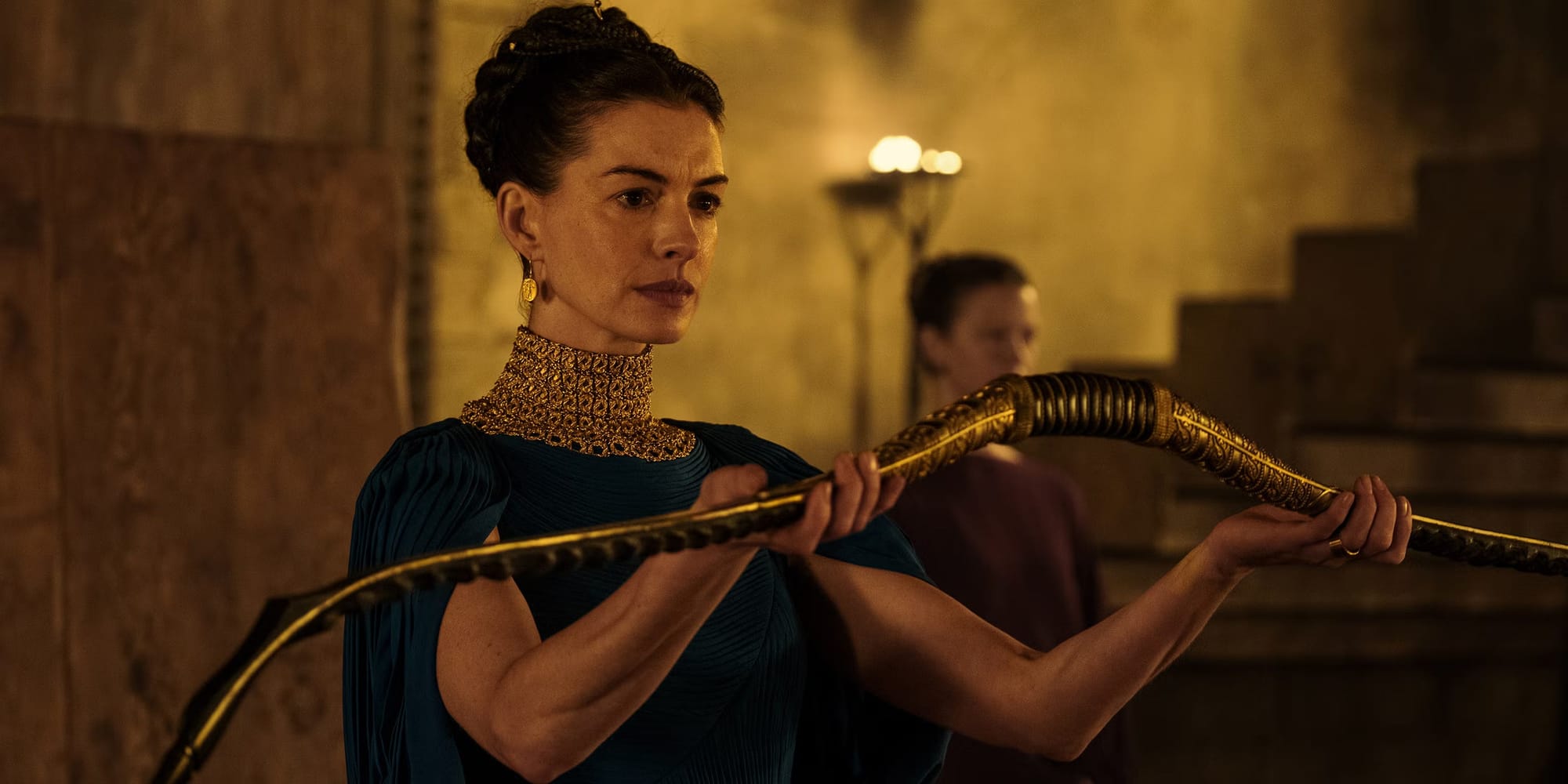
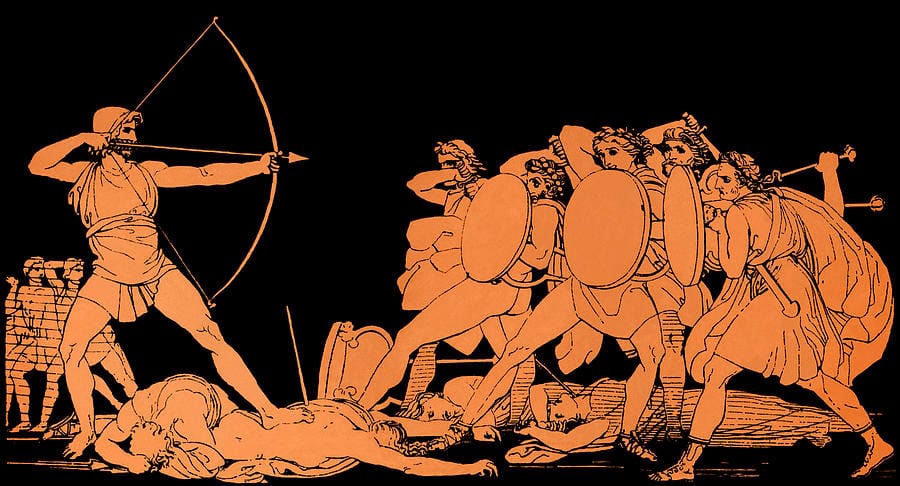
At dawn, once the suitors have gathered, Penelope declares that she will marry whomever can string Odysseus's famously difficult to string bow, and then shoot an arrow through a row of crossed axe heads. One by one, the suitors all fail, but then Odysseus succeeds, revealing his identity. The hall erupts in battle. Odysseus versus all comers.
Daddy’s home, and it’s past time for an ass-kicking.
As suitor after suitor falls, the smart ones begin to kneel, until finally it’s over, everyone has either surrendered or they’re dead, including the not-quite-as-sly-as-he-thought-he-was, Antinous. Reunited, and feeling so good, Odysseus steps down from his throne, and gives it to Telemachus. He and Penelope intend to seek peace in exile, to sail west in order to honor the dead of the past twenty years. As they leave Ithaca, they muse that... surely time will forget all of Odysseus's mistakes.
The End
The Odyssey (2026) is a fantastic distillation of Homer’s famous poem.
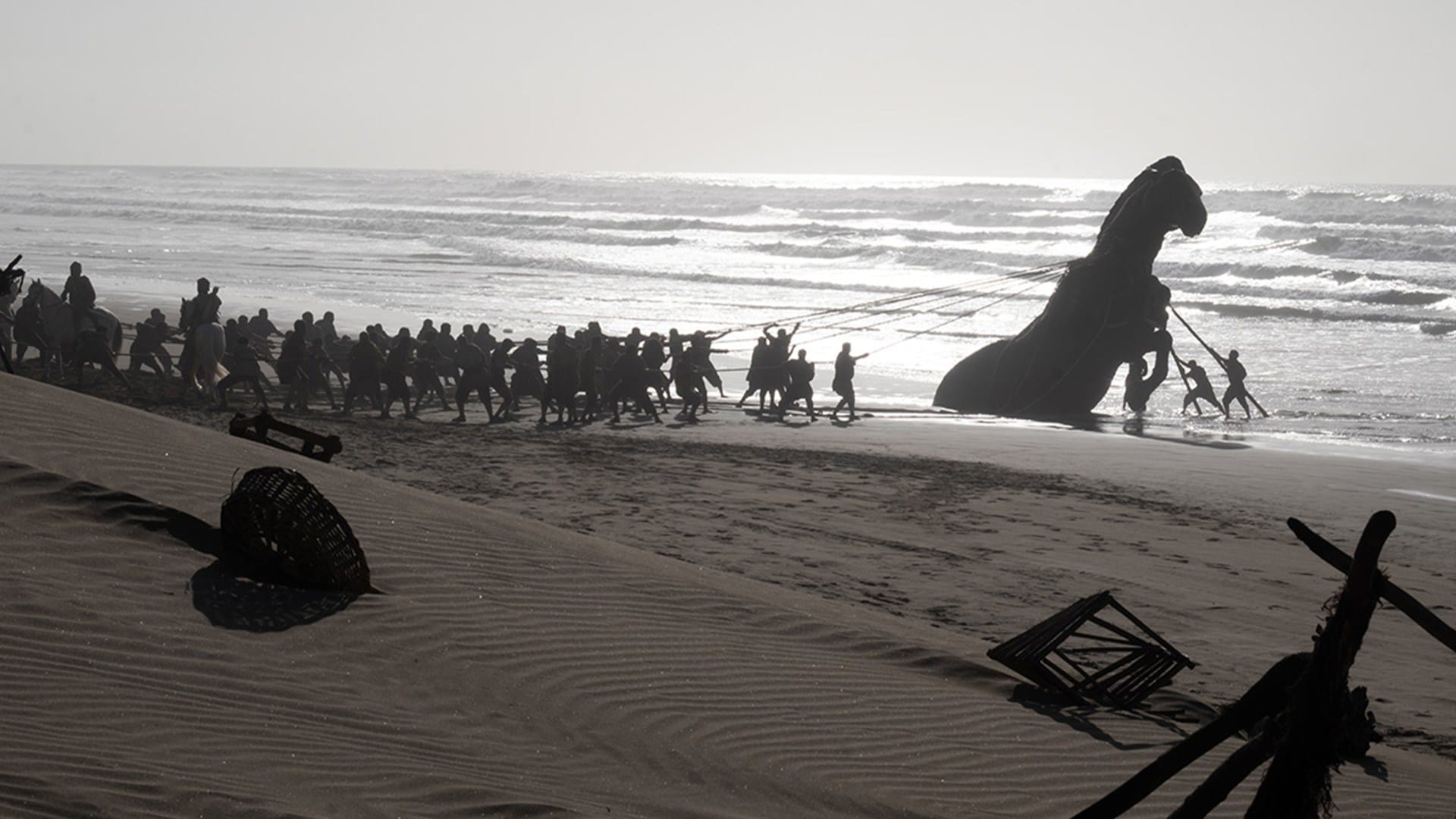
An action fantasy film and a historical epic flavored with Harryhausen-like monsters and magic, written and directed by Christopher Nolan, and starring basically everyone in Hollywood, it is a tale about the end of an era, the end of a civilization, and of the many horrors that man will commit in the name of greed. Like with Oppenheimer, it’s the story about the man who destroyed the world, but this time, the atomic bomb is a big wooden horse left on an empty beach.
In short... it is a story of consequences, and it is a great time at the movies.
Unlike Avatar Fire And Ash, I didn’t notice The Odyssey‘s nearly three hour length at all while I was watching it, even while sitting in a surprisingly crowded theatre for a weekday matinee, masked-up against the on-going threat of COVID, and surrounded by a bunch of Boomers who long ago lost the ability to whisper. This is because The Odyssey is simply a good movie that tells a good story, and it tells it well. In fact, I’m just going to tell you now, my only realy complaint about this film is that it left out the classic 3000 year old Dad-joke about “Nobody.”
The first time I saw a Christopher Nolan movie was in 1998 on the opening night of his first film, Following, at the Nuart theatre in L.A.. Christopher Nolan was in attendance, obviously, and he gave a Q&A afterwards, and I’ll never forget how he mentioned that, because they were all also working their day jobs while making the film, they only filmed on the weekends, and as a result, the film shoot lasted for a full year, every single weekend.
I was amazed at the film’s continuity.
But then, that’s Christopher Nolan in a nutshell, right? He’s meticulous. This is evident in all of his work. Memento, Inception, The Prestige, his Batman Trilogy, Interstellar, Oppenheimer. To me, this is part of why he’s one of the biggest names in film today, he cares about the details. Christopher Nolan isn't a filmmaker who finds his movies in post, he knows what he's doing before he starts rolling, he sets up so that he will be able to get what he wants, and he keeps rolling until he does.
"I'm fascinated by our subjective perception of reality, that we are all stuck in a very singular point of view, a singular perspective on what we all agree to be an objective reality, and movies are one of the ways in which we try to see things from the same point of view" – Christopher Nolan
Still, say one thing about Christopher Nolan, and it’d be that his films are a bit emotionally cold and distant. At arm’s length, as they say. Let's be honest, he's a bit of a robot. I bet he just sits straight up in bed every morning, one quick motion, just–ding–he's sitting up. Say a second thing about him, and it’d be that he’s not great at writing women. In Nolan’s films, the female characters often seem to exist only to be rescued, mourned, or killed as motivation for the male hero. I’m not sure that he’s ever passed the Bechdel Test. This doesn’t mean his films are bad, the Great Escape doesn’t pass the Bechdel Test either, just that it is what it is, and you should be ready for that it going in to one of his movie. Say a third thing about Nolan? He definitely has a preference for grounding his stories in a kind of reality. This is a guy who is going to explain how magical things work, and why. And if his Batman trilogy has proved anything, it’s that doing this has a tendency to kill the magic completely, while also exposing just how inherently silly some of those magical ideas are.
So because of all this.... when I heard that his next film was going to be The Odyssey, I was a little worried. This is a story that is nothing but monsters and magic, and I wasn’t all that interested in seeing him try to provide some logical explanations for things like the Gods and the Cyclops and Circe’s magic and all of that stuff.
But then... he didn’t do that at all.
Instead, he was apparently going to embrace the magic, myth, and legend. I was shocked and very intrigued. I heard this and I was instantly excited to see the film, if for no other reason than... how exactly will Mr. Roboto approach all this? Turns out, it’s still a little underplayed and at arm’s length, sure. I would have preferred a little more fantastical, but still... I liked it. I really liked it. I liked his approach, I liked the balance he found between "real" and myth. I liked his metaphors, and the themes he chose, and that he didn't shy away from the truth, that every problem Odysseus faced was the result of his own actions, that his hubris, that his greed, that his cruelty, destroyed his world, and I liked that he was forced to face that in the end. So yeah, I liked his choices in general.
I liked the film. It’s currently my favorite of the year, just edging out 28 Years Later: The Bone Temple.
And I’m not alone in this either.
Currently, The Odyssey, a nearly three hour long adaptation of a nearly 3000 year old poem, is the second highest grossing film of the year, having made over $540 million dollars at home, for a total of $1.5 billion worldwide. That's more than Toy Story 5, more than Mario 2. Not more than Spider-man 4, of course, but hey, you can't win them all. My point is... the people are into it.
Which is funny, because the same people who believe in a white Jesus were convinced this film was going to bomb, mostly because of a black Helen of Troy.
But then, much like the belief in white Jesus, the racist backlash to this film is really just yet another attempt by the bigots on the Right to claim credit for things they had nothing to do with, all in order to justify their belief in white supremacy. If you ever hear someone claim that the Greeks were actually Norse, an idea largely inspired by that super racist movie, Birth of a Nation, the main driving force in the resurgence of the Klan in the 20s, know that you are speaking to a bigot. And if you ever hear someone claim there were no black people in the eastern Mediterranean in the Bronze Age, know that you are talking to a particularly stupid bigot. It is the curse of our times that whenever the white Right sees a Black person, especially a Black woman, they then throw a big fucking tantrum, and we’re all supposed to pretend it’s not solely due to their racism. It’s exhausting.
But this is the shitty world we live in.
That said, The Odyssey is also a nice illustration of why it's a complete waste of time trying to "understand" these Trumper bigots. Their response to this movie, before it even came out, shows there's nothing there for us to understand. Simply put, it's because they were totally wrong about it, and they were wrong because a) they hadn't seen it, and b) they don’t know what they are talking about. And that ignorance will never change, because they refuse to, and also, they don't care that they don't know what they're talking about, they just assume they know better, because in the end, every part of their worldview, every single facet, it is only ever about white supremacy. So, yeah, they don't give a shit that it's clear they've never read The Odyssey, because that doesn't change their goal of white supremacy... because in the end, they're just bigots.
That's it.
And just so we're clear... like I said when I was talking about Supergirl, it’s totally cool to not like these films. You don’t have to. You can think they’re bad. They can just not be your kind of thing, or you’re just not into them for whatever reason, that is totally fine. But one thing is always reliably true… when the reason that you don’t like something is due to your own bigotry or misogyny or transphobia or whatever the fuck your ugly little troll ass hates, everyone can tell, man…
Everyone can fucking tell.
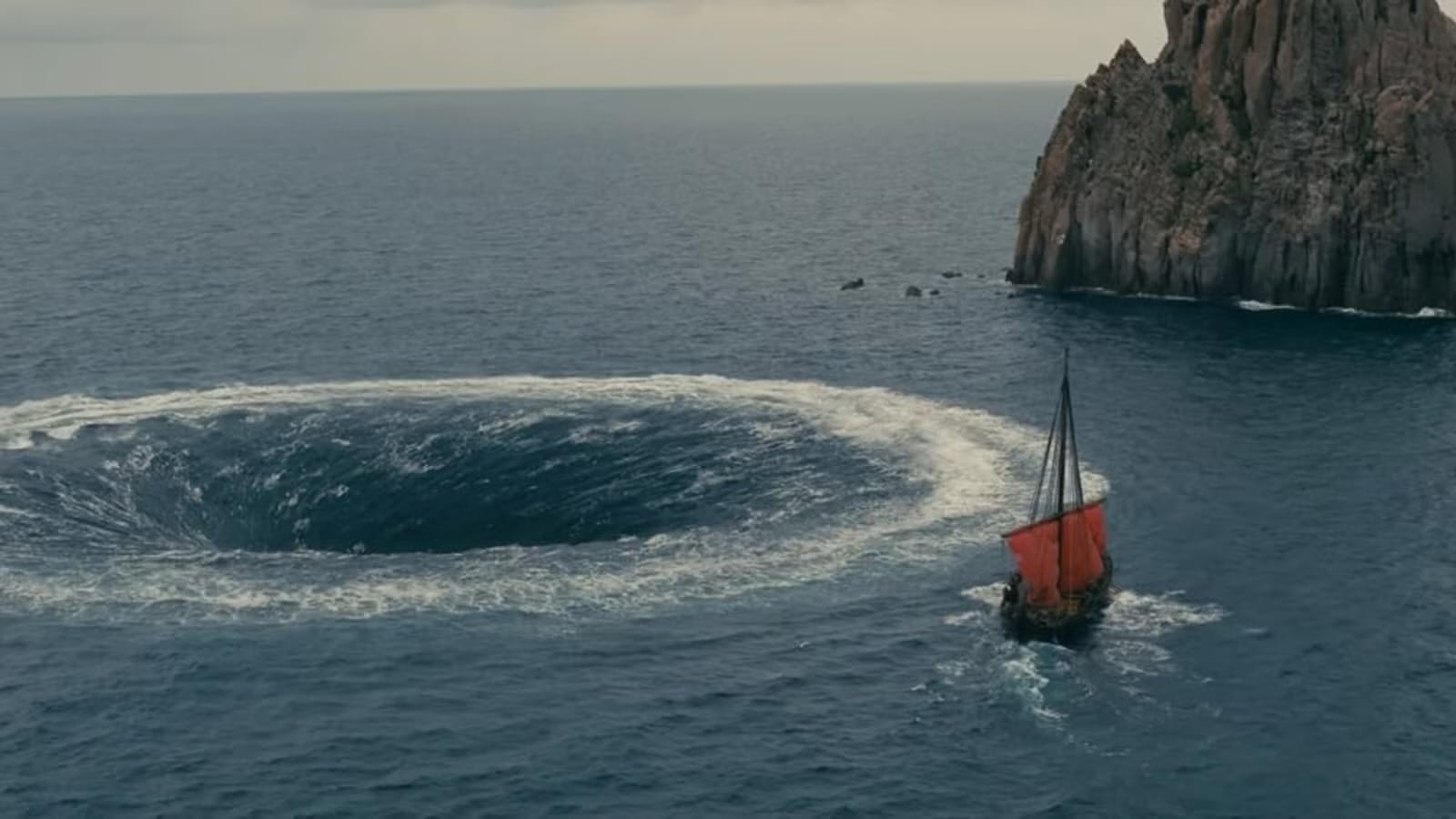
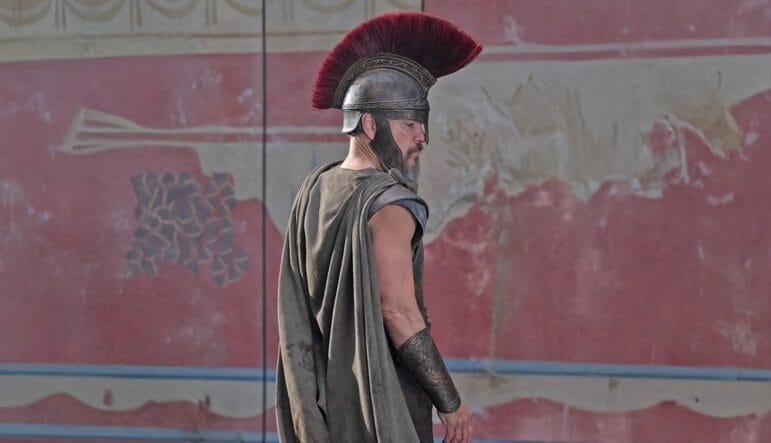
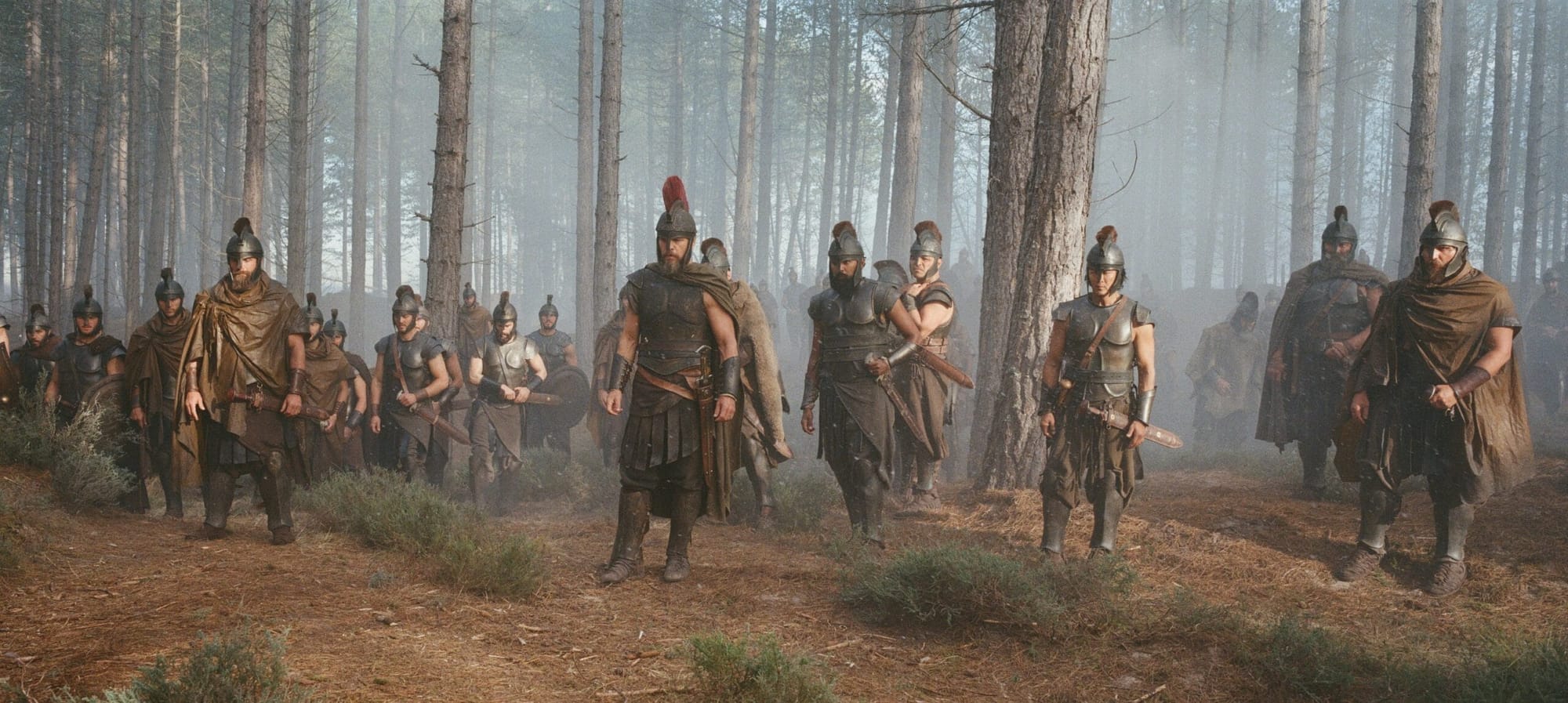
Because these people always tell on themselves eventually. Much like with the movie Noah, these assholes went on and on about "historical inaccuracies” in the story, even though, again... like Noah, The Odyssey is nothing but a fictional story written hundreds of years after the events that they're supposedly retelling. It's a mythological fantasy. Historical accuracy? Which part? When the witch turns them into pigs, or the part where the giant cyclops traps them in a cave, and then tells on them to his father, the God of the Sea? Of course, when you point this out, they'll try to claim that they're actually complaining about “anachronisms” like how some of the characters are wearing the wrong kind of armor, or how they’re sailing about in Viking-inspired longships rather than ancient Greek vessels. But it all ends up in the same place. What was historically inaccurate about the longships, buddy, the part when the army of armored giants tore them apart with their bare hands?
But mostly...
Mostly the bigots complained about Lupita Nyong'o playing Helen of Troy.
Because as I said, bigots always reveal themselves. Apparently there’s a poll out there that says 30% of Americans agree it was "inappropriate" for Lupita Nyong'o to be cast as Helen of Troy. And I have to wonder what percentage of that 30% is white? I wonder what percentage of them identify as Christian? Is it close enough to 100% to not matter? Gosh... I wonder. These people threw huge tantrums over the news. They called her casting "race-swapping," nothing but "identity politics," their favorite racist buzzwords. They claimed that there was no way that Lupita Nyong'o's face could launch a thousand ships, that Helen should have looked more like she spends her weekends riding the Red, White, and Blue around the ring at Rodeos down in Texas.
Which is just… so wrong.

The second most popular pre-release complaint was the film's use of American accents, even though this is an American adaptation, not a Greek one. More than that, this is a movie about a dying Empire that has shattered cherished norms, that has ignored established precedents, and has turned its back on the principles and the ideals and the morals that it once claimed to value, and how their greed and militarism turned out to be them sowing the seeds of their own destruction.
This isn't just an American adaptation, it's a movie about America.
“Well,” say the dumb assholes, “if people are complaining so much, and they have to explain why they did it that way, then it’s a failure.”
The funniest part about this complaint? Besides exposing their own inability to engage with art in any kind of critical manner, if the actors all spoke in nothing but Ancient Greek, these same dumb assholes would’ve complained endlessly that they had to “read the movie” for three hours. Even funnier? None of these dumb fucks actually wanted Ancient Greek… what they wanted was British accents. Most of the fuckers whining about the American accents and vernacular in this movie wouldn’t have said a thing if all the actors spoke with faux Shakespearean British accents... because that's how you know it's historical!
Again, the American voices and the American venacular, it was used for a specific reason, and that reason is because it's a metaphor about America. It's the same idea as in Iannucci's The Death of Stalin.
Of course, the down side of this film being an American adaptation about America, is how sexless it is. Which to be fair, isn't surprising coming from Nolan. But then, also to be fair, we are nothing as Americans, if not a bunch of boring puritans and prudes, so sadly, yeah, I'll admit it, Nolan probably made the right decision by not including any nudity or sex.
But I digress...
My point is, imagine seriously complaining that a story, one that began almost 3000 years ago as oral tradition, has the audacity to put a slightly different spin on the way that it's being told this time.
That said, there were some academic rebuttals, including one by Emily Wilson, whose translation was actually a big influence on Nolan’s script. She had a lot to say, and not all of it was wrong either, but if we're being honest here, an academic complaining about the cinematic adaptation of the particular thing they have spent their life studying, is like a comic book fan complaining about costume changes in a comic book movie. That's not to say that it has no value, it’s just that they’re huge fucking nerds about their thing, and are often unable to see the forest due to their love of this one particular tree. Also, it's not uncommon for these people to be just straight-up unwilling to understand that adaptations between different medias will require changes, and usually not for the same reasons that translations will require changes either. Plus, after having read her critique, it’s also pretty clear that Emily Wilson doesn’t really like or even understand modern movies in general, let alone the big blockbusters. But most importantly, more than any of that other shit, the real reason why you don't need to bother with some weirdo butthurt academic's angry response because the movie version is too dang loud... the undercurrent of anti-blackness in her critique is pretty fucking shitty. I mean, god damn, go on and show your ass to the world just because you’re a little miffed, Emily.
We see you…
Like I said, they always reveal themselves.
Anyway, this film isn’t meant to be just another retelling of the old tale. This is an adaptation meant for the modern age, and it is meant to say something about our modern world to modern audiecnes. It still retains its ancient grandeur, sure, but it just has a fresh coat of paint.
It's also a true cinematic experience. Nolan brings the goods here. It's got great action. It's intense and tactile and immersive. The blood, the candle-lit darkness, the spray of the sea, the fiery heat of a burning city, you are in amongst it. You can feel the terror of the unknown, as the world starts to run down and collapse, just as much as you can when a monster appears. But most of all, there this melancholy feel here that really put me in mind of The Lord of the Rings in a way... This is the end of an age. It's all winding down.
It’s good stuff.
Yes, it's a little stingy with its gods. Yes, as I said, I wish there had been more depictions of them, and more fantastical at that. But I did like what Nolan does with Athena here. Her rebuttals to Odysseus' whining that “The gods do not speak to us in ways we understand,” by responding, “Who doesn’t understand thunder?” That was great. As was the reveal of her role in the story.
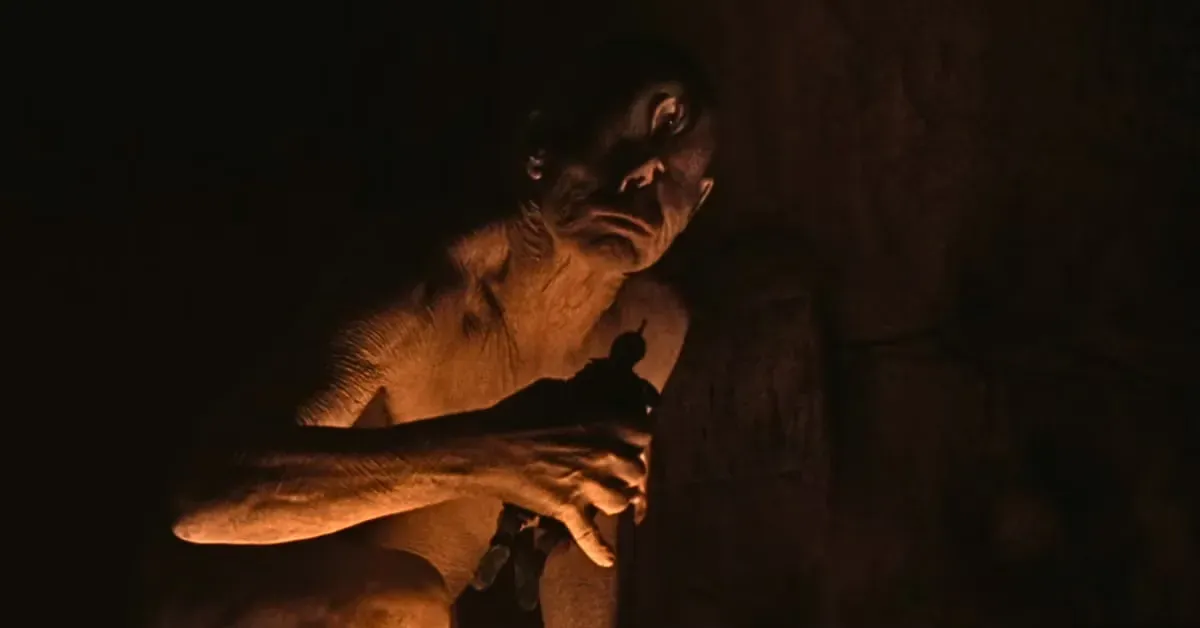
The depiction of Circe’s spell work was amazing, the way she molds them like clay into pigs was incredible. I loved that. I also loved Odysseus sprinting out of Hades, chased by an army of the dead. It's just Iceland, but it felt so otherworldly. And the entire Trojan Horse sequence, from the wait within the horse’s belly, to the Greeks silently slipping out at night and trying to open the gates of Troy? For a moment in the story where you definitely know exactly what is going to happen, where there is literally no doubt about the outcome, it was incredibly tense and exciting.
So good.
Also, I really did like how Nolan sets this film at the fall of the Bronze Age, where the once-great era is toppled by wealth-hoarding, diminished trade, and a series of climate catastrophes, as this provided him with such a fertile setting for his main metaphor. And the way he does it by tying it all to Odysseus' actions, as well as to The Sea People and the shattering of Zeus’ Law? Fantastic.
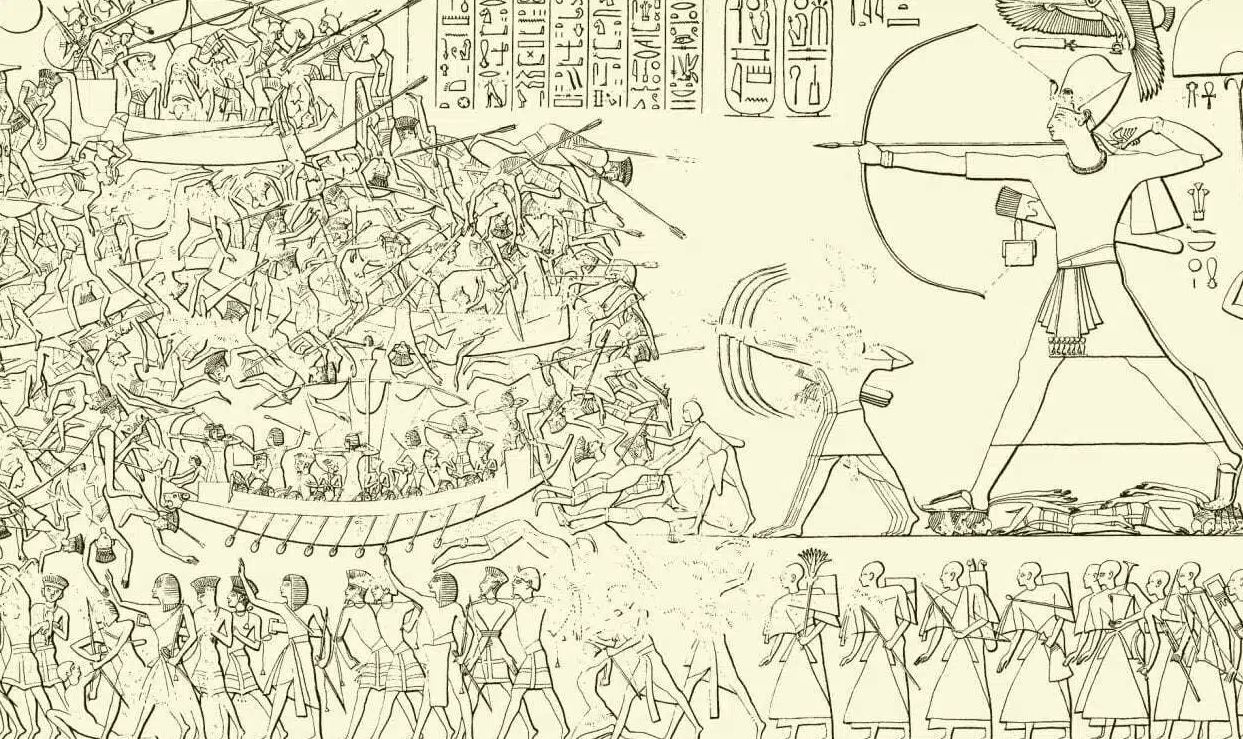
So, in the late Bronze Age, around 1200 BCE-ish, during one of the most dramatic periods in ancient history as entire empires were crumbling, including the Hittites, the Egyptian New Kingdom, even the Mycenaeans, where whole cities were burned to the ground, and a long-standing system or trade dissolved into chaos, there was this mysterious tribe/tribes of seafaring people raiding the eastern Mediterranean. They were called The Sea People, and they were terrifying. Like, you'd just be busy doing your Bronze Age peasant stuff one day, minding your goat herds, probably, and then suddenly... these sails would appear on the horizon, and just like that, you were at war.
And the weird thing is, no one knows who they were.
There's a lot of theories, but he historian Strabo (64 or 63 BCE – c. 24 CE) a Greek geographer in the Roman Empire, best known for his work Geographica, a descriptive history of people and places from different regions of the world known during his lifetime, talks about how many of the Greek heroes returned home from the Trojan War to find that everything was gone, their houses taken, their thrones usurped, their former lives in shambles, I mean... it'd been 10 years, right? So they get home and they have nothing, nothing but ten years of killing. So what do they do? These displaced warriors and their armies turn back to the sea to find their future out there on the water, not as traders but as raiders. Some claim that this is the origin of the Sea People. A kind of Bronze Age Noir, if you will.
But who knows? Whatever the truth, much like the Trojan War, the Sea Peoples origins, their motivations, the extent of the chaos they actually caused, as well as the totality of their role in the broader collapse of the Bronze Age system, are still up for debate. In fact, so little is actually known about them, that even the term “Sea Peoples” is nothing but a modern designation based on an ancient Egyptian record that only describe them as “the peoples of the sea.” And then, after a short but tumultuous time, they were gone. Some say the reason they disappeared is they finally settled somewhere, that they became the early Philistines, or even the Etruscans of Italy. Again, who knows. The only thing for certain is, for a time, they were this element of terrible chaos as the world was crumbling, and then just as suddenly, they were gone.
In the film, as I said, Nolan reveals that the Sea People, this nameless terror threatening the known world, disregarding Zeus' Law, were really just Odysseus and the rest of the Mycenanean army returning home from Troy, raiding, raping, and pillaging along the way, killing as they go, "These are our waters!" as they ruin the world. I love how he shows that this is just the continued ripples of their greed, their bloodlust, their militarism, and how it wrecks the very fabric of their own society, irrevocably, the thing they claimed they were setting out to protect.
Sounds familiar, right?
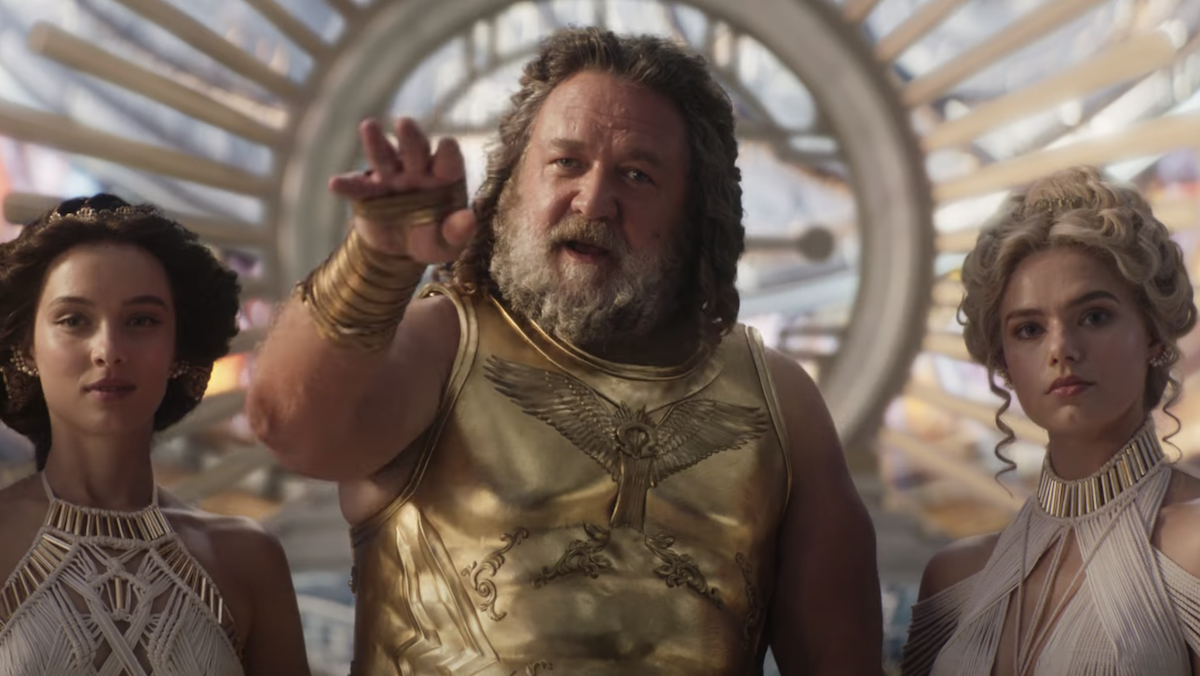
As for Zeus' law, well... it's named after Zeus.
Zeus is the supreme deity of the Greek pantheon of gods. A sky and thunder god, the wielder of the the thunderbolt, and a child of the titans Cronus and Rhea, he is a usurper, who slew his own father and took over heaven, which he rules as the king of the gods on Mount Olympus. He is married to Hera, queen of the gods, and he cheats on her all the time. Usually with human women, and usually while he is in disguise somehow. Maybe as an eagle. Maybe as a swan. Maybe as a goose. Or maybe as a cuckoo bird or a phoenix. He seems to favor birds. But he's also been a satyr, an ant, he was a bull once, and really, the question of beastiality is looming over all of this, right? I mean, does Zeus seduce them as an animal, and then he reveals himself? Like “Tah-dah, it’s me! Zeus! Still wanna do it?” Or does he have sex with them as an animal and that’s it? They never know? They seriously thought they were just getting down with a swan, and then nine months later they gave bith to Helen of Troy? It’s never been clear to me. Does he change into a man partway through sex, because I got say, that's probably a deal-breaker for the lady, right? I mean, if you’ve just been seduced by a goose, then goose-fucking is probably your thing, right? Yes, it’s weird, none of us approve, but that’s what they're into, right, and the chance came along... it was even initiated by the goose, for god's sake! So, you’re probably not gonna be happy if halfway through this sexy god damn goose just railing the shit out of you, your toga thrown up over your head, just honking in ecstasy, and then out of nowhere, it’s actually Grandpa Greek doing the deed?
Who knows what and when? This is my whole question.
Plus, what is the origin here? Was there a lot of beastiality in ancient Greece, and when someone would get caught, were they then like: "This isn't a horse... It's obviously Zeus! I mean, c'mon! Like I'd fuck a horse... ppfffbbt! C'mon."
Whatever, doesn’t matter.
Also, to be fair, he’s not always an animal while he's slumming it amongst the humans, just most of the time. Once, he was a golden shower. That's how he got Clash of the Titans’ hero Perseus' mom pregnant. Another time, he was fire, and I don't mean it like the kids say it, that he is awesome, I mean he was literally fire, which... makes no sense. One time, he appeared as his daughter Artemis, goddess of the moon and the hunt, so that he could have sex with one of her hot friends. One has to wonder who is actually running the world during all this, right, because Zeus has to be way too busy knee deep in strange. It's probably Hera, right? That makes his infidelity even worse. What a jerk.
The point is, Zeus has a million billion kids. Basically every god and demi-god, or just a regular famous person in the greek stories is either related to him, or he has had sex with them, or both.
This is the root of Zeus’ Law... I think.
Otherwise known as Xenia, which is derived from the word Xenos or “stranger.” It's the idea of hospitality wrapped up in the basic concept of religion... be nice to guests, or you could be punished, because you never know, that strange traveler at your door asking for help might be Zeus, and fair warning, he's probably going to turn into a surprisingly sexy goat or something, so he can fuck your wife. Just fyi.
Zeus' Law consists of two basic rules:
- Hosts must be hospitable to guests, and provide them with a bath, food, drink, gifts, even safe escort to their next destination. Also, it's rude for the host to ask questions of their guests, even their name, before the guest has finished a meal, provided to them by the host.
- Guests, meanwhile, must be courteous, and should not be a threat nor a burden. Guests must also be entertaining, bring some news of current events and some fun stories. Most importantly, if the hosts ever show up at guests' home some day, the guests need to pay the host's hospitality back in kind.
Xenia was an important aspect of maintaining community in the ancient world, because after all, it was dangerous for a person to leave their home on a journey. So, much like Blanche Dubois, people depended on the kindness of strangers. This is why they would take care of strangers at their door, because they might need that helping hand some day themselves. In short, even though people laugh about Penelope waiting 20 years, holding off all those suitors for so long, and yet no one kills each other, or just takes over Ithaca, the whole reason is due to Zeus' Law.
This belief kept people civil, at least nominally.
But when Odysseus built that wooden horse, it went off like an atom bomb, shattering that delicate web of community, that civilty. Suddenly, all over, people realized that these norms were just words. You didn't have to follow them. So they didn't. Odysseus' clever ruse, his need to win, his need to conquer, it echoed across the world. It turned every open hand into a closed fist. It sowed distrust, and those seeds took hold fast. And afterwards, there was no way of ever going back. The veil was lifted. The milk was spilled. The atom was split. He had become death, the destroyer of worlds.
The metaphor for our current reality in America is pretty easy to see.
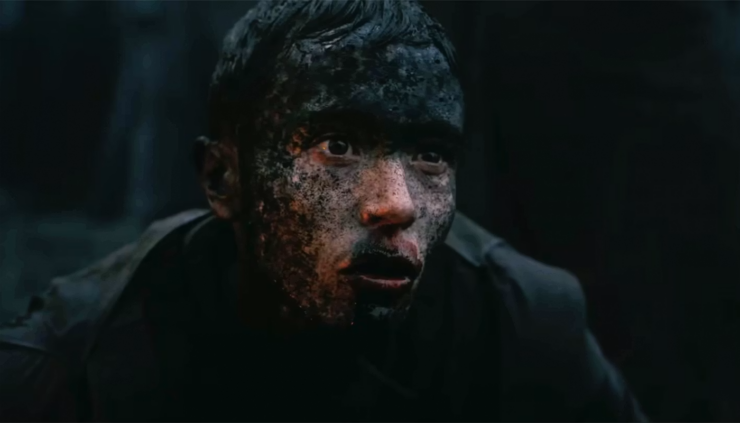
And speaking of how shitty America is, another thing I really liked was the inclusion of Sinon.
Sinon isn’t in The Illiad or The Odyssey. He appears in The Aeneid, which was written by the Roman poet Virgil sometime between 29 and 19 BCE, and Sinon's role there is to be the unapolegetic liar who convinces the Trojans to take the horse into Troy. Because Virgil was Roman, and the Romans hated the Greeks because the Greeks built marble columns first, and also because some Romans considered themselves to be the descendants of the refugees who fled the burning of Troy, this was seen as one of the most treacherous things ever done, just an ultimate act of betrayal. So much so, in fact, that Sinon appears in Dante's Inferno, along with Odysseus, being punished in the eight circle of hell as a liar and a fraud, right next to the guy that actually built the Horse, which seemed excessive, but whatever.
My point is, Sinon is known for being one thing... a liar.
So why did Christopher Nolan add this small character who didn't even appear in the original poem, and is only known as being a liar, and then turned them into the totem of Odysseus' guilt? And, why did he cast one of the most famous transmasc actors alive, Elliot Page, to play that role, whose inclusion caused almost as large a meltdown as Lupita Nyong'o's casting, just so he can to play a character that up til now was only known as a liar... a charge that is often leveled at transpeople by transphobic shits?
The answer lies in two places. One, that Sinon was an innocent manipulated into lying about the horse by Odysseus. He had no idea what was actually in the Horse. And two, in the moment where Odysseus returns to Antinous the lot that the shade of Sinon gave to him in Hades, the lot Antinous drew, and then forced onto Sinon, forcing the boy to take his place in Odysseus' army, an act which ultimately led to Sinon's death. "I give you back your shame," Odysseus says to Antinous.
This is Nolan talking about people who would sacrifice others for their own comfort and convenience, for their own agenda, and here, this is both Antinous and Odysseus. But specifically, their using of Sinon as a pawn stands for how the Right will drum up their nonsense trans-panic out of nothing, and the Dems will then quickly capitulate, both sides going on and on about protecting society, about making choices for the greater good, but it's really only about them prioritizing their own agenda over other people's lives. It's about how the idea of abandoning the trans community now is a shameful and terrible thing, and that this price will come due some day, that this shame will resurface like Antinous' lot, and the side that you chose now will be remembered as the moment that you told the world who you truly are, and then you will have to carry that shame to your grave.
So here, in this film, Nolan spends the movie showing that Sinon is no liar, he is no fraud, he is a victim of the actions of careless and greedy and evil men.
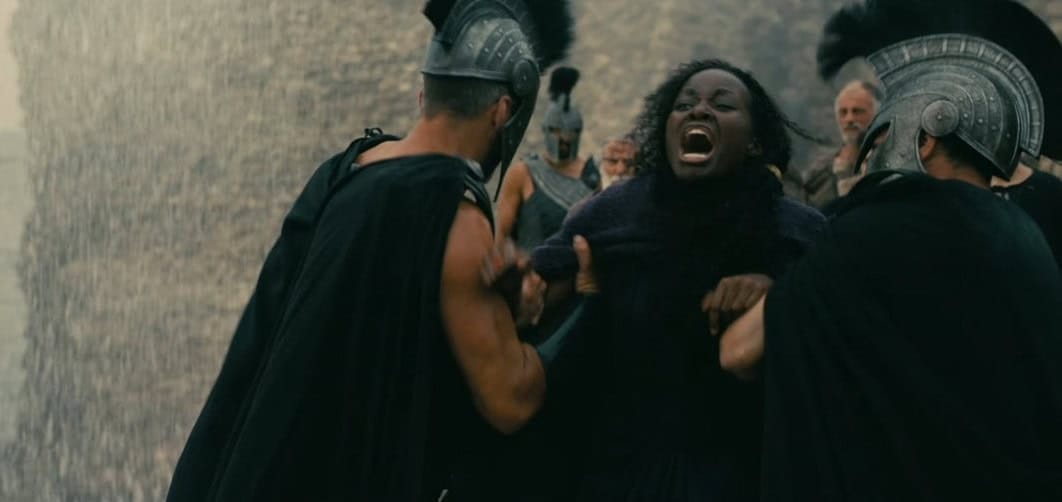
Which brings me back to Lupita Nyong'o...
I also really loved her small part in this film. Not only was she obviously the perfect casting for the legendary beauty of Helen, but her performance as both Helen and her twin sister, Clytemnestra, wife of Agememnon–two very different characters–showed that, despite a very small amount of actual screentime, she got these roles based on her talent as an actress.
In this film, the question of what exactly happened as far as Helen ending up in Troy is never addressed. Was she abducted? Did she go willingly? It doesn't matter at the point where we see her, all that matters is she is draped in sadness, any hope she ever had of escaping her gilded cage clearly having been beaten out of her, as the scars that disfigure half her face attest to. Menelaus says to Telemachus with a smirk how her face can only launch "maybe 500 ships" now. Helen is very cold and imperious during this, only occasionaly showing her spite, as if she knows now that she has no other way to survive, but it is clear that she is staying upright through sheer silent fury alone. That makes her sudden hurried whispers to Telemachus as he prepares to leave all the more heartbreaking, asking him to please tell Penelope: “I’m sorry for Troy, and for everything that has happened in my name," with tears rolling down her face. In that moment, it is clear that Helen is a prisoner of this story, that even her name has been taken from her, and all she can do now is to call across the void to another woman far away, and hope that she understands.
Meanwhile, Clytemnestra has been waiting patiently for ten long years for the bitter seed of her vengeance to bear the sweet fruit of justice. Even in terms of the film, the moment where we see the hulking brute Agamemnon carrying his young daughter to a cliff above the raging seas, as the sobbing Clytemnestra fights against the guards restraining her, was a while ago. A lot has happened on screen since we last saw her by the time Odysseus encounters the shade of Agamemnon in hell, and he tells of how he was greeted when he returned home. As the familiar tale tells us, Clytemnestra is at the dock to welcome him. She bathes him and annoints him and takes him to bed as a champion and a king, just as the return of the conquering hero should be. Then she kills him, bright with fury and satisfaction.
Both women, despite being used, abused, and disregarded, considered to be nothing more than property by the world of men, fought back against their prisons as much as they were able to, and both are remembered in history solely for their terrible acts. But in less than five minutes screen time, Nyong'o showed clearly that these two women, vilified through the ages, were the true victims all along.
It was a really good performance.
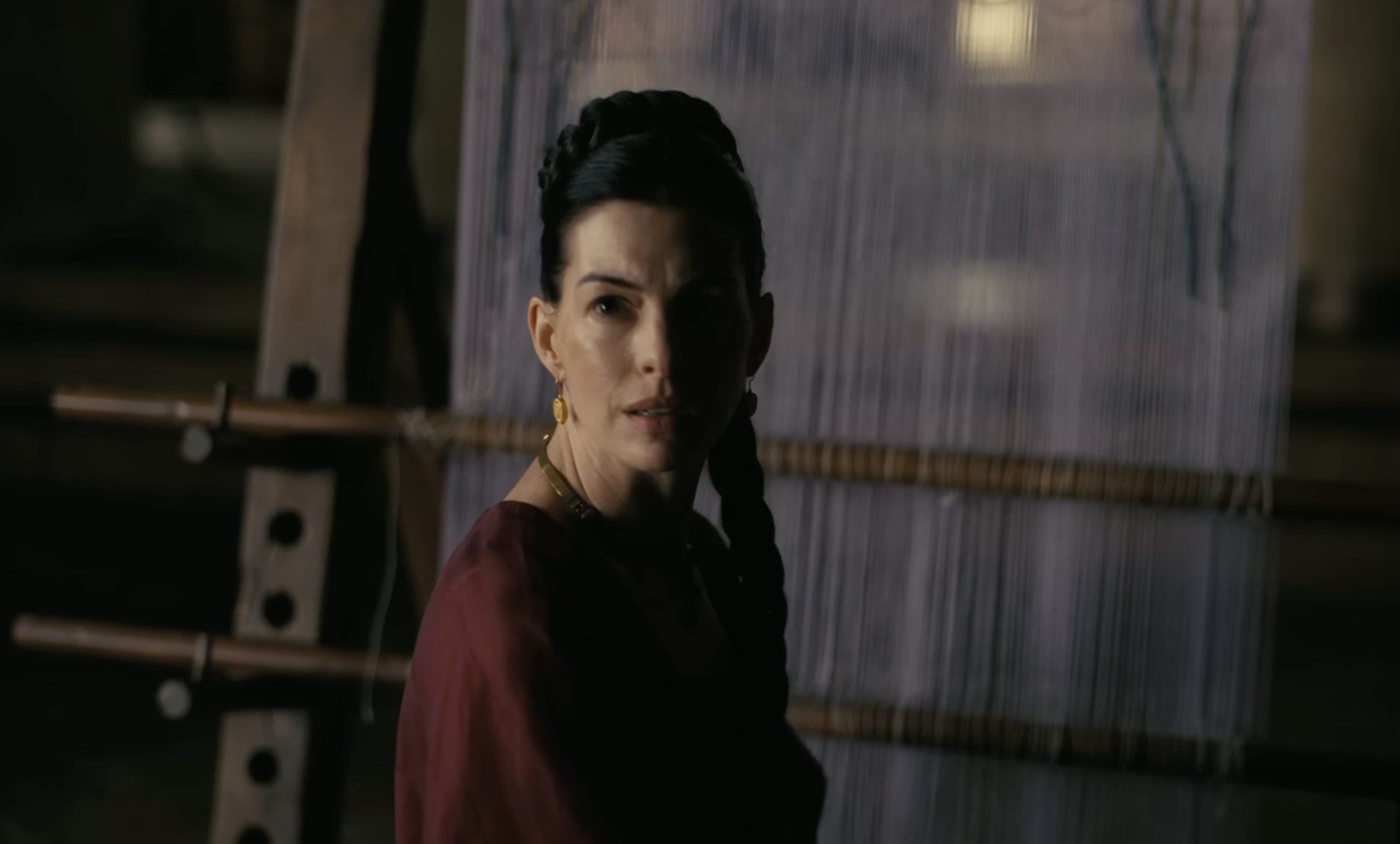
Of course, as I said, it has to be mentioned that Nolan is not the best when it comes to him writing his female characters, but as well as with Helen and Clytemnestra, I think he also some good stuff with Penelope too.
Often times, Penelope is shown to be clever, cloistered in the palace as she holds off all the loutish suitors, but it's always a demur clever, like she's merely dancing around their questions, nothing more than quick conversational side-steps during the day, as she makes fluttering eyes behind her fluttering hand fan, while at night quietly picking the threads out of her loom every night.
A women's power, soft and unseen, as they might say.
So I appreciate that in this version, it specifically points out how Peneloped has been administering Ithaca in her husband’s absence, doing the hard work, all while fully aware it will ultimately be without any credit or any power of her own. I really liked how, fed up with Telemachus and his baby boy Prince bullshit, thinking he's a tough guy, she rips into him how she should be the one on the throne, as she is the one who's been keeping the lights on in this craphole of a kingdom the past twenty years, all while he sulks and pouts, but she can't, because women are not allowed. I love how she reminds him that she is more than capable of taking care of business, and that he is not, that he is still a child, and yet, all her experience is for naught when compared to the fact that he has some baby-whiskers on his chin.
That was good stuff.
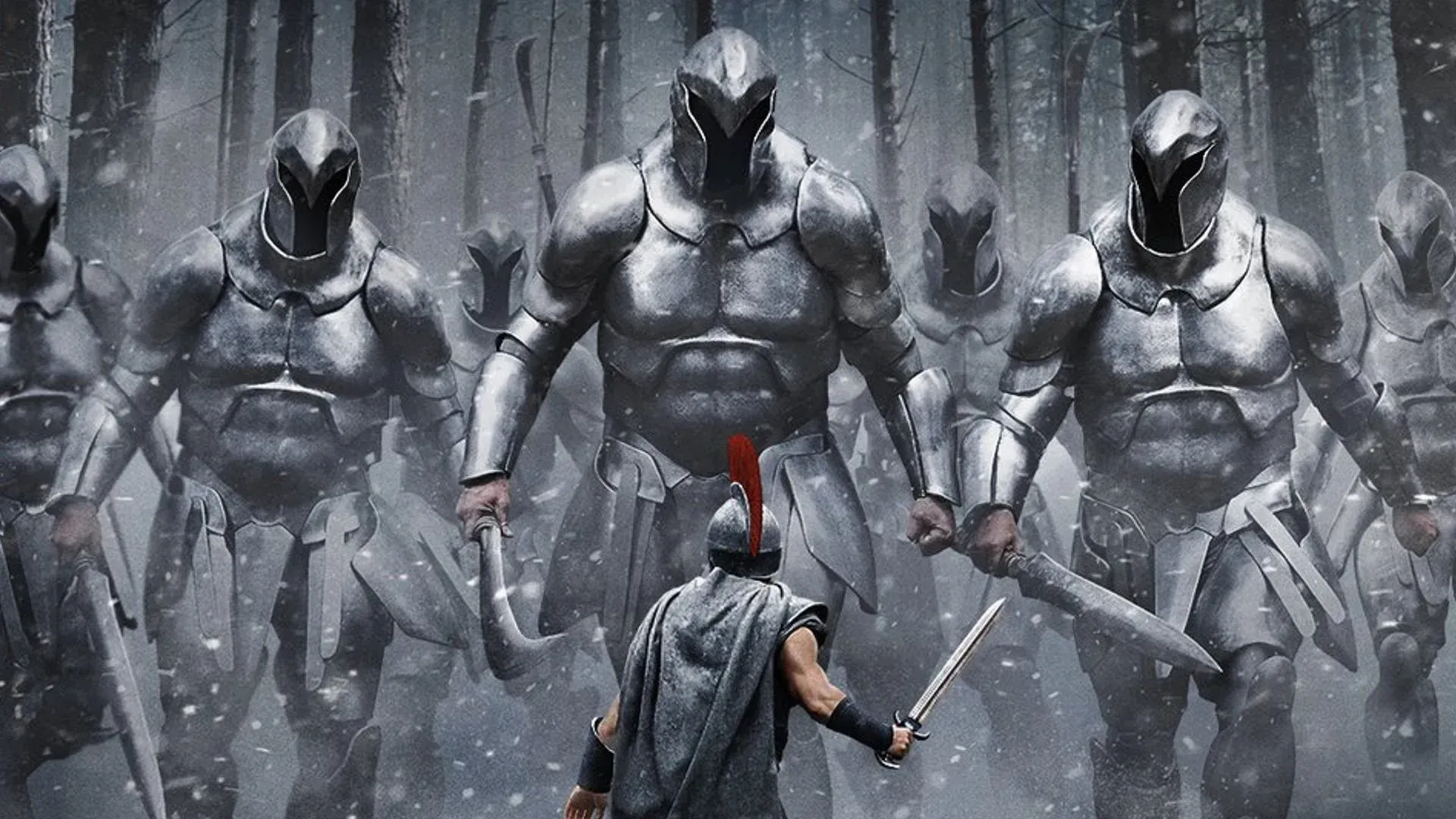
In the end, The Odyssey is just a good movie.
And you can feel safe knowing that means that first and foremost, it’s fun, a big dumb action movie about Odysseus, the legendary warrior and king of Ithaca, the beloved husband to his wife Penelope, who waited ten years for his return as he fought his way back to her through monsters and magic and myth.
It’s some big time epic fantasy shit. It’s super fun.
It’s just that at the same time, it’s also an anti-war movie, an anti-nationalism movie, and anti-colonization movie, one with a clear message about how moral transgressions will always carry consequences. It’s a movie about a fading empire stumbling towards its end, and the destruction that comes when its leaders forsake its people and their values for their own vanity, greed, and selfishness. It’s about how nations crumble when they forget their own story, when they wildly celebrate the clever ruse that was the giant horse, but ignore all of the terrible destruction that it wrought. It's just a good movie.
Thumbs up. Very highly recommended.