Topkapi
"Do you mind that I am a nymphomaniac?"

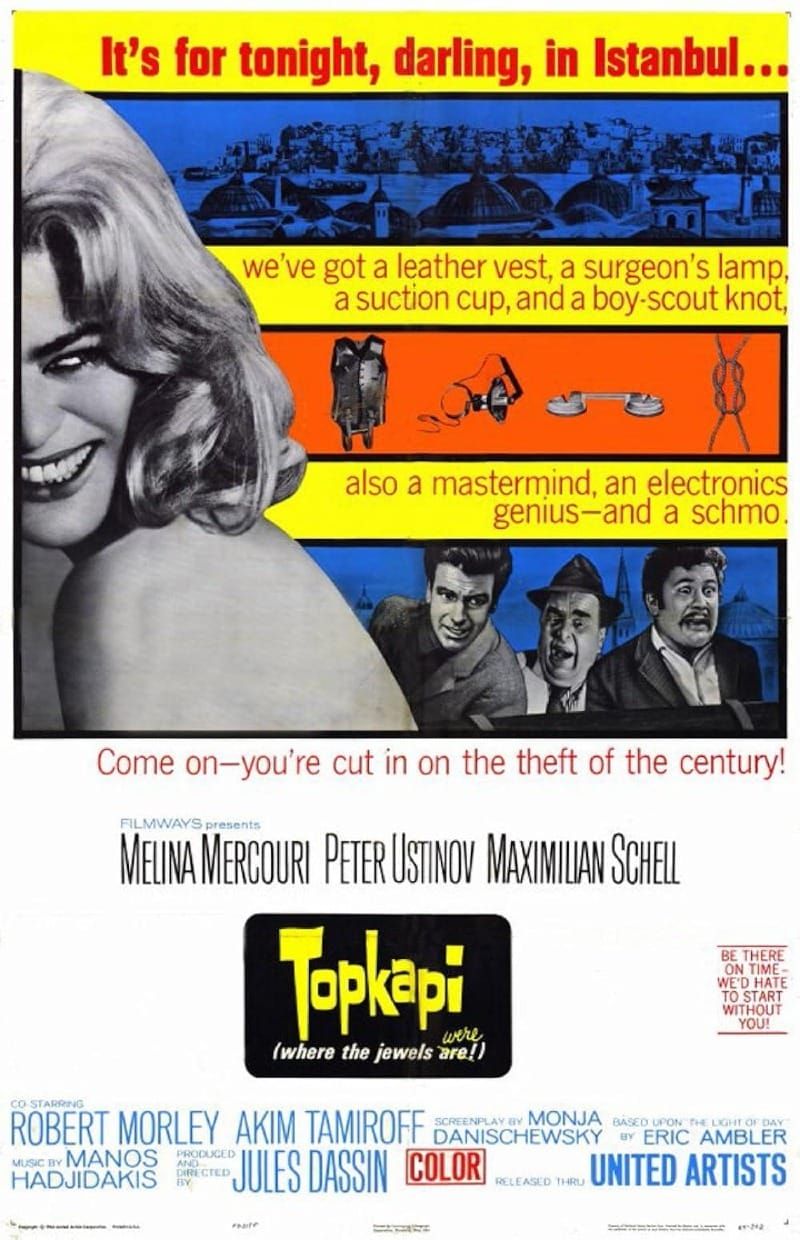
A small-time con artist is roped into a gang of international art thieves’ plan to steal an emerald-encrusted dagger from Istanbul's Topkapı Palace, all while the Turkish police close in.
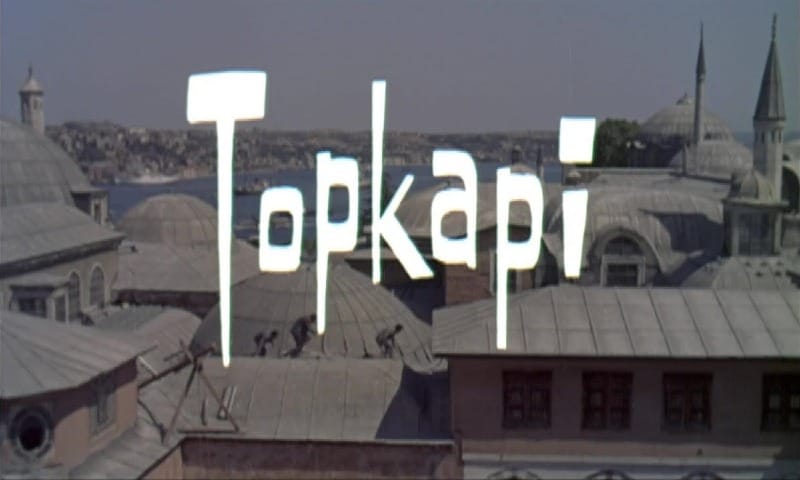
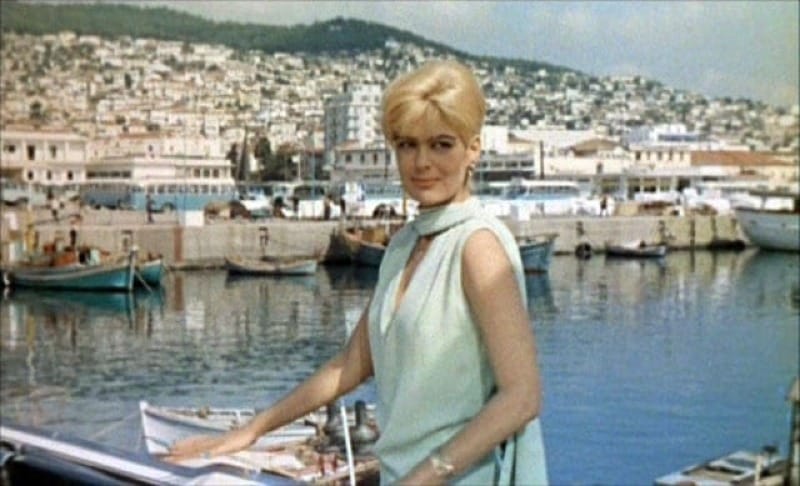
Released in 1964, Topkapi is a perfect example of both "they don't make them like this anymore," and also "there's nothing new under the sun." It's a garishly bright, yet underlit, madcap romp of a classic broad comedy caper film, while also acting as a documentary archive of 1960s Greece and Turkey, featuring a story that very clearly inspired so many others that followed. It's a film that opens with a 4th-wall-breaking info dump–pre-credits, mind you–to set the scene, under the flimsy guise of jewel thief Elizabeth Lipp visiting Istanbul to case her potential new heist. This means that the film opens with the film's lead actress–Greek singer, activist, and politician, all in all, a very unique character, Melina Mercouri–swanning about a very obvious sound stage that's been dressed up to look somewhat like the interior of Topkapi Palace, with all its treasures, and also a traveling fair that has replicas of those very same treasures, for ten minutes, with her smoky, Eartha Kitt-purr of a voice, explaining everything.
As awkward and as out-of-date and reminiscent of a play as it is as a narrative tool, as far as openings go, Melina Mercouri certainly makes it intriguing...
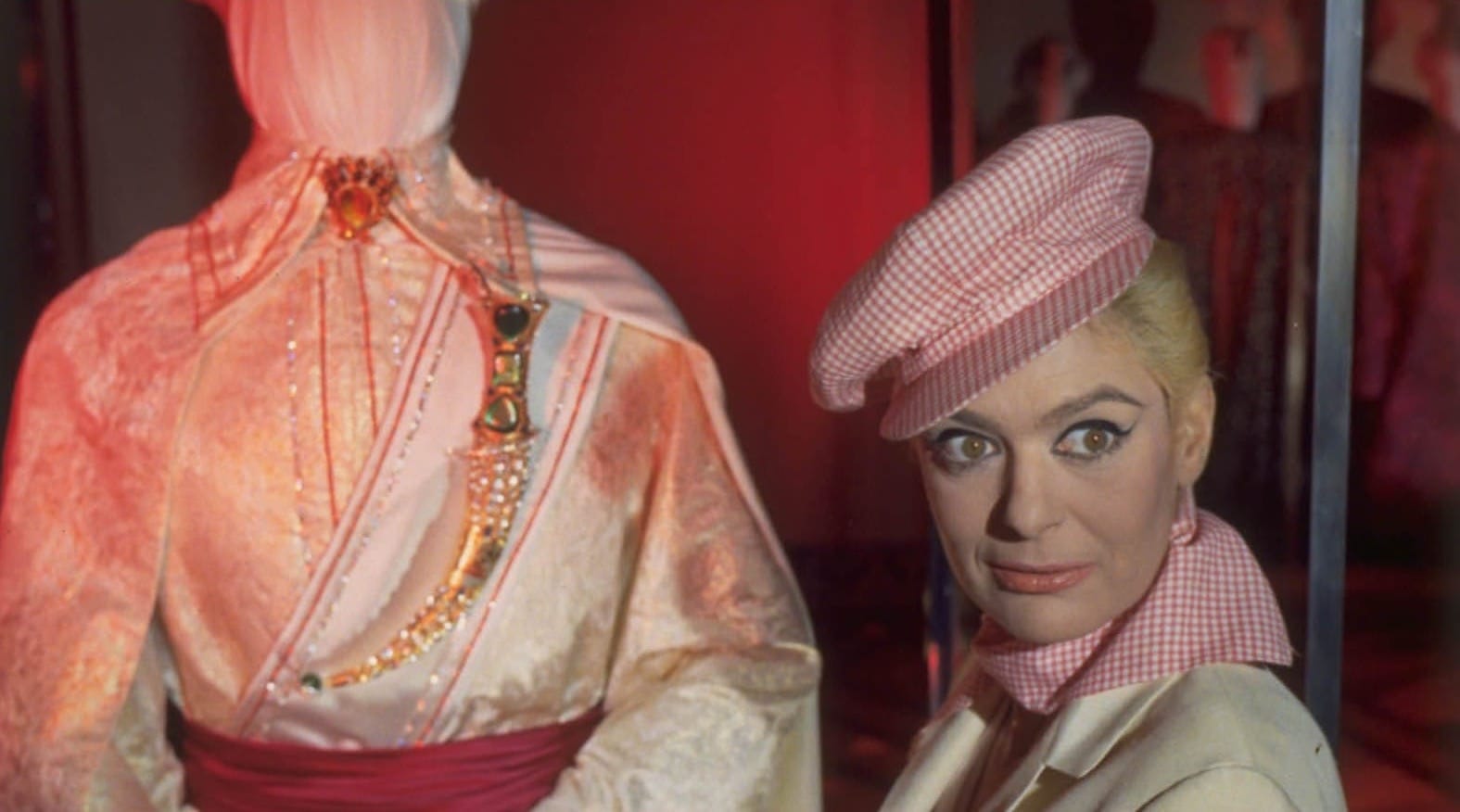
Based on the 1962 novel The Light of Day by Eric Ambler, the film is directed by Jules Dassin, who moved to Europe after being blacklisted during the McCarthy Red Scare witch hunts, when he was named as a Communist by the rat, Edward Dmytryk, who named names before the House Un-American Activities Committee in 1951. Dassin would marry Melina Mercouri two years after Topkapi’s release, and the pair stayed together until her death in 1994.
The film's title, Topkapi, is of course for Topkapi Palace.

Once the center of the Ottoman Empire, this means that the film is set in Istanbul, obviously, not Constantinople, because you can't go back to Constantinople. It's been a long time gone, Constantinople, now it's Turkish delight on a moonlit night. That means every gal in Constantinople, lives in Istanbul, not Constantinople, so if you've a date in Constantinople, she'll be waiting in Istanbul. But whatta ya gonna do... even old New York was once New Amsterdam. Why they changed it, I can't say, people just liked it better that way. So construction on Topkapi Palace began in 1459, just six years after the Fall of Constaninople, when Sultan Mehmed the Conqueror, who conquered the city and effectively brought an end to the Byzantine Empire, wanted a new home... now a museum.
It's also our thieves' target, for inside Topkapi Palace lies the emerald-encrusted dagger known as the Topkapi Dagger.
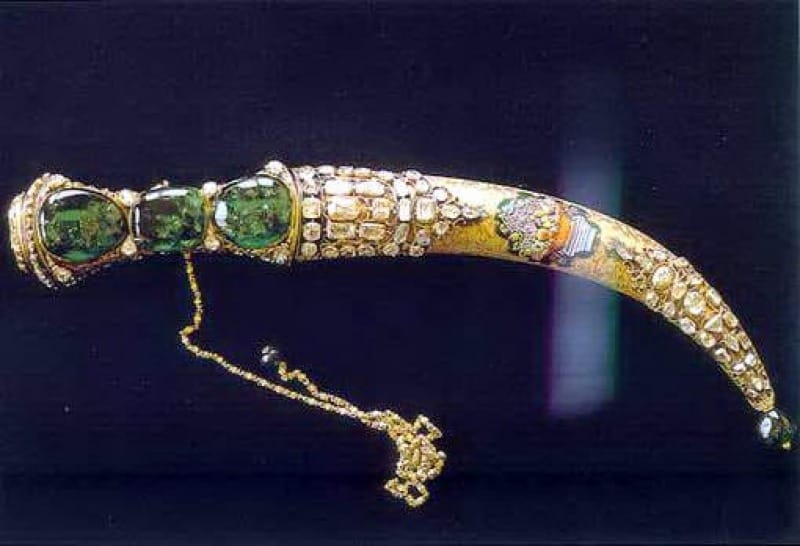
Commissioned in the 1740s by the order of Sultan Mahmud I, who was known as Mahmud the Hunchback for reasons I can not guess, the dagger was meant to be a peace offering to the Shah of Iran, who had already gifted the Sultan with a vertible treasure trove that is said to have included pearls from the Persian Gulf, a jeweled Mughal throne, and two dancing elephants. TWO DANCING ELEPHANTS! What do you think they danced to? It probably wasn't the Lambada, but I bet I probably speak for all of us when I say that I wish it was. Can you imagine? Two elephants dancing the Forbidden Dance? I would pay to see that. But anyway... while the dagger was on its way to Iran in 1747, the Shah was assassinated, so the envoys returned to Istanbul and the Sultan kept the dagger.
No use wasting a good present, right?
A status symbol in Ottomon culture, as well as a badge of authority, the dagger is 14 inches long, and is estimated to be worth somewhere in the neighborhood of 50 million dollars today. It has a golden sheath that's positively bedazzled with rose-cut diamonds. Three large Colombian emeralds, discovered by the Europeans after Spanish conquistador Gonzalo Jiménez de Quesada's expedition in the 1530s, are set in the golden hilt. The pommel has an English watch set within it that's covered by yet another emerald. The dagger also had religious signifigance, as the emeralds were chosen specifically because the color green is considered to be the favorite color of the Prophet Mohammed.
It's kind of a big deal.
So...
International jewel thief Elizabeth Lipp visits Istanbul, where she sees a traveling fair featuring replicas of treasures from the Topkapı Palace. She cases the Topkapı, fascinated by the emerald-encrusted dagger of Sultan Mahmud I. Leaving Turkey for Paris, she recruits a former lover, Swiss criminal mastermind Walter Harper, to plan the theft of the dagger.
Walter explains the three cardinal rules of theft to Elizabeth:
- Plan meticulously
- Execute cleanly
- Don’t get caught before, during, or after
That's why he's a criminal mastermind, people.
At Walter's urging, they assemble a group of amateurs with no criminal history, theorizing that this would mean that the local police would be unable to identify any of them, should they be surveiling the group, making it harder for them to be able to figure out what the group is up to. The group includes both Elizabeth and Watler, of course, and Cedric Page, a whimsical toymaker and master of all things mechanical, Giulio, a mute acrobat known as the "Human Fly" and his burly acrobatic partner, Hans Fischer, who will also act as the group's muscle.
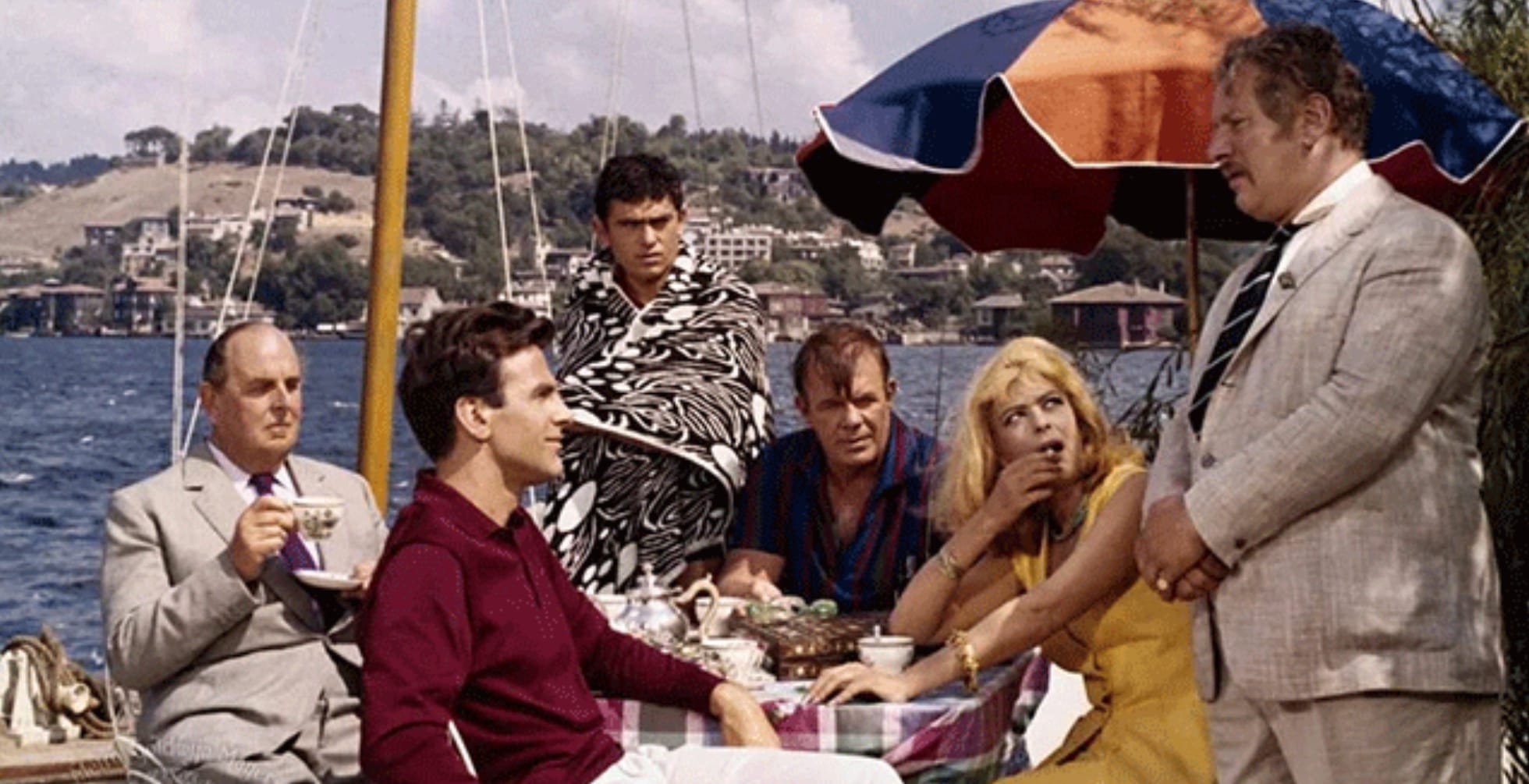
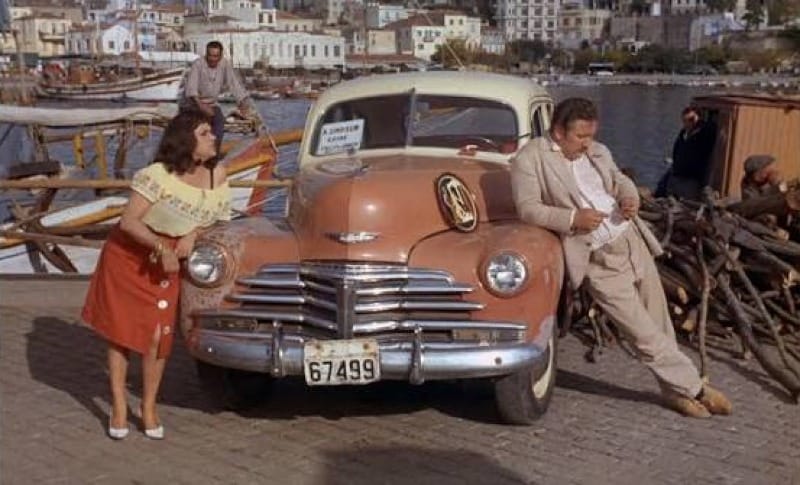
Finally, in Kavala, Greece, a mere day's drive to Istanbul, Turkey, Elizabeth and Walter hire a small-time hustler named Arthur Simon Simpson to drive a rented car across the border into Istanbul. The car is full of hidden explosives and guns to use in the heist. It's a bit of a Hail Mary move, they figure that if Simpson is able to deliver the car to them in Istanbul... great! And if he gets caught at the border, well then, he has no idea who any of them really are.
Simpson is a sweaty and overly-loquacious oaf–or a schmo, as Elizabeth and Warren call him, rolling the word elaboratively around in their mouth as if it was some delicious piece of lingusitc alien exocitism never before heard–and he is caught at the border for those very reasons, he's a schmo. He's detained by Turkish Customs on suspicion of plotting a terrorist attack at an upcoming military parade. But Simpson is a hustler, and he manages to convince the cops of his innocence, who they mostly seem to believe him due to the fact that he seems generally incapable of doing... really anything well, let alone something nefarious. So, they recruit him, and when he delivers the car, which is picked up by Cedric Page, a Turkish police officer informs Cedric that only the person who brought the car into the country is legally allowed to drive it, which can't be true, because what about car dealerships? Whatever... anyway, as a result, Simpson is now part of the gang, periodically tossing notes tucked within crumpled cigarette packs for the cops to retreive.
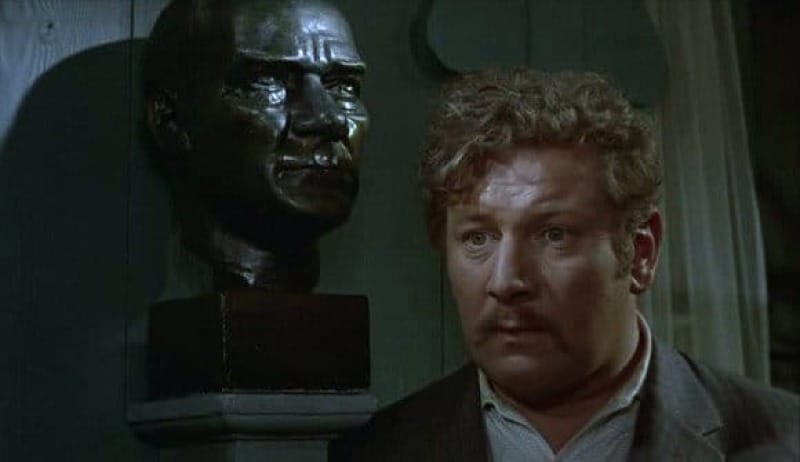
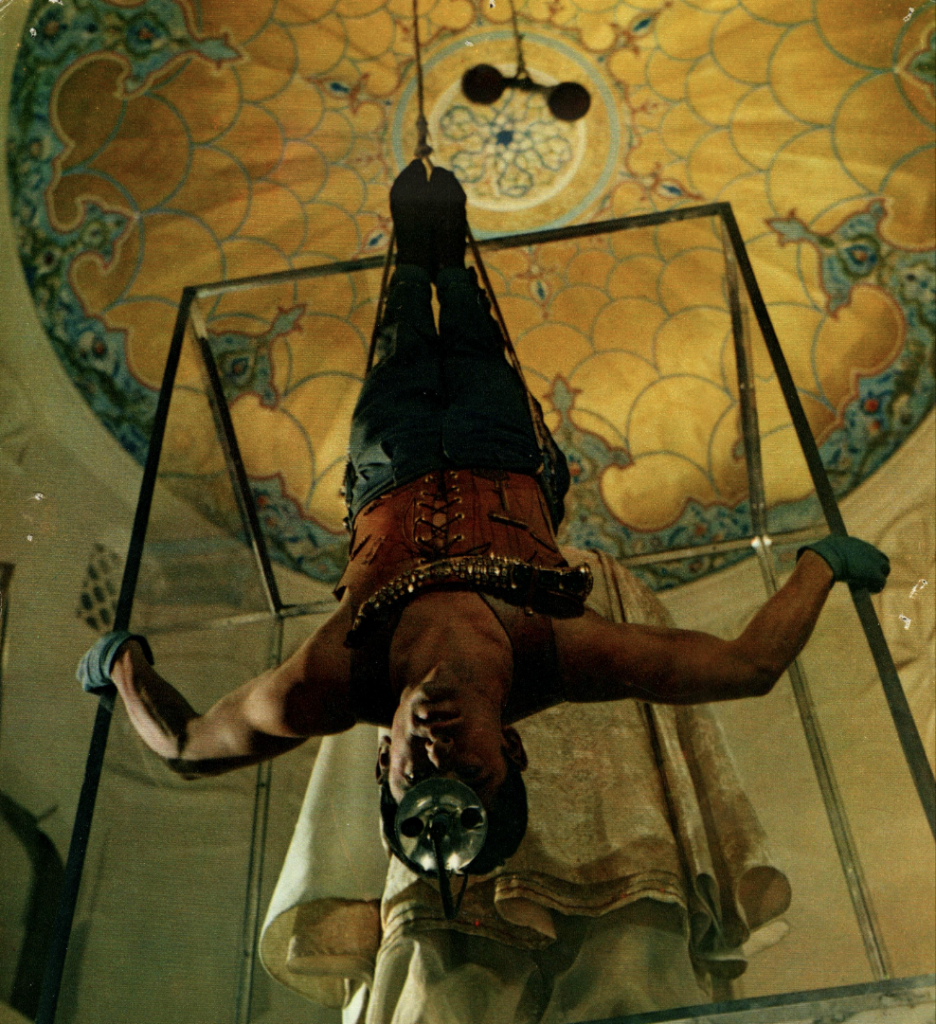
The gang's plan is to enter Topkapı Palace by crossing the rooftops, all while Elizabeth and Cedric distract the spotlight operator, so that Hans and Walter can lower Giulo down a wall, so Guilo can enter through an upper window, and Hans can lower him on a rope, so Giulo can attach a second rope, so that Hans can lift the large glass box around the dagger out of the way, so that Giulo can replace the dagger with a replica, after which Hans will lower the glass box back into place, and all without touching the floor, which has a built-in alarm system...
Simple, right?
Unfortunately Hans' hands are injured in a scuffle with the team's drunk Russian cook, and Simpson is enlisted as a substitute, which prompts him to accidentally confess that he has been working undercover for the Turkish police. Knowing that the cops are watching, they decide to leave the guns and bombs where they are, and then, as cover, later claim ignorance, and tell the police that they found the guns and explosives in their car with no idea where they came from.
What were the guns and explosives originally going to be used for?
I don't know.
In what I assume was a mandate by the Turkish Cultural Ministry in order to film this movie, to establish an alibi, the group attends a Turkish wrestling match with lots of culture going on around them. There's tightrope walking, and belly-dancing, and drumming and marching, and groups of oiled up shirtless men wrestling, and a little dog in a hat and a coat dancing on its hind legs. And during all this Turkish Culture hub-bub, the thieves give the tailing cops the slip.
And with that, the heist is on...
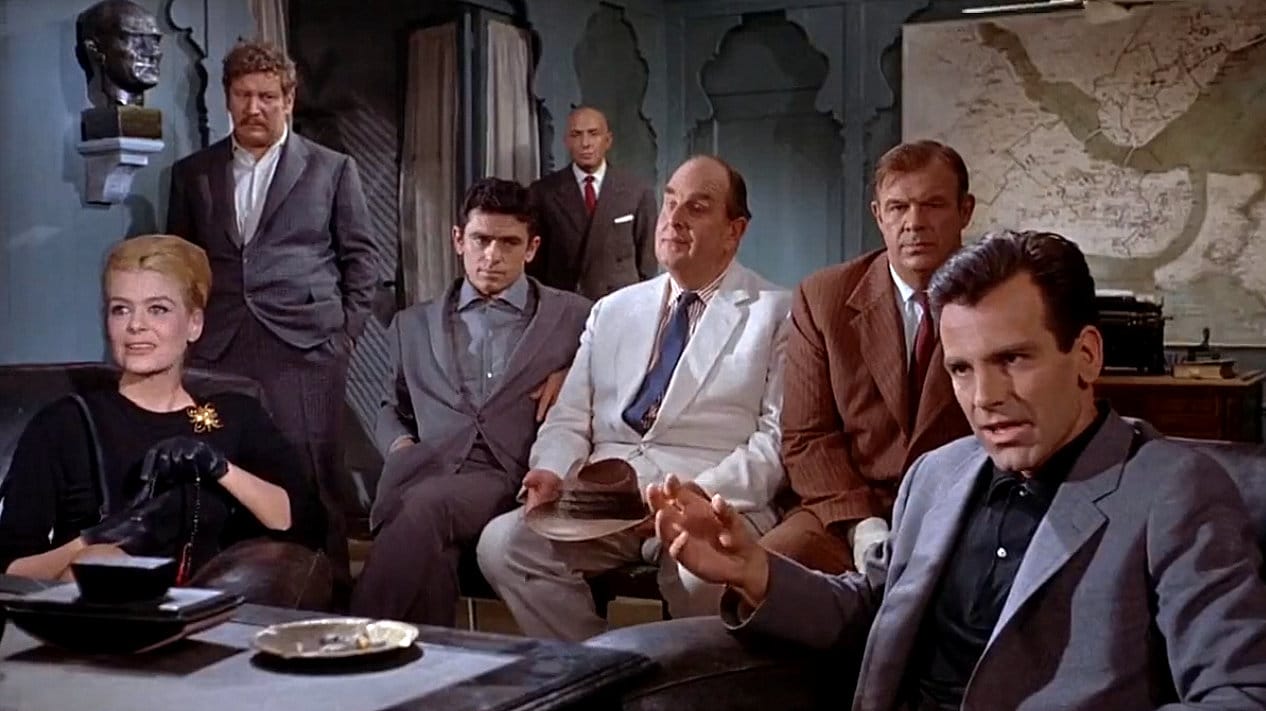
Topkapi is an absolute blast. It's weird. It's fun. It's interesting. Seemingly caught between Mod culture and the Swinging Sixites, it's a unique-feeling film, a feeling that is exacerbated by the fact that it is set in the old world of an "Eastern" city that is in the process of changing under the influence of "Western" modernity.
On top of that, you can also clearly see how influential this film was on the heist film genre, and not just because it hinges on a genuinely tense break-in sequence that obviously inspired the break-in sequence in the first Mission Impossible movie. It's the style. The whole "getting the band together" sequence. The various specialities and characters they gather. It's not just heist films in general, it's clear the Oceans 11 series specifically owes a lot to this film too. Topkapi is credited as one of the inspirations for the Mission Impossible TV series too, so that means it's the inspiration for the entire Mission Impossible film series too. Also, Peter Sallis said in his 2007 autobiography, that Wallace & Gromit: The Wrong Trousers was loosely based on Topkapi.
So there's that too.
Apparently both Peter Sellers and Orson Welles were briefly a part of this film, which would have been interesting, but ultimately, Peter Ustinov would win his second Academy Award for Best Supporting Actor for his performance as the oaf, the sweaty schmo, Arthur Simpson, beating out Stanley Holloway in My Fair Lady. And you can see why, it's a fantastic comedic performance. There's a pratfall that he does during the heist that you can see coming from a mile away, and it's still hilarious, and all while maintaining the tension of the sequence.
Fantastic stuff.
Plus, it's always funny to watch films like this, films that were supposed to be so "edgy" at the time, so "libertine" with its attitudes towards sex, so "risque" in the way it presents its characters (mostly the way Melina Mercouri portrays Elizabeth) through modern eyes. Because honestly, it's as "edgy" as a CBS police procedural that is set near a beach. Oh, my... scantily clad women being openly flirtatious! How scandalous!
I also liked how the film didn't have the usual heist film sequence where they explain what's going to happen in the heist for the audience, all while showing it happening. There's no clear details provided in neat order, you just have to listen and watch and follow along. That kind of thing, that presumption that you're not an idiot, is always refreshing.
But that said, I’m honestly not sure how exactly things unravel at the end. I mean, I understand the sequence of events, and what happens, it just seemed rushed and presented much more conviniently than the rest of the events in the film had been. And it's not because they were pressed for time and needed to end either, as there's a whole extended epilogue after that. It's more like the connections the cops make seem to happen mostly because the film won't allow “bad guys” to win. Rather than trying to make any sense, it just felt more assumed. Apparently the book ends in a similar way too, in failure, but also not quite failure. The gang is not exactly beaten in the end, but in no way do they get away with anything. It's more like they're not giving up. They're incorrigible, the scamps! It's a weird ending and, at least to me, who prefers that the theives always get away with it, a little disappointing. Still, it's pretty par for the course when it comes to most heist movies, especially older ones, which somewhat inevitably always seem to end with some kind of pro-law & order, pro-wealthy establishment, finger-wagging scolding to "be good or else" message, a "nobody gets out clean" kind of cliche, but with much less blood and pathos. Much, much less.
It's especially weird here–again, through modern eyes–as our heroes are stealing an object that was created through brutal colonialize and bloody subjugation by a line of cruel monarchies, a thing built off the blood, sweat, and tears of the masses. I mean, stealing this dagger would clearly be a good thing. But what are you gonna do, right? Much in the same way stories of the Hook-Hand Killer out at Lover's Lane was an attempt to keep teens from parking and getting pregnant, the crooks go to jail in these things as a way to reminding us all not to step out of line, to know our place, and not to steal from the master's house.
But like I said, what are you gonna do? It is what it is. And that aside, this is a great time, and definitely worth checking out.