Wicked: For Good
“Ding dong! The witch is dead!”
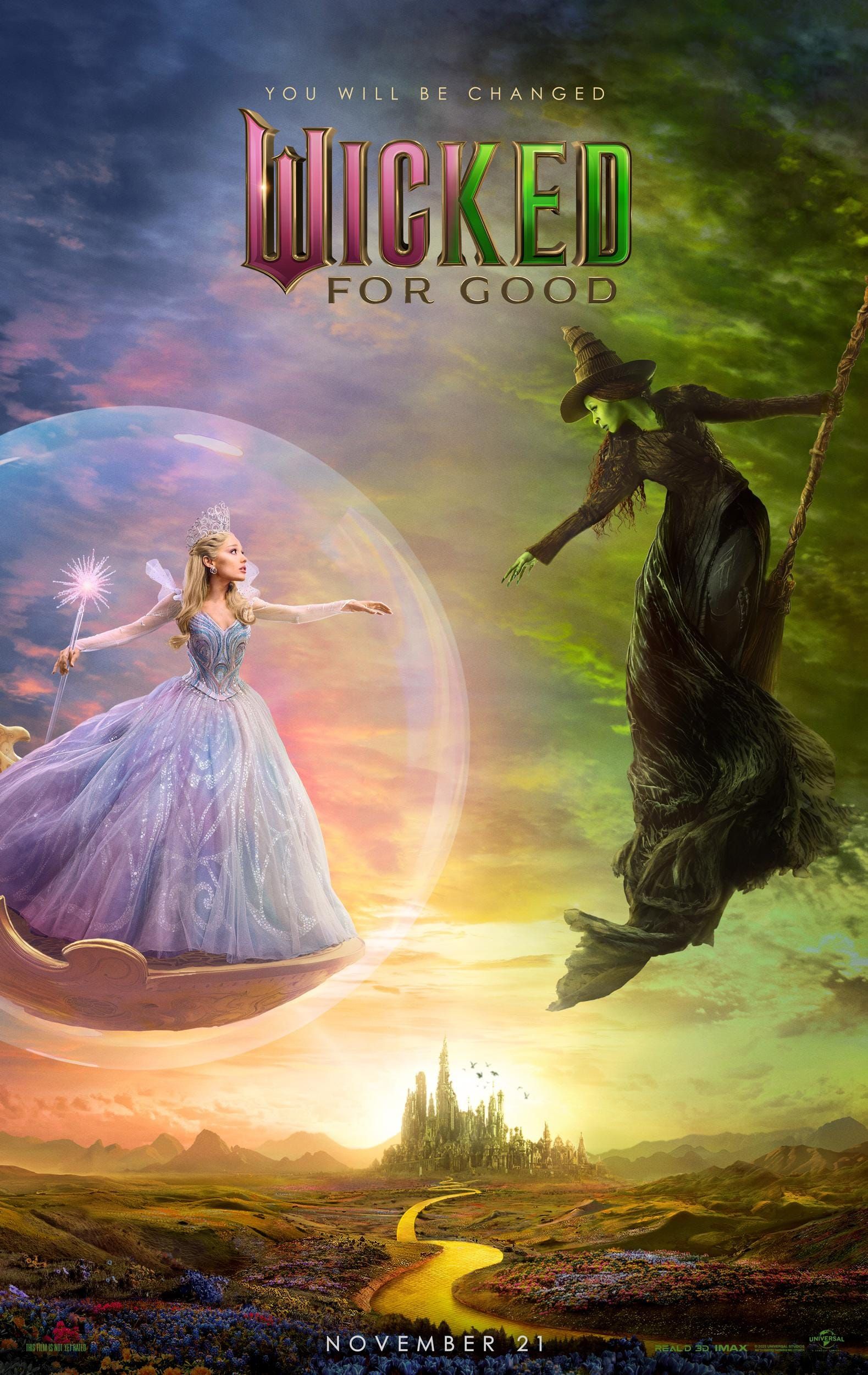
Demonized as the Wicked Witch of the West by the villainous Wizard of Oz, Elphaba continues to fight for truth, while Glinda resides in Emerald City, reveling in her fame and popularity. But as the citizens of Oz turn against Elphaba, she and Glinda must face each other one last time...
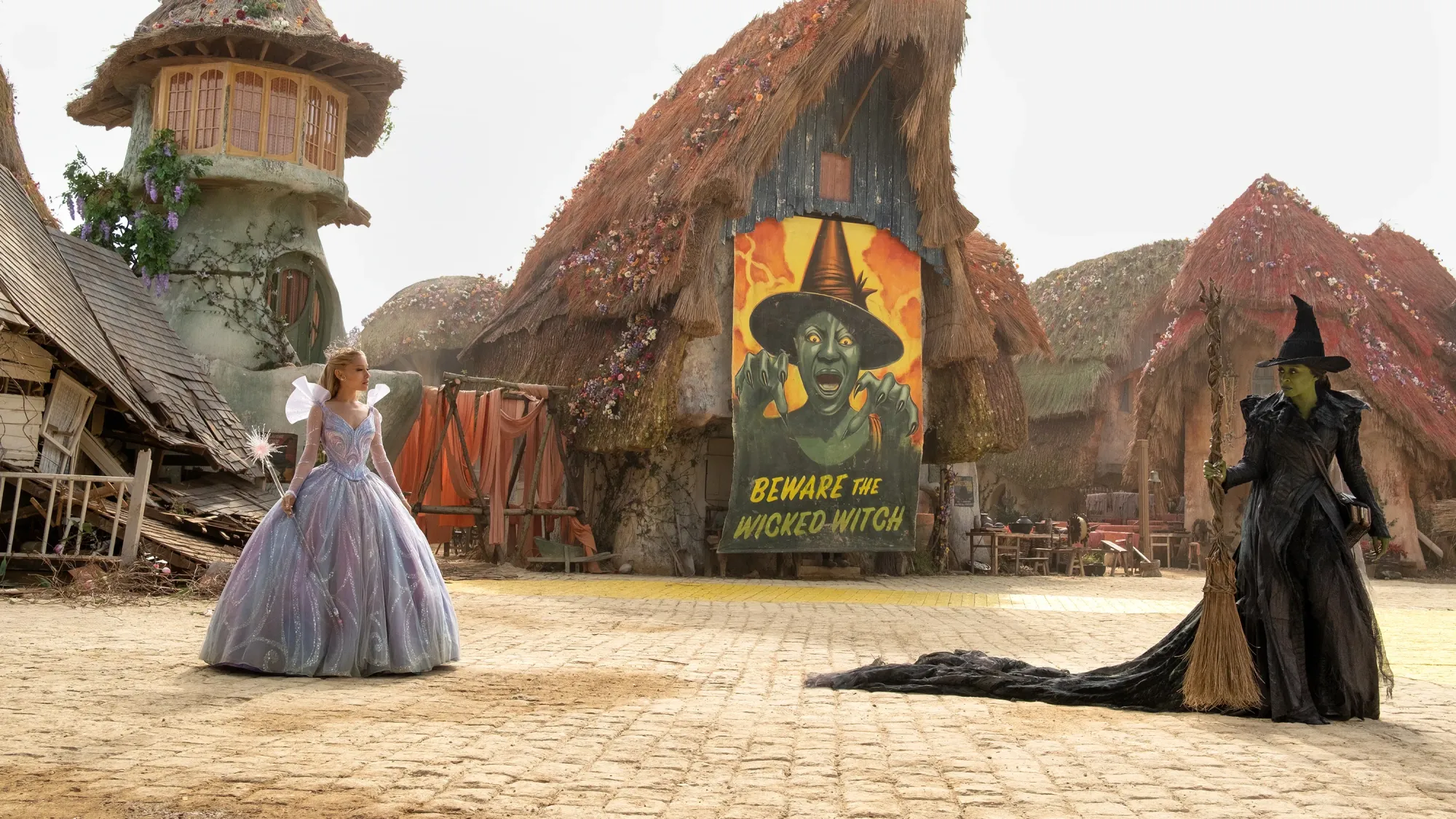
Wicked: For Good is the sequel to the 2024 Best Picture Oscar nominated film, Wicked. Directed by Jon M. Chu and written by Winnie Holzman and Dana Fox, these two films adapt the 2003 stage musical by Stephen Schwartz and Winnie Holzman, which was loosely based on Gregory Maguire's 1995 novel of the same name, which was a re-imagining of L. Frank Baum's famous novel, The Wonderful Wizard of Oz, published in 1900, and its more famous 1939 film adaptation, The Wizard of Oz, which, as the joke goes, was the story of a young girl, transported to a surreal landscape, who kills the first person she meets, and then teams up with three strangers to kill again.
Both of the Wicked movies were insanely popular.
Wicked made $764,211,609 at the worldwide box office. Wicked: For Good made $540,810,127. That's a good take. Plus, both films received multiple nominations and awards too, although notably, and perhaps deservedly, unlike the first film, which received 10 Oscar nominations, Wicked: For Good received none.
Personally, I’ve never read Wicked the book or seen Wicked the musical, and I think I’ve only read Baum’s first book, The Wonderful Wizard of Oz, although I’ve always wanted to read the other 14 in the series. But I’ve seen the movie a ton of times, not only because it was on tv every year growing up, but also because, it’s just a damn good movie. In fact, I’d go so far as to say that The Wizard of Oz might actually be the most perfect movie ever made. Disagree? Name another movie that is as old as The Wizard of Oz—87 years!—and has aged as well, and hasn’t become problematic as it did, all while still playing just as fresh today as it did the day that it was released. Name another film like that.
…Okay, fine, The Terminator, maybe. Check back in 45 years.
Anyway, my point is, I am dying to know how this film links up with the storyline from the movie that everyone knows and loves. How will this film’s story reconcile the fact that, according to the story in the Wicked films, Dorothy is basically duped as a fool, and used as an assassin by a corrupt fraud, in order to have her murder an innocent woman and a freedom fighter?
Well, maybe I'm not dying to know…
I’ve obviously taken my sweet-ass time getting around to actually watching this movie. I waited almost a year to the day that it was originally released, in fact, on November 21st, 2025. But whatever, I’m here now.
Let’s see how it turns out…
So…
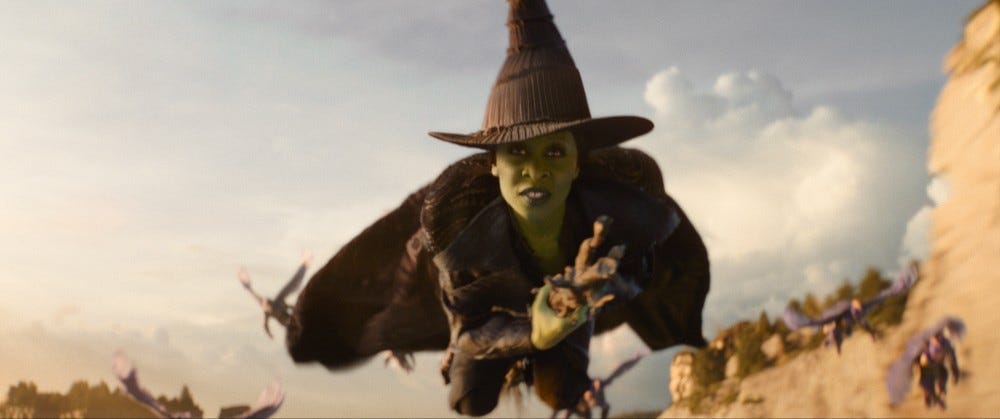
After refusing to join with the carpetbagging grifter, The Wizard of Oz, and branded as the Wicked Witch of the West due to the malicious machinations of the evil Madame Morrible, Elphaba Thropp continues to fight for rights of the Animals of Oz, striking at Yellow Brick Road construction crews from her forest hideout.
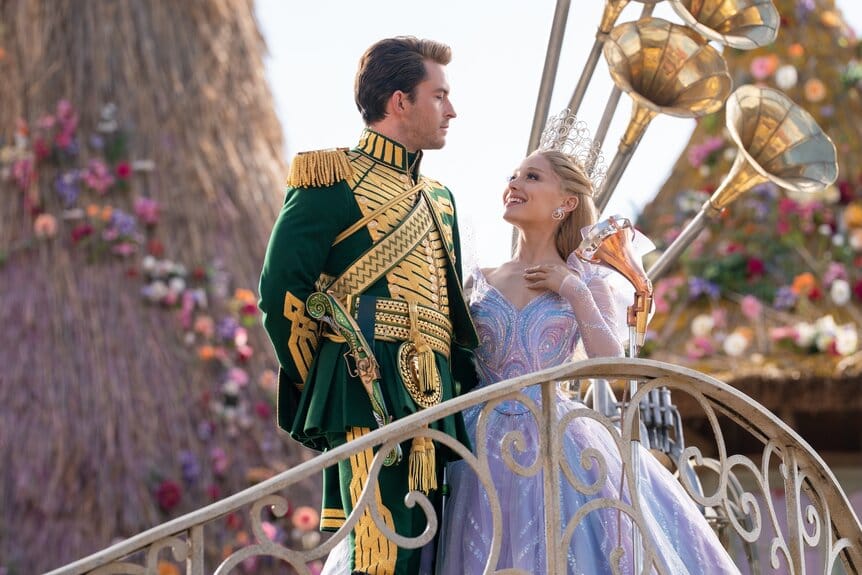
Glinda Upland, meanwhile, is now the Wizard's spokesperson, and engaged to Fiyero Tigelaar, who is Captain of the Gale Force, a unit tasked with capturing the Wicked Witch of the West. Everybody loves her. She also gets her Bubble Flyer, which looks like magic, but is actually technology-based. Glinda is very happy, and only occasionally haunted by what happened between her and Elphaba.
But then, at the celebration marking the completion of the Yellow Brick Road, Fiyero reveals to Glinda that he is actually attempting to locate Elphaba, to help her, but Glinda insists Elphaba does not want to be found. It’s the first major crack in the facade of Glinda’s perfect life.
Flying about Oz, Elphaba encounters some Animals, tired, scared, and broken from the Wizard’s agenda of Animal oppression, as they attempt to escape from Oz into the surrounding desert through a secret tunnel under the Yellow Brick Road. Amongst their number is her former caretaker, Dulcibear. Elphaba encourages the Animals to stay and fight against the Wizard… through song… but the Cowardly Lion interrupts and dissuades them, as he blames Elphaba for freeing him from his cage as a cub, the only home he had ever known, and then abandoning him in the woods. He exposes Elphaba as the reason for the Wizard's fearsome flying monkey spies, their most hated enemy.
The Animals abandon Elphaba and her cause, leaving Oz.
Feeling dejected, Elphaba visits her sister Nessarose, who is now the Governor of Munchkinland. Nessarose, in order to hold onto her fading relationship with her assitant/boyfriend, Boq, prohibits all Munchkins from traveling without official approval. Elphaba, in an effort to feel like she is doing good in this world, enchants Nessarose's shoes, giving her the ability to fly, which is a little bit ableist, sure.
Boq, deciding Nessarose no longer needs him because of her silver slippers, and having just learned of Glinda and Fiyero's wedding, and realizing that he still loves Glinda, despite her having no feelings for him whatsoever, tries to leave Nessarose. Enraged, she tries to cast a love spell from Elphaba’s spell book, the Grimmerie, but it backfires, and damages Boq's heart. In order to save him, Elphaba casts a desperate spell, and accidentally turns him into a tin man.
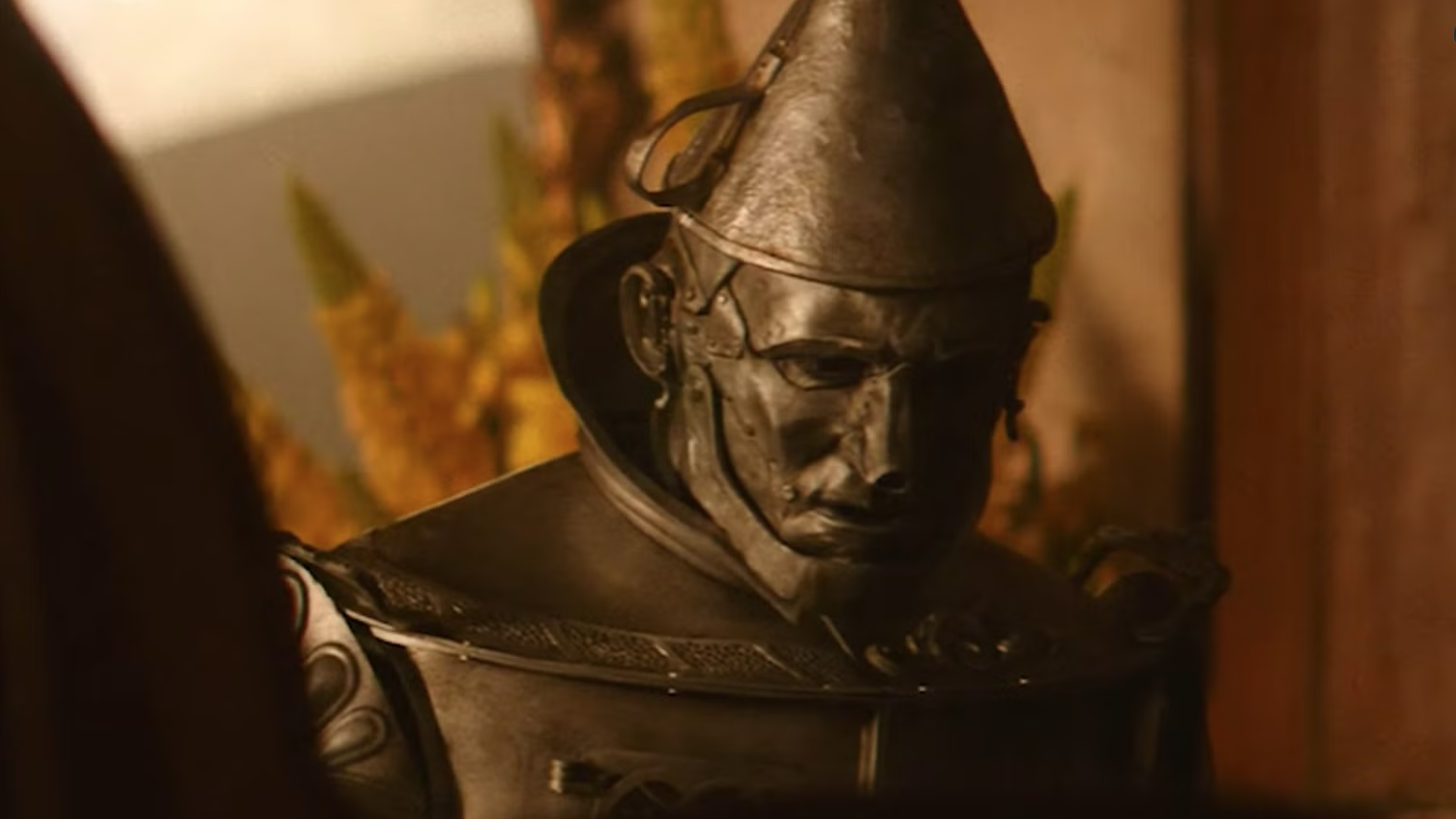
Boq is not happy about any of this.
Elphaba returns to the Emerald City, because she still loves Fiyero, and today is the day that he and Glinda are to be married. Glinda seizes the chance to try once more to get Elphaba to join with her and the Wizard. There’s a big song and dance number, and it is enchanting, so Elphaba accepts, but only under the condition that the flying monkeys are freed from their bondage.
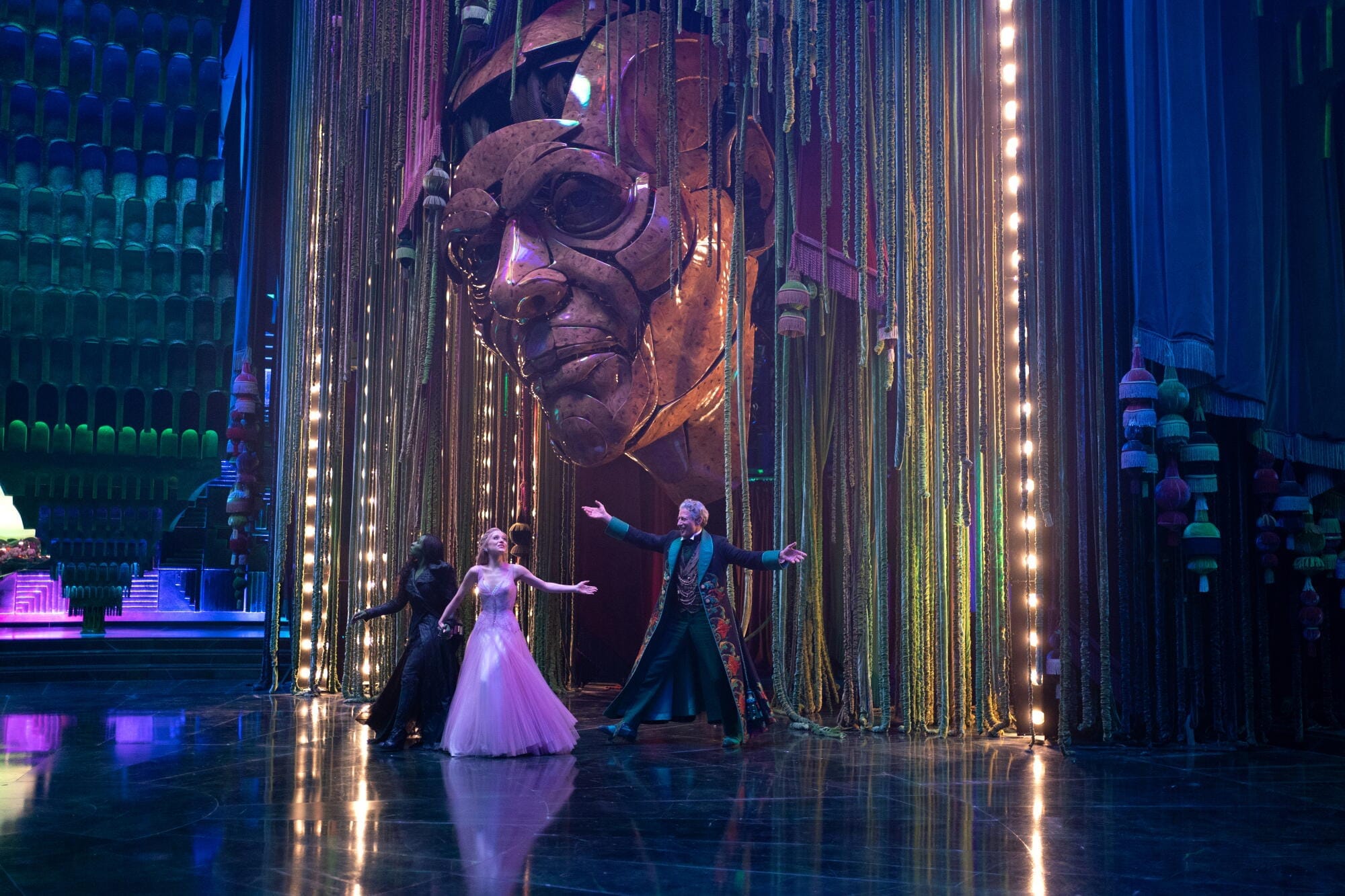
But once the binding spell is removed, before they all fly off, Chistery, the lead flying monkey, reveals to Elphaba that several Animals are imprisoned beneath the Wizard's lair. This includes her and Glinda’s former goat professor, Dr. Dillamond, who has lost his ability to speak. Enraged, Elphaba frees all of the Animals, ruining the wedding, and generally causing havoc. As the palace guards close in on her, Fiyero not only helps Elphaba escape, he joins her.
Her romantic dreams and her wedding day now in shambles, Glinda angrily concludes that Fiyero and Elphaba were having an affair, and in revenge, suggests to the Wizard and Madam Morrible that they may be able to lay a trap for Elphaba by spreading a rumor that Nessarose is in trouble.
At Elphaba’s forest hideout, she and Fiyero profess their mutual love, and then they do it a whole bunch, which is pretty fucked up, considering the fact that he literally just left his fiance at the altar maybe an hour ago. Later, drunk on their post-coital bliss, the two decide to move into an abandoned castle together, even though it looks dirty, and like it’s about to collapse on itself, and maybe doesn’t have a roof.
Madame Morrible, meanwhile, because she’s horrible, is like… fuck a rumor, I’m going to put Nessarose in actual danger. So she sends a tornado to Munchkinland, where Nessarose is out in the middle of the night, looking for the Tin Man, I think.
Anyway, guess who hitches a ride in the tornado...
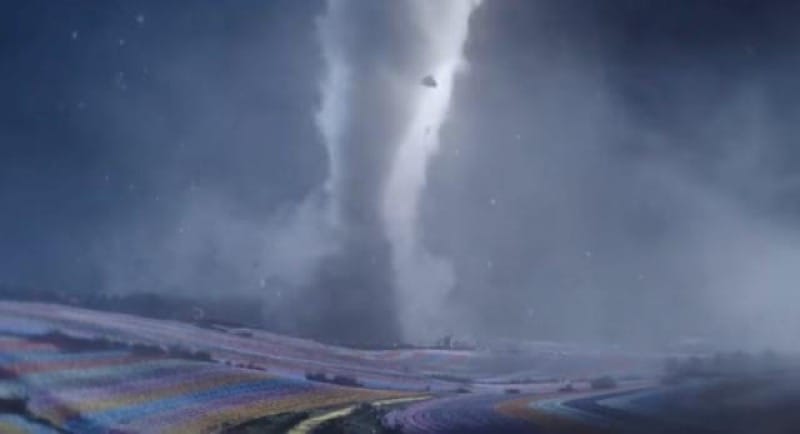
Nessarose is squished flat by a Kansas dirt-farmer’s dumpy little house.
Glinda then gives Nessarose's shoes to young Dorothy Gale from Kansas, even though Dorothy already has shoes, but then Glinda is probably still a bit miffed about Elphaba stealing her husband on her wedding day, so maybe we can forgive a little vindictive corpse-looting of a former classmate. Glinda then directs Dorothy to go see the Wizard, promising that he can help her get back home.
Elphaba arrives then, to find her dead sister’s corpse crushed beneath a weirdly black and white shack, and the person who killed her sister merrily walking away along the Yellow Brick Road, while wearing her sister’s Silver Shoes (a nice nod to the original book, but probably confused the shit out of most of the movie-going audience). Then she sees Glinda standing there, looking all smug and princessy. Understandably, I think, a fight breaks out. Not a dance-fight either, it’s more like a Wizard’s staff fight. But y’know… Broadway-style (Jazz hands).
Fiyero tries to intervene before someone twists an ankle or maybe breaks a nail, and is only able to hold back the guards trying to take in Elphaba by threatening to kill Glinda. It is at this moment that Glinda, with Fiyero’s gun in her face, finally accepts that Fiyero loves Elphaba more than her. Fiyero urges Elphaba to escape, and the guards drag Fiyero…into a field of straw… to beat him to death. Elphaba returns to Kiamo Ko, where she casts a hurried spell, desperate to save his life. But Elphaba believes her spell failed, and decides, ”Fine, you want a Wicked Witch, I’ll give you fuckers a Wicked Witch!” but, y’know… in song.
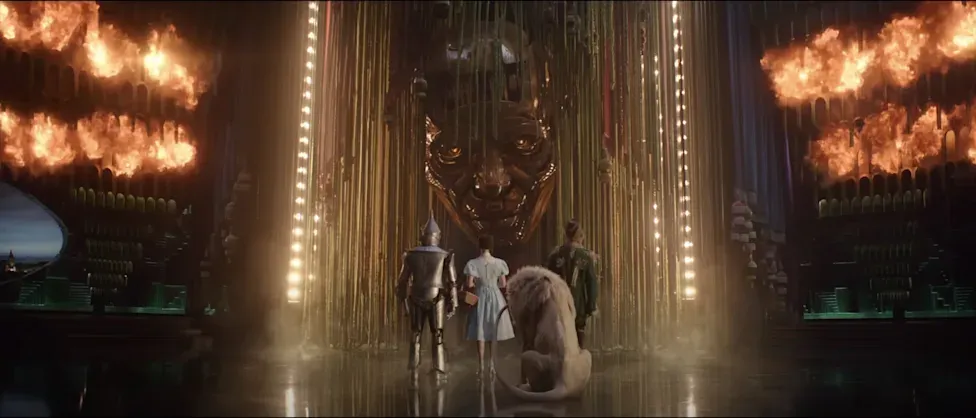
It’s at this point that Dorothy, with Boq the Tin Man, the Cowardly Lion… and a strangely unnamed scarecrow… meets with the Wizard, who instructs them, if they want his help, to kill Elphaba and to bring him her broom. Boq is still upset about the whole "turned into a tin man presumably without a penis" so he is fired up by this plan, and ready to chop some motherfuckers down tin woodsman-style. Outside of the palace, he rallies the hate-filled citizens of the Emerald City against Elphaba, again... through song.
Glinda sees all this from her balcony high above, and lamenting that her public image is built on lies, confronts Morrible about the tornado, but Morrible rebuffs her. Desperate, Glinda rushes to Kiamo Ko to warn Elphaba about the Wizard’s approaching assassins. But Elphaba’s flying monkeys have already kidnapped Dorothy, and imprisoned her in order to retrieve the shoes, so things have gotten out of hand. Then Chistery informs them of Fiyero's apparent death, so Elphaba decides to surrender. She has Glinda hide, entrusting her with the Grimmerie, and the two take this last moment to reaffirm their friendship in a tearful farewell... in song.
From her hiding place, Glinda watches in horror as Dorothy douses Elphaba with a bucket of water, seemingly melting her.
As Dorothy and friends skip away, jubilant with post-homicidal adrenaline, Chistery arrives and gives Glinda the green elixir bottle that belonged to Elphaba's mother, the one she got from her one night stand with a traveling elixir salesman. Glinda recognizes it, and brings it to the Wizard, who realizes that he is Elphaba's biological father, because surprise, surprise, before he became The Wizard, he was a traveling snake-oil salesman. He is also the reason for Elphaba’s powers, due to him being from our world. Ashamed of his actions, The Wizard leaves Oz in his hot air balloon as Glinda's demand. Now in charge of Oz, Glinda orders the monkeys to arrest Madame Morrible for her crimes. At this point, we return to the beginning of the first movie, where Glinda finishes telling the story of her and Elphaba to the Munchkins. She then returns Rights to the Animals, who have returned to Oz and have regained their voices.
Huzzah!
Meanwhile, in what was apparently meant to be a big surprise, it’s revealed that Fiyero hadn’t actually died, that he had been transformed by Elphaba's spell into The Scarecrow. Also, apparently he and Elphaba had actually been colluding this whole time, and it turns out that Dorothy didn’t kill Elphaba, she just tried to, and that Elphaba didn’t melt, she was merely acting, and had used a trapdoor to seem like she melted, faking her death. Now free, Elphaba and Fiyero depart Oz through the tunnel under the Yellow Brick Road, and the two set off into the surrounding desert, and out of the story.
Back in Emerald City, the Grimmerie finally opens for Glinda…
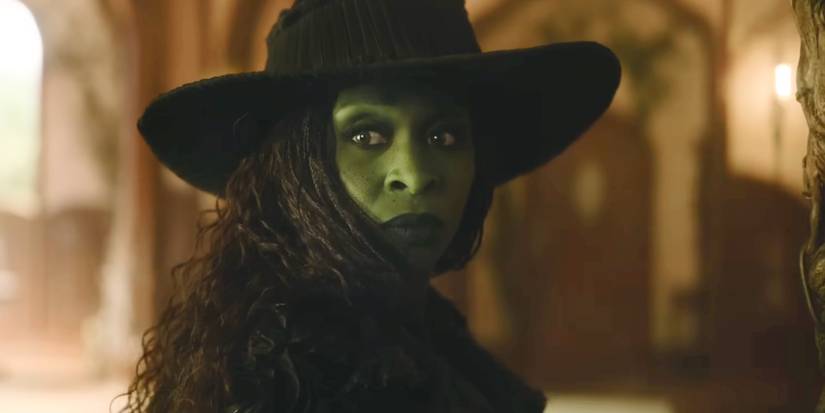
Overall, I enjoyed this film, but it’s definitely a pale shadow of the previous film.
The main issue is that, while the Wicked films/musical/book are definitely a strange, interesting, and somewhat awkward companion piece to The Wizard of Oz, and while it’s also true that they don’t exist in the same universe as the 1939 movie, or Baum’s books, it’s difficult to keep this in the forefront of your mind as you’re watching these films, especially as you get closer to the big ending. While I did like the decision to never show Dorothy’s face, so she wouldn’t overshadow the narrative here, the unavoidable main question the entire time that you're watching this is still: how will these films reconcile the fact that, according to the story they are telling here, Dorothy, while always somewhat of an ingenur-in-a-strange-land, is in actuality something even worse, a dangerous dupe, used by a corrupt conman at the head of an oppressive regime, who willingly agreed to kill a person she didn't know, someone who was actually a hero. How will these films reconcile the fact that Dorothy was always portrayed as a hero, and pure of heart, and yet this story tells us something completely different?
The short answer is… They don’t.
And that’s fair, I suppose, after all, this is their story.
But at the same time, The Wizard of Oz is a very well-known and beloved story. Like it said, it might be one of the greatest movies of all time, based soley on how audiences still embrace it. So, as a result, it’s kinda unavoidable that the audience is going to have that version in their head as they watch this version play out, and this awareness of the original story is going to intrude on this story, so this is going to be a problem for these films if you don’t acknowledge that. If you don't try work within the original's framework, if instead you present a clashing narrative against one that is already so fimly established, then most likely you’re going to end up just seeming wrong in the audience's eyes, at best, and transgressive at worst.
This is basically the same problem (one of them, at least) that plagued Zack Snyder’s execrable Batman v Superman: Dawn of Justice. That film depended on the audience being aware of the long-time friendship of the two main heroes, both contextually and metatextually, all to give the tragedy that was them fighting each other some emotional weight. But at the same time, it was also presenting versions of those characters that were completely different from the much more well-known long-time friends versions. The clash in narratives, characters, and worlds was simply irreconcilable, which contributed to the film being unwatchable.
The Wicked films aren't as bad, obviously, but still...
It’s hard to square the goofy, love-sick Tin Woodsman from the original movie with the raging fascist bigot in this film. It’s hard to square the silly, but charming clown that is Cowardly Lion in the original movie with the whiny complicit little coward asshole in this film. It’s especially hard to accept this version of Dorothy, the willing tool of the corrupt system, with the young hero who saves a kingdom. It all works, in its way, within this story, obviously. Here, the trio makes sense as an eager fascist Brownshirt, a complicit traitor, and a white woman from America's Heartland who has been dazzled by the smoke and mirrors of a grifter, and then, due to that, her culturally-inbred presumption of privilege, her lack of curiosity, and her resulting ignorance, is more than willing to harm a Person of Color for her own benefit. That totally makes sense. Modern audiences can understand this, as obviously (gestures to the world outside our collective windows), but still...
The shadow of the original film just looms too large.
The Tin Man is basically the C-3PO Problem. As in, why didn’t Threepio ever mention that Darth Vader built him, except here it's why didn’t the Tin Man ever mention that the Wicked Witch is who turned him into the Tin Woodsman? These kind of retroactive character details in prequels never do anything except to make the story too small. Suddenly everyone in the story, at least all the most important characters, actually have a long history, where, not only have known each other the entire time, but they are all actually related, or slept together, or were once college roommates. It's ridiculous and weird, it's like how all the background characters in the sitcom Community complain how everything is always about the Study Group, but it's not a joke here. And even worse, despite everyone knowing each other the entire time, Dorothy is blissfully ignorant of this, and for the entire time she's in Oz too. When did they all decide to not tell her shit?
(Judy Garland voice): "The Wizard?"
(literally anyone else in the film): "Yeah. Apparently he and Glinda and the Wicke–Ow!" (rubbing their sore arm, after they were suddenly punched by a third person) "What was that for?"
(literally anyone else in the film, except the second person): "Don't tell her about that. What's wrong with you? Remember? We had that meeting?"
(The second person nods apolegetically): "Oh, shit... yeah, sorry." (looks at Dorothy) "So, yeah, just... y'know, follow the Yellow Brick Road."
(Judy Garland voice): "Toto too?"
(exchanged looks of confusion): "Yeah, of course. Why would you ask that? What're you gonna do, leave him here? Take your dog."
And then… the weirdest part? After all that added backstory that completely conflicts with the more well-known versions, neither The Tin Woodsman nor the Cowardly Lion get any kind of resolution to the new angles added to their stories. They just vanish from the narrative. And as for Dorothy, she goes home, ignorant of the reality of what she and the rest of the kingdom believes she has done. From that lens, because it's impossible to ignore, it's hard to see the point of these additions to the story.
What's the upside? Because the downside is that you have now added awareness of the events of this story, the "real" story, to the original film, every time you watch it from now on. Which is basically the whole problem with prequels–even the good ones, especially the good ones–inevitably, it will run headlong into a brick wall that is the already established events of the original story. That clash in details and motivations are story-killers. Adding all this extra character work and story points and world-building when your ending is already determined, only ever results in the prequel being too large to fit comfortably up against the shape of the original story, while overall lessening the original work too.
This is why prequels, even the good ones, are always bad ideas.
Add all that to the fact that, while, yes, it’s a musical, so a plethora of songs which are all tied to the events of the narrative are to be expected, too often the songs in this movie felt like they were being used as a way to cheat the story's way to an emotional catharsis that otherwise it felt like it didn’t earn.
Plus, and maybe this is the thing that bothered me the most...
While the first Wicked movie was a surprisingly strong anti-fascist film, and to be fair, this one is too, Wicked: For Good feels more thematically muddled, as well as much more hesitant when it comes to making the same kinds of statements that it made so clearly in the first film.
Yes, there are plenty of moments that invoke recent events, especially from the past year, when white Christian American fascism fully and irrevocably removed its mask, as its idols in the Trump administration sent their ICE Brownshirts into American cities in order to implement a white supremacist agenda the majority of white Americans, across all demographics, eagerly and specifically voted for in the last three Presidential elections. The villification of the Animals by the oppressive regime of the Wizard, forcing them into hiding, locking them in cages, taking their voices from them, all while the Munchkins say nothing, believing themselves safe within the comfort and convenience of complicity, the sweet allure of fascism-lite, the “just throw this one group under the bus, and it’ll all be just fine" lifestyle of the privileged, only to find themselves soon enough amongst the oppressed class as well, it's all very much a familiar reflection of our own crumbling American society. The film also highlights the fact that, much like in our own world, political power stems from those who have the ability to control the dissemination of information, an idea that should terrify us all, as the worst people alive continue to take over our main media platforms.
So, yes, the anti-fascist (or Antifa) message is there, but it feels... less sharply aimed, less deliberate, less angry. Maybe that's just me. Or maybe this film was toned down in response to all the dumb asshole bigots who complained that the previous film was too "woke" or something? I don't know if that's what happened, it's certainly something that's happened before, despite the fact that all these hit-dogs hollering about creative works like this being “woke”—a word that used to mean something, but now means that the person saying it is a dumb bigot–have completely missed the entire point of the work. But whatever the reason, Wicked: For Good felt more subdued this time, a little less focused, like it was scrambling too much in order to finish it all up. Which is too bad, because the best escapism is the kind that entertains while also maybe doing something like... reflecting our current reality in such a way that might inspire positive change.
In the end, there were a lot of big issues that bothered me, and there was a whole litany of little things too…
Why is the Gale Force is called the Gale Force? I assume it’s a reference to Dorothy Gale, but in the story, at the time the Gale Force was created, she has yet to arrive in Oz. Is it a tornado reference? Does Madame Morrible have a history of sending tornados? I don’t remember it being said that she did. So… why?
Also, they don’t show Dorothy’s house fall on Nessarose. They just show her walking around, and the tornado in the same place, and then they just skip past the actual moment. I'm not looking for a big splat and tomato splatter necessarily, but maybe a dramatic moment? Is that too much to expect? I get that maybe they didn’t want to crush her, because the character of Nessarose has a weird arc that doesn’t quite work, sure, but she didn’t really deserve being crushed by a house, so I get that, but the result of this is that her death is weirdly underplayed in the film. They didn't even show Glinda give Dorothy the shoes either, a moment that you'd think, especially in this new context, would deserve examining the motivation and emotion behind.
It’s also really weird that the film leaves the Scarecrow out of the film so much. It’s weird because, well... he’s the Scarecrow, he's a big part of the story, and everyone else who similarly has a big role in the story gets featured, so it’s really noticeable that the Scarecrow doesn't. It's even worse, because it’s clearly only being done to hide the fact that the Scarecrow is actually Fiyero, which is a terrible name, one I assume is meant as a nod to the line “Have some fire, Scarecrow” otherwise known as the entire reason that Dorothy throws water on the Wicked Witch, killing her, which is also yet another part of the story that the film ignores/erases, probably because its inclusion would make no sense given the relationships of the characters as presented in this story... Basically, the entire character of the Scarecrow is now a huge mess, and the fact that it's this way only because of what would be considered to be the most tedious and obvious reveal in the whole film, if not for the fact that the traveling salesman in the beginning of the first film is clearly Jeff Goldblum, is really annoying to me…
It's just so poorly done.
And then! And then there’s the part where the Fiyero tells Elphaba that she’s beautiful, and she says you don’t have to lie to me, and he says “it’s not a lie… it’s seeing the world differently.” Which is… so fucking rude, right? Why not say “It’s the truth” instead of basically saying “okay sure, fair, you’re hideous, but y’know what? That’s still unique. And… interesting looking. And I’m kind of into… non-traditional-looking chicks, y'know? Plus, ugly can be hot... right?” It's the most back-handed non-compliment ever. And then! And then, they call back to it later on in the movie, like it's this super-romantic moment that he can somehow still love her despite her hideous visage… It’s so weird.
On top of all that... the songs just aren’t as good this time.
I don’t know if Wicked deserved its 10 Oscar nominations. Some, sure, but the rest... I don't know. But that doesn't matter, my point is, after watching Wicked: For Good, I definitely agree that this one deserved none.
Still, despite its many shortcomings, despite proving that prequels are always narratively inert, and making them is generally a bad decision, I enjoyed Wicked: For Good, even though it has this weird, tacked-on Dark Knight Returns-like ending that only serves to highlight the story's own cowardice for being unwilling to stick with the entirety of what both movies were saying up to that point... Still, while I know I just complained about this movie a lot, it's still fun.
It's just too messy.